


Church marquee signs help congregations share service times, events, and timely messages with the surrounding community. Planning church marquee signs well means looking beyond the display itself: the right system must fit the site, communicate clearly, meet applicable requirements, and remain manageable for staff over time.
For churches and community organizations, a marquee is often a high-visibility part of a broader campus identity. The decision affects communication, property planning, electrical coordination, and long-term service needs. This guide outlines the questions to settle before design and fabrication begin, and how a coordinated sign partner can help manage the project from planning through installation.
What should a church marquee sign accomplish?
Short answer: Define the messages the sign must carry, who will update them, and how the sign should support the church’s broader campus communication.
Start with the communication job, not a preferred product. A church may need to show recurring service times, announce a special event, share a schedule change, or provide a timely community message. List the core message categories and identify which details change often. That simple inventory helps distinguish a sign that primarily identifies the church from one intended for frequent updates.
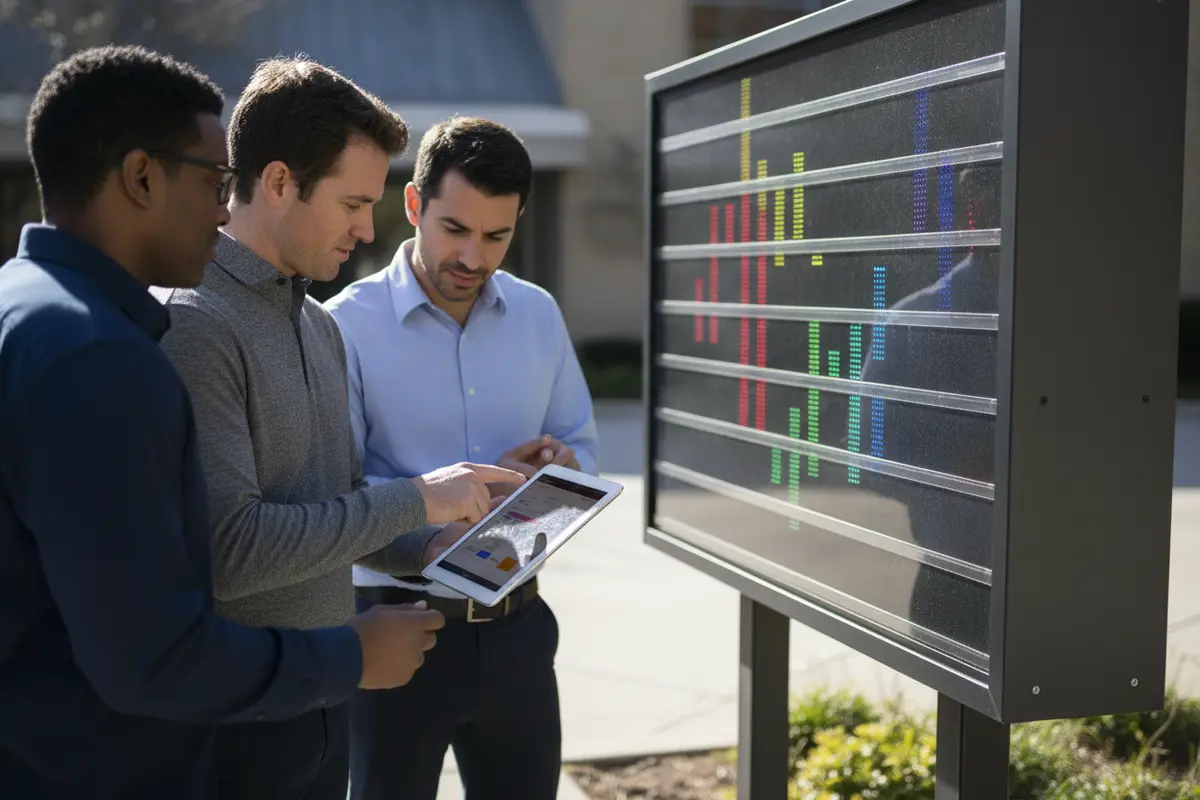
A digital church sign can display service times, events, and messages in real time. Electronic message centers use bright LED displays designed for visibility during the day and at night. Content management tools can let authorized staff schedule or change messages remotely. Ask who will own that process, how many people need access, and what basic training they will need. Carolina Signs and Wonders offers digital sign solutions and describes the Vnnox system as supporting scheduling, real-time updates, remote management, and user-friendly controls.
Keep the message plan practical. A sign’s display capability is only useful if the church has a clear process for preparing and approving content. Decide which staff role maintains the schedule, who approves time-sensitive announcements, and how the team will handle a last-minute change. Confirm these operational needs before selecting the system, rather than assuming every display will be managed in the same way.
How should you compare marquee sign approaches?
Short answer: Compare the communication role, update effort, and project requirements of each approach before choosing a display.
The options below are planning categories, not a substitute for a site-specific design. A church may need one approach or a combination of sign types across its property. A custom sign program can coordinate the marquee with other exterior or interior identification needs.
| Approach | Best suited to | Planning considerations | Ongoing staff role |
|---|---|---|---|
| Static identification sign | Stable church name or campus identification | Confirm the design, materials, visibility, structure, and applicable approvals for the site. | Limited message changes; staff should keep the displayed information current. |
| Digital LED message center | Service times, events, and messages that change over time | Plan display purpose, outdoor conditions, electrical coordination, content controls, and permitting. | Authorized users schedule or revise messages and follow the church’s approval process. |
| Coordinated campus sign system | Churches needing consistent identification and wayfinding across several areas | Coordinate sign types, visual standards, locations, approvals, and installation sequencing. | Assign responsibility for updates and future changes across the system. |
A digital display may be a strong fit when messages change regularly. A static sign may meet a narrower identification need. A campus system can bring several sign functions together, but it also calls for coordination among church leadership, facilities staff, design stakeholders, and the project team. Evaluate the total communication need before focusing on a particular display feature.
What makes marquee messages easier to understand?
Short answer: Make each message direct, prioritize the essential information, and review it in the context where people will see the sign.
There is no one message formula that works for every campus, road approach, or display. During planning, gather representative messages such as a regular service announcement, a one-time event, and a schedule change. Reviewing real examples gives the project team a clearer basis for discussing how the sign will be used and whether the planned system supports those needs.
- Put the most important information first, such as the event or service being announced.
- Use a consistent naming style for regular programs and services.
- Assign someone to review dates and details before an announcement is scheduled.
- Plan how the church will update or remove a message when an event passes.
- Check sample content on the proposed display during design review, rather than relying only on a description.
Ask the sign team to explain how the proposed display and content controls will work for the staff who will use them. The goal is a repeatable process that does not depend on one person knowing undocumented steps. Training and clear user roles can support continuity when responsibilities change.
Where should a church marquee be placed?
Short answer: Evaluate the actual site, intended audience, access, utilities, structure, and local constraints before fixing a location.
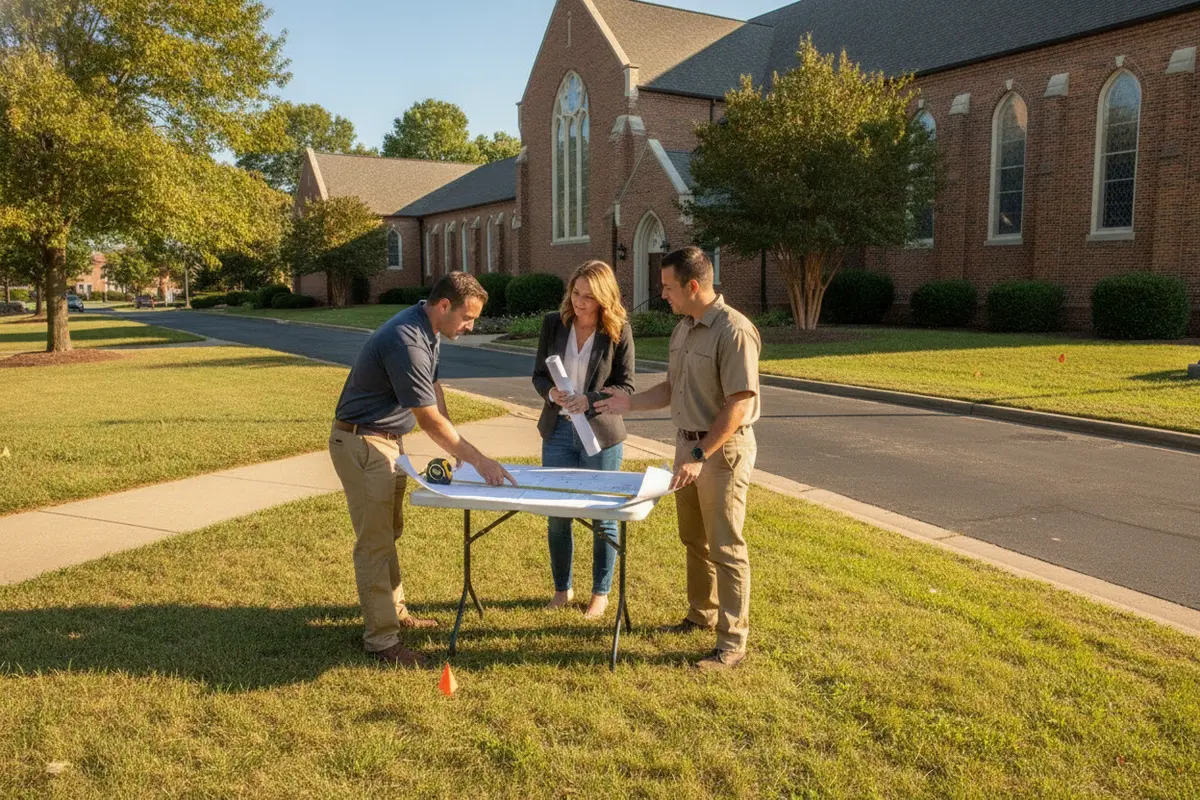
Placement is a site decision, not a universal rule. The project team should review the proposed sign area in relation to the church property, entrances, existing structures, and the way visitors approach the campus. Do not select a location from a rendering alone. Site conditions can influence foundations, sign structure, electrical routing, visibility, and the approval path.
Bring the people who understand the property into the review early. Facilities staff can identify known site constraints; church leadership can confirm the communication purpose; and design and construction stakeholders can flag coordination needs. If the sign is freestanding, structural design may involve wind-load calculations and foundation design. Carolina Signs and Wonders provides structural engineering for outdoor signage and can coordinate design considerations as part of an integrated project.
Churches that are considering other exterior formats can also review LED sign options and business sign types as part of the planning discussion. Those pages provide context for the range of sign formats; the appropriate solution still depends on the property and project requirements.
What should electrical planning and permitting cover?
Short answer: Treat electrical coordination and local approvals as project workstreams that should be resolved before installation is scheduled.
An illuminated outdoor sign needs appropriate electrical coordination. The church should identify who is responsible for evaluating the site’s electrical requirements, coordinating licensed electrical work, and documenting any inspections that apply. Do not rely on assumptions about an existing connection or ask unqualified staff to make electrical changes. Carolina Signs and Wonders coordinates code-compliant electrical connections for illuminated signage, with UL-listed electrical work.
Permitting is also site-specific. Local sign codes and approval processes differ, and the church should not assume a previous project’s approvals apply to a new property or sign. The sign project may require drawings and municipal submissions. Carolina Signs and Wonders handles the permitting process, including drawings and city submissions, and works with local sign-code requirements. Confirm the project scope, decision points, and responsible contacts so the church understands what information is needed from its team.
For signs that are part of a wider accessibility or wayfinding program, review applicable requirements with the project team. A freestanding marquee does not replace accessible building or campus wayfinding. The U.S. Department of Justice provides federal accessibility information at ADA.gov; confirm which requirements apply to the specific sign types and locations in your project.
How can installation be coordinated with church operations?
Short answer: Set clear project responsibilities, confirm site readiness, and coordinate the installation plan with the church’s calendar and property operations.
Before work begins, align the church’s decision-makers and the sign project team on the approved design, site information, permitting status, electrical coordination, and access arrangements. Identify who will answer project questions and who can approve decisions if a stakeholder is unavailable. For a church campus, it is also useful to communicate upcoming work to the people who manage services, events, visitor access, and facilities.
Installation involves more than placing a sign. Site preparation, structural considerations, electrical connections, and final positioning need to fit the approved plan. Carolina Signs and Wonders manages projects across design, permitting, engineering, fabrication, electrical coordination, and installation. Its sign installation service includes site preparation through final placement. A single accountable project team can help keep handoffs visible and reduce the chance that separate vendors leave gaps in coordination.
Use project reviews to keep decisions documented. Confirm what has been approved, what information remains open, and who owns each next step. If the church is planning more than one sign, discuss sequencing and brand consistency across the package rather than treating every element as an unrelated order.
It can help to keep a short decision record for the project. Note the approved design version, the people who signed off, any open property or utility questions, and the next action owner. Keep these records with the church’s facilities and property documents so a staff transition does not erase project context. Before installation, verify with the project manager that the current plan reflects the approved drawings and that required site access and coordination are understood. This is a coordination practice, not a substitute for required permits, inspections, or professional direction.
How should the church plan for long-term operation?
Short answer: Plan for content ownership, routine observation, issue reporting, and access to support without assuming a particular service schedule or warranty.
LED signs are rated for more than 50,000 hours of use, although actual service life depends on the sign and its operating conditions. Outdoor displays use weather-resistant enclosures, and durable materials and finishes support long-term performance. These features do not remove the need for a practical operating plan. Agree on who can update messages, who will report a display or lighting issue, and how the church will communicate a problem to its sign partner.
Keep records that help staff manage the sign over time: approved drawings, permit documentation, electrical and inspection records where applicable, user access details, and the final content-management instructions. When staff roles change, transfer the system knowledge and confirm that designated users can access the tools. Avoid making changes to electrical components outside the qualified project process.
Church leaders evaluating a larger package can review the full range of signage services and discuss how the marquee should relate to other campus signs. For organizations in North Carolina or South Carolina, the company’s service locations provide additional regional context.
Request a church sign consultation
Frequently Asked Questions
Can digital church marquee messages be updated remotely?
Digital sign content can be managed through content-management tools. Carolina Signs and Wonders describes Vnnox as supporting real-time updates, scheduling, remote management, and user-friendly controls. Confirm the proposed system’s access, training, and content-approval process with the project team.
Does every church need a digital marquee?
No. The right approach depends on whether the church needs frequent message changes, stable identification, or a coordinated mix of signs. Compare the communication purpose and ongoing staff responsibilities before selecting a format.
Who handles church sign permitting?
Permitting requirements depend on the project location and local sign codes. Carolina Signs and Wonders handles permitting work that includes drawings and city submissions. The church should confirm the project scope and provide the property information requested by the project team.
What should the church prepare before requesting a quote?
Prepare the sign’s communication goals, example messages, property information, desired project scope, and the names of the people who will review design and approvals. If the church is considering related campus signs, include those needs in the initial discussion so the project can be evaluated as a whole.
Get a Free Quote for your church marquee project
A well-planned marquee brings together clear communication, site-specific engineering, coordinated approvals, and a manageable process for the people who will use it. Begin with the church’s needs and property conditions, then select a sign system and project plan that support dependable visibility over time.


