


Laundromat signs have to do two jobs at once. They tell a driver, in a few seconds, that this building is a self-service laundry. They also tell a customer who has already parked which door, machines, and payment station to use. A name alone does not do that work. A useful program starts at the street and continues through the machine room.
Request a quote for a laundromat sign program
What should laundromat signs accomplish first?
Start with the decisions a customer makes before they walk in. From the road, they need to recognize the business and judge whether it is open. In the lot, they need the right entrance and a place to unload. Inside, they need washers, dryers, payment, and the restroom without asking staff who may not be on site.
Write those decisions in order. A first-time customer might need to read the business from a side street, confirm hours after dark, find the accessible entrance, and then locate large-capacity machines. Each of those moments is a sign job. If two signs use different names for the same room, the program is already working against itself.
- Identification: State that the business is a laundry, not only a brand name.
- Approach: Stay readable from the street and from the parking aisle.
- Hours and services: Show when the store is open and which services exist.
- Wayfinding: Point to entrances, payment, and permanent rooms.
Trade publications for coin-laundry operators make the same point. A clear exterior message, night visibility, and signs at every approach matter more than decoration. American Coin-Op's guide to laundry signage separates a large exterior sign, a building sign, and the smaller interior signs that explain parking, machines, and services. That split is a good planning order.
Rank each item as essential, helpful, or optional. Essential signs identify the laundry and support safe movement. Helpful signs explain wash-and-fold, card reload, or attendant hours. Optional brand graphics should not crowd the words a driver must read.
A concrete example helps the ranking. Picture a single-story laundry on a four-lane road in a Charlotte suburb, set about 80 feet back behind two parking rows. The street face must say the business is a laundry before the driver passes the driveway. The monument at the curb carries the name and the word laundry. The building face repeats that name at the door. A small message board lists hours and wash-and-fold. Inside, one sign points to the card station, and separate signs mark the restroom and the attendant door. That is one program, not five unrelated purchases.
The same store fails if the street sign is only a clever name. Neighbors may not know that the name means laundry. Spell the category out in plain letters. Keep the brand mark, but do not let it replace the word customers use when they look for the store.
How do you plan laundromat signs from the street inward?
Walk the property before you pick a sign type. Start on each street that borders the site, then the driveway, the parking rows, the front door, and the side or rear entry. Note what a driver can see at the speed of that road, and what a person on foot can see while carrying a basket.
A stand-alone building often needs more than a face-mounted sign. If a side street passes the blank wall, that wall is part of the approach. A store buried behind a parking field may need a freestanding sign near the drive, plus a building sign at the door. A laundry in a multi-tenant center may be limited to the fascia, the window zone, and an interior program. Write the constraint down before design starts.
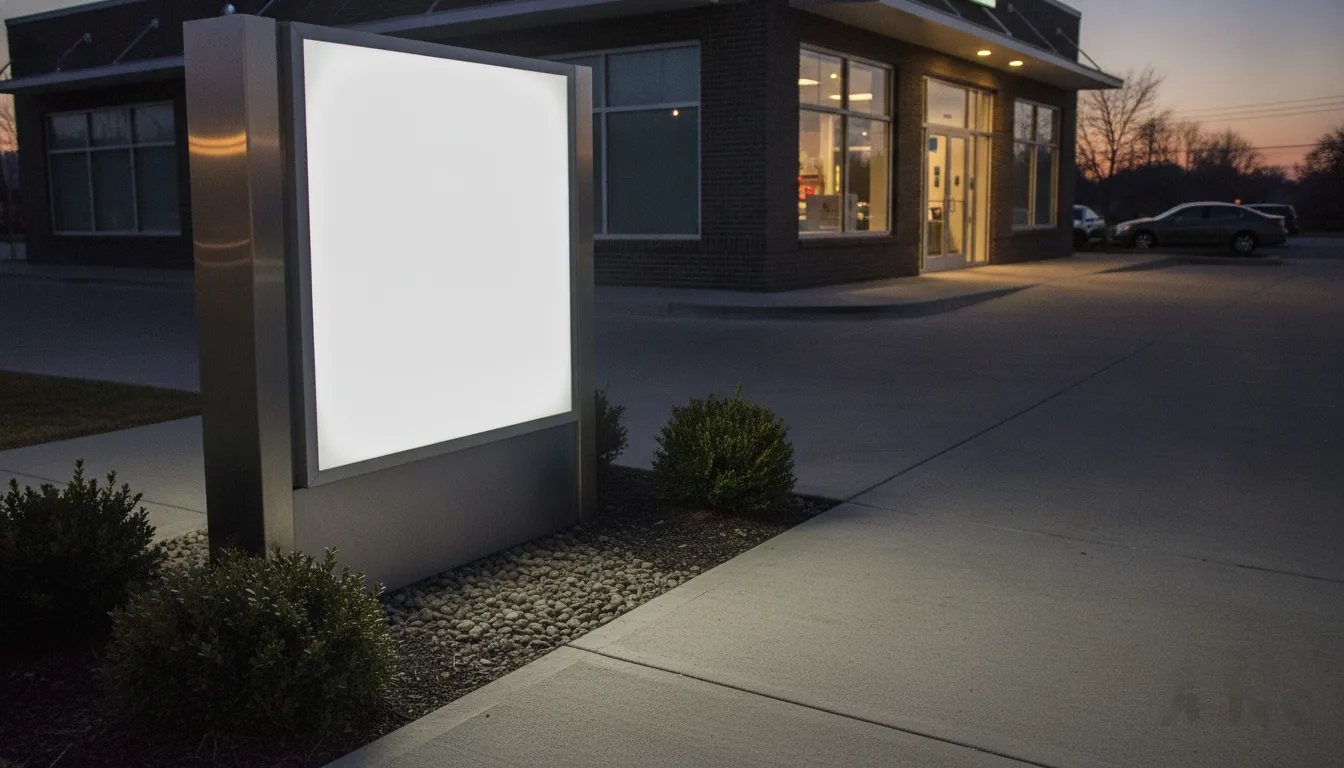
Check night conditions on purpose. Many laundries stay open late, and a dark face can make a clean store look closed. Illumination is a design choice, not a finish added at the end. A commercial LED sign can carry changing hours or service notes, while a fixed illuminated cabinet can carry the permanent name. Choose based on how often the message must change.
Also look at neighboring signs. A small face between taller neighbors disappears. Letter height, contrast, and placement should be set for the actual sightline, not for a drawing that ignores the buildings next door. The LED sign viewing distance guide is a useful companion when a message board is part of the program.
Which laundromat signs belong outside and inside?
Outside, the program usually has three layers. A primary identification sign names the laundry from the road. A secondary building or canopy sign confirms the entrance. Smaller signs handle parking, accessible entry, and after-hours rules. Inside, permanent room signs, machine-area directions, and payment instructions keep the visit moving.
Keep the primary message short. The business name and the word that says laundry should be readable first. Service lists, prices, and promotions belong on a message board or an interior display, not packed into the street face. Operators who change promotions often may want a digital sign for that layer, while the building identity stays fixed.
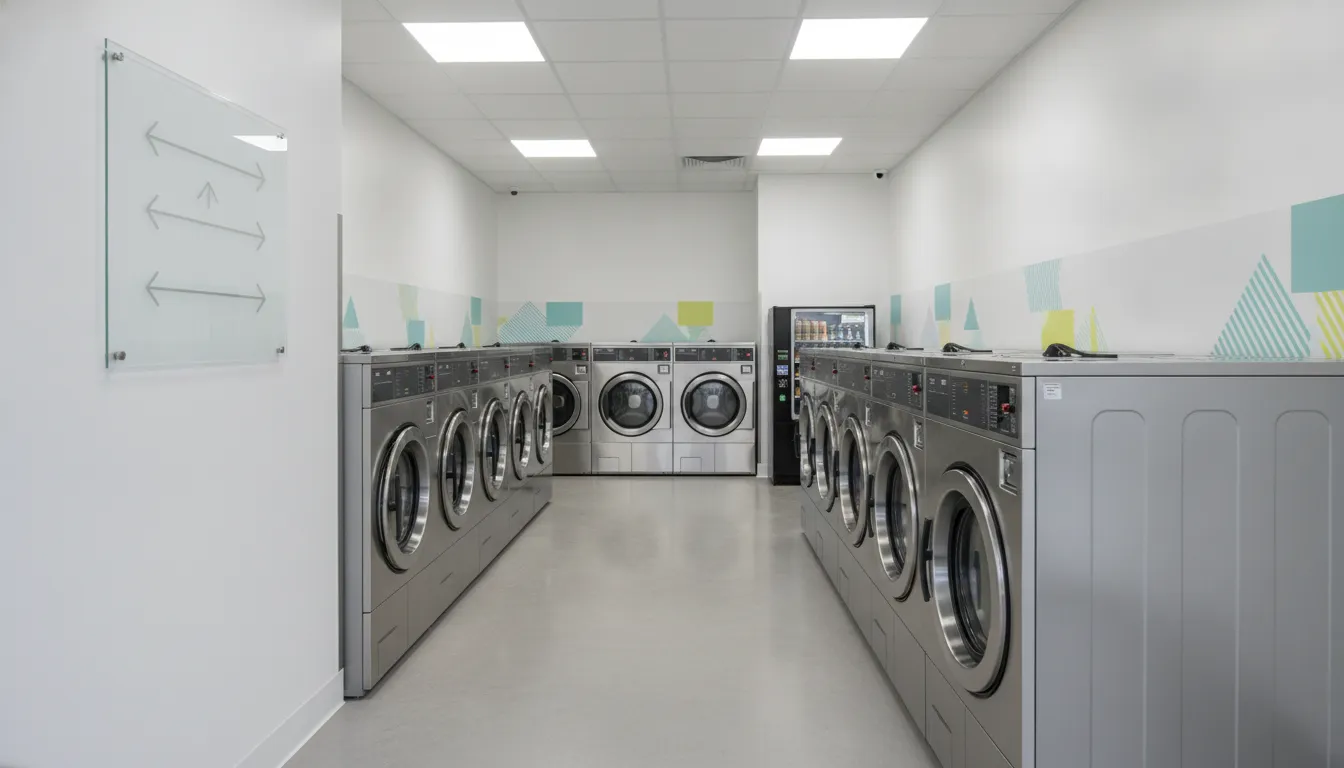
Permanent room signs are a different standard from the street sign. The U.S. Access Board explains that signs identifying permanent rooms and spaces, where provided, need both visual and tactile characters, while occupant names and company logos are treated differently. Restroom labels are a common example. Read the Access Board guide to sign standards with your designer so room signs are specified correctly, and use a separate interior sign scope rather than stretching the exterior artwork indoors.
CLA, The Laundry Association, notes that customers form an opinion in the parking lot, before they judge the machines. That is the moment for a clear entrance, a readable name, and a path that does not depend on a staff greeting. Their customer-experience note is about the whole visit, and the sign program is the part of that visit people can see from the curb.
How should owners compare laundromat sign approaches?
Match the sign to the message and the site, not to a catalog photo. A monument near the drive, channel letters on the fascia, a cabinet on a blank wall, and a message board for hours can all belong in one program. They should not all try to say the same sentence.
| Approach | Best use at a laundry | Watch for |
|---|---|---|
| Freestanding monument or pylon. | Identifying a store set back from the road. | Setback, height, and utility conflicts. |
| Channel letters or a cabinet on the building. | Confirming the name at the entrance. | Fascia limits and night readability. |
| Message board or digital display. | Hours, wash-and-fold, and short notices. | Brightness, power, and content rules. |
| Interior room and direction signs. | Payment, machines, and permanent rooms. | Tactile rules for permanent rooms. |
A monument sign is often the right street layer when the building face is hard to see. Channel letter signs work well on a fascia the customer faces while walking in. A tall pylon sign is a separate structural project and should be scoped only when the sightline needs that height. Do not add a second primary sign just because the first drawing looks sparse.
Color and contrast belong in this comparison too. A pretty script that disappears against a glass storefront fails the street test. The guide to color and contrast in wayfinding is a practical check for both the exterior name and the interior directions.
What approvals and site facts should be settled early?
Sign rules are local. A laundry on a commercial corridor, a laundry in a shopping center, and a laundry on a neighborhood street can face different limits on size, height, illumination, and changeable copy. Landlord criteria can be stricter than the city. Collect both before anyone fabricates a face.
- Confirm the property address, parcel, and who may sign the application.
- Pull the landlord sign criteria and the local sign rules for that district.
- Mark driveways, easements, utilities, and the accessible route on a site plan.
- Note power availability for any illuminated or digital sign.
- List every message that must change, and who will change it.
Permitting is part of the sign scope, not a paperwork errand after fabrication. If a contractor is coordinating the build-out, share the sign drawings with that team early. Carolina Signs and Wonders handles design, permitting, fabrication, and sign installation as one project so the approved drawing and the installed sign stay aligned. The permitting notes for contractors show the kind of site facts that prevent a late redesign.
Electrical planning matters for any lit face or message board. Ask where the circuit will come from, who owns the meter, and whether the center's house power can support the display. A sign that cannot be powered as drawn is not an approved sign yet.
Installation access belongs in the same early check. A fascia over a glass storefront may need a lift, a night install, and a clear parking lane. A monument in a landscaped island needs a footing that does not cut the accessible route. Share those limits with the fabricator before the cabinet size is locked. Carolina Signs and Wonders builds and installs custom signs for commercial sites across North Carolina and South Carolina, and the site facts decide the method.
If an older cabinet is staying, say so. A reface can be the right move when the structure, wiring, and location are still sound. A new cabinet is the right move when the face is too small for the road, the lighting has failed, or the landlord will not accept the old shape. Do not assume a reface until someone has inspected the existing structure.
What belongs in the project brief?
A short brief keeps the quote tied to the site. Include photos of each approach, a simple plan, the words that must appear, and the words that must be easy to change. Say whether the laundry is a single store or one of several, because a multi-site operator needs the same name, colors, and mounting logic at every location.
- Business name and the plain-language description, such as laundry or laundromat.
- Hours, and whether hours change by season or staffing.
- Services that customers must see before they park, such as wash-and-fold.
- Photos from the road, the lot, and the interior at day and at night.
- Landlord rules, local contacts, and any signs that must stay during construction.
For a multi-site operator, decide which parts are fixed and which parts are local. The name, logo, and color should match. Address, hours, and a local service note should be easy to swap without rebuilding the cabinet. That is a fabrication decision. It belongs in the brief, not in a later email.
Avoid packing the street sign with temporary offers. A durable identification sign should still be correct in three years. Promotions can live on the message board or inside the store, where they can change without a new permit set.
Bring the brief to one partner who can carry design, review, fabrication, and installation. Splitting those steps across vendors is where laundry projects stall. The city approves one drawing, the landlord marks up another, and the installed face matches neither. A single scope keeps the words, the power plan, and the mounting details in one place.
When you are ready, send the address and the photos. A planner can tell you which signs the site can support and which messages should stay off the main face. That review is the start of a custom quote, not a catalog order.
Get a free quote for your laundry sign project
Frequently Asked Questions
What signs does a laundromat usually need?
Most stores need a primary identification sign readable from the street, a building sign at the entrance, and smaller signs for parking, hours, payment, and permanent rooms. The exact set depends on setback, neighboring buildings, and whether the laundry is in a center or on its own lot.
Should the street sign list every service?
No. The street sign should say who you are and that the business is a laundry. Hours, wash-and-fold, and short notices belong on a message board or inside, where they can change without rebuilding the main face.
When should room signs be tactile?
Signs that identify permanent rooms and spaces, such as restrooms, generally need visual and tactile characters when they are provided. Company names and logos follow different rules. Confirm the current local adoption of the ADA Standards with your sign partner before those signs are built.
Can one design work for every laundry location?
The brand system can. Letter size, mounting, and illumination usually cannot, because each site has its own sightlines and rules. Lock the name and colors, then size each location from its own photos and survey.
How do I request a project quote?
Send the site address, photos of each approach, the words the signs must carry, and any landlord rules. Carolina Signs and Wonders will review the scope and prepare a custom quote. Call (704) 625-2345, the number published in the site footer, or use the contact form. There is no fixed package price, because each site is different.


