


An LED message board can help a school, municipality, church, or multi-location organization share changing information at a prominent site. Planning an LED message board project means aligning communication goals with site conditions, approvals, electrical and structural coordination, content ownership, and installation timing. This guide is for facilities and communications teams evaluating a durable, high-visibility project, not simply selecting a screen.
Discuss your LED message board project
What should an LED message board accomplish?
Begin with the audience and the information they need at the moment they encounter the sign. A campus entrance might need to communicate event reminders and schedule changes. A municipal property might need to direct visitors toward a facility or make public notices easier to find. A multi-location organization may need a consistent way to identify each site while sharing local updates.
Write a one-sentence purpose statement before discussing display details. For example: “Help visitors recognize the main entrance and see the current event notice before reaching the parking area.” This keeps later choices tied to a real communication need. If the team cannot agree on the purpose, list the competing goals and identify which one takes priority at the proposed location.
- List the primary audiences and the routes from which they approach.
- Separate information that changes often from permanent property identification.
- Decide how the display relates to directional signs and other campus or site signage.
- Name the staff who will draft, approve, and publish messages after installation.
Review the company’s LED sign services to understand how a display may fit into a larger site signage plan. Where a project needs a broader digital communication system, compare the needs with commercial digital signage solutions.
How should the team assess the site?
A site review should answer three practical questions: Can the intended audience see the sign in time? Is the location compatible with the property and its circulation? What technical or construction coordination may be required? Walk the approach from the audience’s perspective. Observe sightlines from likely vehicle and pedestrian paths, nearby structures, landscaping, grades, and points where other signs or activity compete for attention.
Consider the sign in both daytime and after-dark conditions. Note surrounding light sources and possible obstructions, and identify where information needs to be noticed without distracting from essential directions or safety information. Do not decide on size or placement from a single photograph. Record more than one view, the approximate proposed location, and the conditions that may change by season or operating hours.
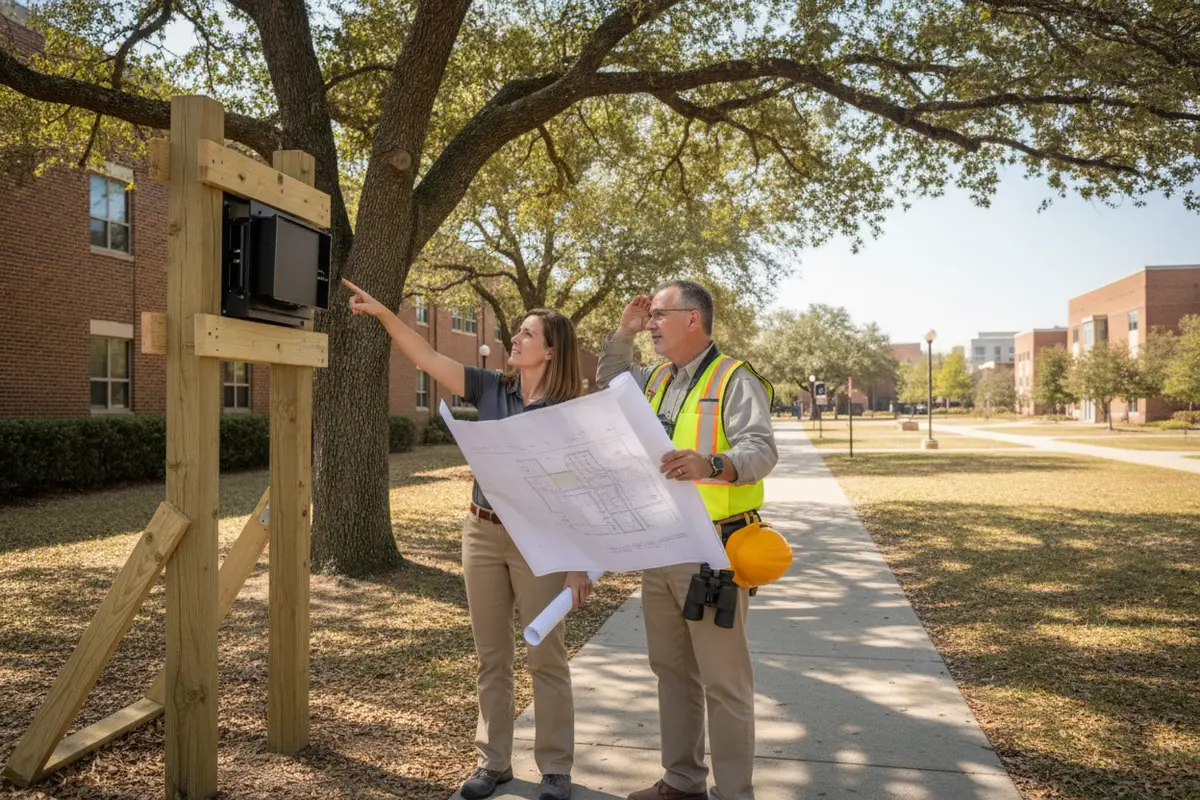
Physical conditions also affect the project scope. A freestanding installation may involve ground conditions, a foundation, access for installation equipment, utility coordination, and review of structural requirements. A building-mounted display raises different questions about the supporting structure and access. Treat these as items for appropriate project and technical review rather than assuming a standard solution applies everywhere.
For a multi-site program, repeat the review at every property. A shared sign standard may support consistent identification, but location-specific access, visibility, and approval conditions still need to be documented. Carolina Signs and Wonders’ monument sign options can be considered when evaluating how a freestanding message display might relate to permanent site identification.
Which display and implementation options should the project compare?
Compare alternatives by the job each must do and the coordination each requires. The decision is not just about the display itself. It includes placement, permanent identification, the surrounding sign program, electrical planning, construction sequence, and who will manage content. Use an early comparison to surface questions; then have the selected concept reviewed for the actual property.
| Planning choice | What to evaluate | Questions for the team |
|---|---|---|
| Freestanding or building-mounted | Available space, sightlines, structure, access, and site circulation | Which position serves the audience and can be reviewed for the site? |
| Message display alone or combined with permanent identity | Balance of changing information and fixed organization or property identification | Should the display be integrated into a larger sign design? |
| One property or several locations | Shared design standards, local site conditions, and rollout sequence | Which elements stay consistent, and how will approved variations be recorded? |
| New installation or coordinated construction project | Site preparation, utilities, trades, reviews, and access windows | Who owns each handoff and when must each decision be made? |
| Routine updates or multiple content owners | Approval steps, access, message scheduling, and removal of outdated content | Who is accountable for a current and approved message? |
- Permanent identity: Keep the organization or property name clear, even when the changing message is different.
- Message flexibility: Define the kinds of updates the organization expects and who will prepare them.
- Site fit: Compare options against recorded observations and professional technical review.
- Program consistency: Set common design rules, then record the reason for any site-specific adjustment.
When an LED display is one element in a larger identification program, consider how it coordinates with commercial business signage. A connected plan can clarify which sign identifies the property, which directs visitors, and which carries changing information.
What should the team decide about messages and operation?
A well-planned display still needs a clear operating process. Decide who can draft a message, who approves it, who publishes it, and who checks that it is no longer displayed when it becomes outdated. If a staff member is unavailable, a named backup prevents the process from depending on one person. Define how urgent notices are handled without bypassing the organization’s appropriate review.
The Conference Board has reported that marketing and communications leaders face tougher workloads. That makes it especially useful to assign content responsibilities before a new communication channel is put into operation. Read The Conference Board’s marketing and communications updates.
Set content principles while the display is being scoped, not after the hardware is installed. Keep each message focused on one main idea, use language the intended audience understands, and make key information easy to identify. The organization’s communications team should determine the appropriate message length and review rules for its audience and context. Provide existing brand standards to the sign project team so the display can be considered alongside other site elements.
- Assign a primary content owner and a backup.
- Set the approval path and identify any messages that require additional review.
- Agree how often scheduled content will be checked and expired messages removed.
- Confirm who needs operating instructions and where those instructions will be kept.
- For multiple properties, decide which messages are centrally managed and which are local.
These decisions help the team assess whether its intended use is realistic and give the project partner useful information about the operating environment. They also keep day-to-day content decisions distinct from design, installation, and technical responsibilities.
How do approvals and technical reviews affect the schedule?
Approval needs depend on the property, design, location, and applicable requirements. Confirm the review path with the relevant jurisdiction and property stakeholders before setting a committed installation date. Depending on the project, reviews may involve sign permits, structural information, electrical planning, landlord or campus approval, and coordination with construction work. The project team should verify what applies rather than assume the same process at every address.
Map the decisions and dependencies in order. For example, a final site location may be needed before permit documents can be prepared. Utility or site-preparation coordination may need to happen before installation is scheduled. If a property is under construction, the sign scope must be aligned with the general contractor’s sequence and site access rules. Record who is responsible for each submission, response, and follow-up.
For a multi-location rollout, use a site-by-site tracker with the location, review contact, documents needed, status, open questions, and next action. This provides a practical way to distinguish a shared design standard from local approvals or conditions. It also gives leadership a clearer view of which locations are ready for the next stage.
Carolina Signs and Wonders describes an end-to-end approach that includes design, permitting, engineering, fabrication, installation, and service. Explore its signage services and commercial sign installation as part of planning project responsibilities.
How should installation be coordinated with site operations?
Installation planning should account for people using the property, work-area limits, deliveries, equipment, and operating schedules. At a school, healthcare facility, municipal site, or active business campus, identify who controls access and which work windows are acceptable. Confirm how visitors, staff, and vehicles will move around the work area, and agree on who communicates schedule changes to affected stakeholders.
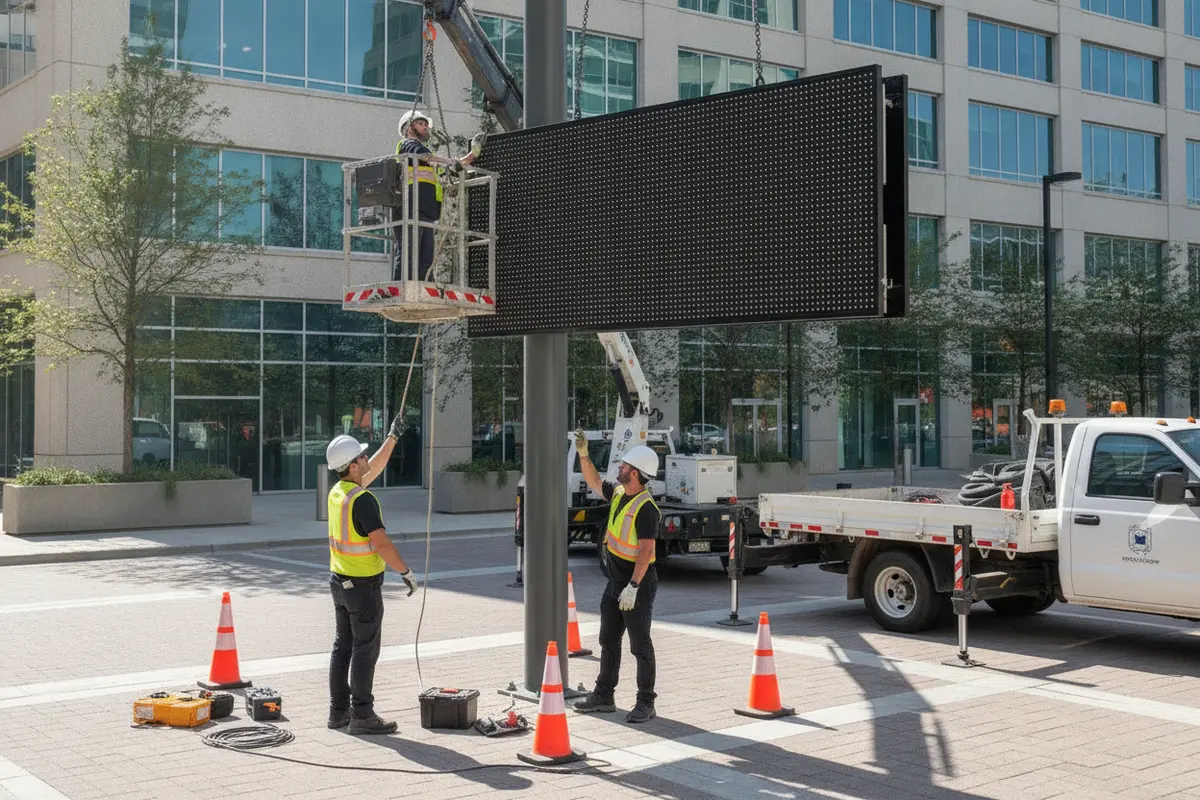
Clarify responsibilities among the sign provider, electrical professionals, general contractor, property team, and local reviewers. Put each task in the project scope: site preparation, utility coordination, approvals, installation access, and closeout. If different organizations handle different parts, set a clear handoff point and make sure the accountable contact knows when information is due.
- Set an installation window and document site access or operating constraints.
- Assign site preparation and utility coordination to named parties.
- Confirm how a schedule change or unexpected site condition will be escalated.
- Plan a final review and collect closeout information for facilities staff.
Carolina Signs and Wonders positions itself as a partner across project stages rather than only a fabricator. Review completed signage projects when considering the range of site settings and coordination needs relevant to your own scope.
How should the organization plan for long-term care?
Consider future operation as part of the initial project, not as a separate issue to address after a display is installed. Ask what routine checks the organization should plan, who will report a display concern, and how service requests will be routed. The appropriate plan depends on the equipment, site, and project scope, so ask the project team to explain relevant operating and service considerations rather than assume one maintenance schedule fits every installation.
Site conditions also inform material and construction discussions. Review exposure to weather, the surrounding environment, access for inspection, and how the sign relates to other permanent elements. Ask what construction choices are appropriate for the specific location and what documentation the facilities team should retain. Do not select materials by appearance alone; consider how the complete installation will be accessed and supported over time.
- Identify who will monitor the display and how staff will report an issue.
- Clarify what operating information and service contacts will be provided at closeout.
- Record relevant site conditions and approved construction decisions in the project file.
- Confirm how a future service visit would coordinate with property access and daily operations.
- For several sites, keep service and closeout records organized by location.
These questions help facilities and procurement teams compare project scopes on more than initial appearance. They also make long-term responsibilities visible before internal ownership changes or local staff transition. Carolina Signs and Wonders provides service as part of its stated signage capabilities; discuss the applicable support expectations for the particular project and locations.
How can a multi-location team protect consistency?
A multi-site program needs repeatable standards and a disciplined way to account for different properties. Define what must remain common, such as organization identity, basic design relationships, and content principles. Then capture site-specific conditions and approved adjustments in a location record. That approach helps avoid informal changes during installation and gives each local stakeholder a clear reference.
Use a rollout matrix to track surveys, design decisions, approvals, fabrication status, installation windows, and closeout for each address. Identify one central project contact to consolidate decisions and share updates, while naming a local contact for site access and operational questions. Keep records in a format the team can maintain after the initial rollout.
Before committing to a sequence, check whether multiple sites have different review paths, operating hours, construction schedules, or access constraints. Grouping locations may help the team organize work, but the schedule should reflect each site’s readiness. For programs across several U.S. locations, review national sign installation partner capabilities. Learn more about Carolina Signs and Wonders and its project approach.
How can the team test its plan before installation?
Before finalizing the scope, walk through a realistic use case from the audience’s point of view. Imagine a visitor approaching the property for an evening event. Where will the visitor first see the sign? What fixed information helps identify the site? What should the changing message say, and who is responsible for confirming it is current? This simple exercise can reveal whether the location, content process, and permanent identification work together.
Then review the same case with the people who will operate and support the display. Ask facilities staff to check access, maintenance considerations, and site constraints. Ask communications staff to check the approval and publishing process. Ask the project lead to identify open permit, technical, or construction questions. Record each unresolved item with an owner and next step instead of treating it as an assumption.
- Choose one routine message and one time-sensitive update that reflect actual organizational needs.
- Trace how each message is drafted, approved, scheduled, and removed or replaced.
- Check whether the proposed viewing position and surrounding signs support the intended audience.
- Review site, approval, utility, and access questions with the responsible project stakeholders.
- Update the brief and scope notes so decisions and remaining questions are visible to everyone.
For example, a school team might discover during this review that event information is set centrally, while facilities staff need local control over site access and installation timing. The planning response is not to assume one person handles everything. Instead, document the content owner, facilities contact, approval steps, and site-specific dependencies. This rehearsal gives the project team a more useful basis for a consultation and helps prevent operational questions from appearing only after installation.
How should a team select a durable project partner?
Evaluate whether a prospective partner can connect design decisions to the technical review, approvals, fabrication, installation, and service needs of the actual project. Ask how issues are raised when a site condition or schedule changes, how decisions are documented, and what information facilities staff receive at closeout. For a high-visibility or multi-location project, consistent communication and clear accountability matter at every handoff.
- Can the partner help define a scope and identify decisions required from stakeholders?
- How will design, permitting, engineering, fabrication, and installation be coordinated?
- How are different site conditions and approved variations documented?
- Which party coordinates electrical and construction interfaces when applicable?
- What operating guidance and closeout information will be provided to the facilities team?
- How can service or maintenance needs be raised after installation?
Ask for a clear explanation of assumptions, exclusions, dependencies, and next steps in the proposed scope. A consultation-based quote should reflect the project’s locations and requirements rather than relying on a generic figure. To learn about a potential partner’s approach, review its service locations alongside relevant project examples and service information.
What should an LED message board project brief include?
A useful brief gives the project team enough context to discuss scope and identify unknowns. It does not need to answer every technical question in advance. Include what is known, mark what needs review, and gather the stakeholders who can make decisions.
- Organization, project owner, decision-makers, and key site contacts.
- Purpose of the LED message board, intended audiences, and the main information it must communicate.
- Property addresses, site photographs from more than one approach, and preferred locations.
- Whether the work covers one property or a multi-location program.
- Brand standards, permanent identification needs, and expected content ownership.
- Known construction, access, electrical, operating-hour, or schedule constraints.
- Known review contacts and any documented property or local requirements.
- Desired project milestones, installation windows, and ongoing service questions.
Before sending the brief, mark which details are confirmed and which are assumptions. Attach a simple site plan or annotated photographs if available. This helps a partner ask focused questions during an initial discussion and reduces the risk of treating an unverified location or schedule as settled.
Request a consultation for your LED message board project
Frequently Asked Questions
When should we involve a sign project partner?
Involve a partner while the team is defining the purpose, preferred site, stakeholders, and schedule. Early discussion can identify technical, approval, and installation questions while the scope is still being shaped.
Can one design standard work across multiple properties?
A shared standard can support a consistent identity, but each property should be reviewed on its own. Record site conditions and any approved adjustments so the rollout remains coordinated without assuming every location is identical.
Who should manage messages after installation?
The organization should assign a primary owner and backup, establish the approval path, and decide how scheduled or expired messages will be reviewed. Include those roles in the project brief so operational ownership is clear before the display is in use.
Will every LED message board require the same approvals?
No. The review path depends on the location, design, property, and applicable requirements. Confirm the relevant steps with the appropriate jurisdiction and property stakeholders for each site.
What information helps prepare for an initial project discussion?
Bring the project purpose, site address, photographs, intended audiences, known constraints, schedule goals, and the names of decision-makers. A list of open questions is useful too; the team can identify which details need technical or local review.
Start a conversation about your signage project
With a clear communication goal, a documented site review, and defined project responsibilities, an LED message board plan can move toward a well-coordinated scope built for the property and the people it serves.


