

Pylon sign repair can involve more than restoring a dark sign face. For a property manager or facilities team, the work may include an electrical fault, damaged cabinet, loose tenant panel, structural concern, difficult site access, or permit review. A careful assessment helps separate an urgent safety issue from a visual or operational problem and gives the project team the information needed to plan the next step.
Request a project consultation
What makes pylon sign repair different from routine maintenance?
Routine maintenance is planned work that helps keep signage legible and functioning. Repair responds to a specific failure or damage event, such as a section that no longer lights. A cracked face, a displaced tenant panel, or visible movement in the structure. The distinction matters because a repair may require immediate risk controls, troubleshooting, replacement components. Or review of the sign's supporting system, rather than a standard cleaning or inspection visit.
A pylon sign is a prominent freestanding structure. Its display, cabinet, internal electrical components, support, foundation, and surrounding site conditions work as a system. A visible symptom does not always identify the source. For instance, a dark section could arise from a power supply issue, wiring fault, failed lighting component, water intrusion, or damage inside the cabinet. Replacing a face without first understanding the fault can leave the underlying cause unresolved.
Repair planning also involves more than the sign itself. A property may have multiple tenants, shared access routes, landscaping, traffic, utility connections, brand standards, and local approval requirements. The property owner or manager should identify who approves messages and appearance, who controls the site, and who needs to be notified before work begins. If the property has an existing sign program, compare the repair scope with its current standards before authorizing changes.
What should a property team check first?
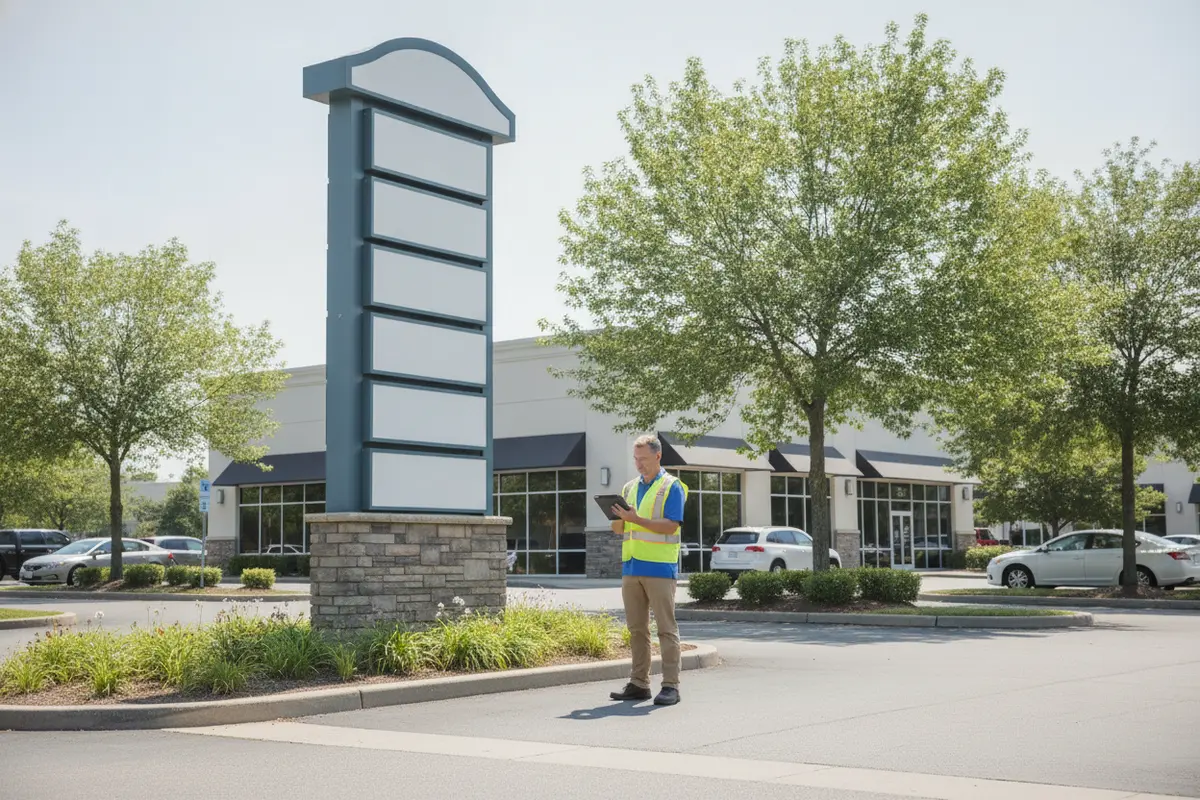
Start with observation from a safe location. Do not climb the sign, open electrical compartments, move panels, or approach a leaning or unstable structure. If there is an apparent risk of falling material, exposed wiring, smoke, or significant movement, keep people clear and contact the appropriate emergency or qualified service personnel. Treat photographs as documentation, not as a substitute for an on-site assessment.
Record what changed, when it was first noticed, and whether the symptom is constant or intermittent. Note the weather or any recent site activity if known, but do not assume a cause. Capture the full sign and the affected area from ground level. For a multi-tenant sign, record which panel or position is involved without attempting to remove it. This gives the project team a useful starting point for diagnosis.
- Identify the symptom: Is a face dark, cracked, loose, faded, or difficult to read? Is the issue limited to one panel or does it affect the whole sign?
- Note the timing: Record when the problem appeared and whether it varies by time of day or operating conditions.
- Document site context: Include nearby traffic, pedestrian routes, landscaping, construction activity, and any access constraints visible from a safe position.
- Check records: Locate the original drawings, prior permits, sign schedule, tenant panel layout, electrical information, warranty records, and previous service reports if available.
- Set an interim plan: Decide whether the affected area should be kept clear, whether tenants need notice, and who will coordinate the next assessment.
Keep observations factual. "The upper-right panel is dark after sunset" is more useful than "the transformer failed" unless a qualified assessment has confirmed that diagnosis. A concise, accurate report prevents premature scope decisions and helps avoid repeated site visits to collect basic information.
How should lighting problems be assessed?
Lighting complaints can range from one unlit portion to a complete outage, flickering, inconsistent brightness, or light escaping where it should not. The first task is to describe the pattern. Does the whole sign go dark, only one cabinet or panel, or a small area within a face? Does the symptom occur only after the sign has been on for a while? Does it affect one elevation or multiple faces? These observations help a qualified sign or electrical professional narrow the investigation.
A repair plan may need to consider the sign's power source, electrical connections, lighting components, controls, wiring, cabinet condition, and water management. A damaged seal or opening can allow moisture to affect components. Replacing a failed part without addressing an identified source of water entry may lead to another failure. Electrical work should be assessed and performed by appropriately qualified personnel, with applicable safety and code requirements considered for the specific site.
Before approving work, ask the provider to distinguish what is confirmed from what remains to be tested. A useful scope states which sections are affected, what diagnostic access is needed. What components may be repaired or replaced, and how the work will be tested when complete. Ask whether the repair changes the sign's illumination, appearance, controls, or electrical configuration. If the sign is part of a wider LED signage system, confirm whether any shared controls or operating requirements affect the proposed work.
Keep the performance goal specific. "Restore consistent illumination across the approved display" is clearer than "make it brighter," which may introduce a design or compliance issue. Where lighting levels or operating hours are governed by property rules or local approvals, confirm those requirements before changing equipment or controls.
When does cabinet or face damage need a broader review?
Cabinet damage may be limited to a replaceable face, trim, access door, or finish, but the visible damage can also indicate a deeper problem. Look for cracking, distortion, loose fasteners, open seams, water marks, corrosion, missing covers, or signs that components inside may be exposed. Do not assume damage is cosmetic because the sign still lights. Conversely, a worn finish does not by itself establish that the support structure is unsafe.
The repair scope should identify the damaged part and check adjacent areas that could be affected. If only a face is being replaced, verify that the new face fits the existing cabinet and maintains approved messaging, color, and visibility. If the cabinet itself is bent or its attachment points are compromised, the plan may need a more comprehensive inspection before a face replacement is authorized. Ask how the proposed repair protects the enclosure and addresses any apparent water path.
Appearance matters on a multi-tenant property. A replacement panel should match the property's established sign program, not simply approximate the old panel from a photograph. Confirm the tenant name, logo artwork, colors, layout, and position with the authorized approver. If the property has a standard for panel dimensions or ordering, use the current approved file and specifications. For a broader view of how pylon sign formats are planned, see this guide to pylon signs.
- Face-only repair: Appropriate to consider when the cabinet and attachment points are sound and the issue is confined to a damaged or outdated face.
- Cabinet repair: Consider when the enclosure, trim, access components, seams, or mounting details are damaged and need attention alongside the face.
- System-level assessment: Consider when damage is recurring, multiple areas fail, there is evidence of moisture or movement, or the source is not clear.
These are planning categories, not a remote diagnosis. An on-site professional should confirm the actual condition and whether the proposed work is suitable for the existing sign.
What structural warning signs call for prompt attention?
Structural concerns deserve a different response from a purely visual issue. Examples to report include a sign that appears to lean, visible movement, a shifted base. Damaged support members, loose or missing connections, cracking around the base, or new separation between parts. These signs do not establish the cause or severity, but they warrant prompt review by qualified professionals. Keep people away from the area if there may be a risk and follow the property's safety procedures.
Do not treat a new panel, a fresh coat of finish, or a lighting repair as a structural fix. The supporting structure, connections, foundation, wind exposure, and site condition may need evaluation. If a sign has been struck or has sustained storm or construction damage. Document the event and visible changes, then seek a site-specific assessment before deciding what can safely be repaired. The scope may call for engineering review, component replacement, reinforcement, or a different project approach; that determination depends on inspection and applicable requirements.
Keep the assessment focused on evidence. Give the evaluator the sign's known history, drawings or previous approval documents, photographs, and a description of the change. If documents are missing, say so rather than assuming the original design. A professional installation or repair plan can then be coordinated with the appropriate engineering and permitting work. Learn more about how commercial sign installation fits into planning for site work and access.
How do tenant panels affect the repair plan?
Tenant panels create an approval and coordination layer that single-message signs may not have. Before changing one, identify the authorized decision-maker for the property and the tenant. Confirm the correct tenant name and artwork, panel dimensions, location in the sign, and any property-specific design rules. If a tenant has changed names or vacated, determine whether the work is a repair, a panel update, or part of a larger sign program change.
Use a written panel schedule when several tenants or positions are involved. It should identify each panel by sign position, tenant, approved artwork version, intended action, and approval status. This simple record helps prevent a correct panel from being installed in the wrong slot or an unapproved variation from being fabricated. It also supports consistent decisions if repairs are being planned at several properties.
Panel work may be coordinated with cabinet access, lighting diagnostics, or other repairs, but the team should verify that the combined scope is technically appropriate. For example, a panel change does not resolve a light failure if the source is elsewhere in the cabinet. Likewise, an electrical repair should not inadvertently alter an approved panel's appearance. Keep the tenant communication clear about timing, temporary visibility impacts, and the person who will confirm completion.
What access and permitting questions should be resolved?
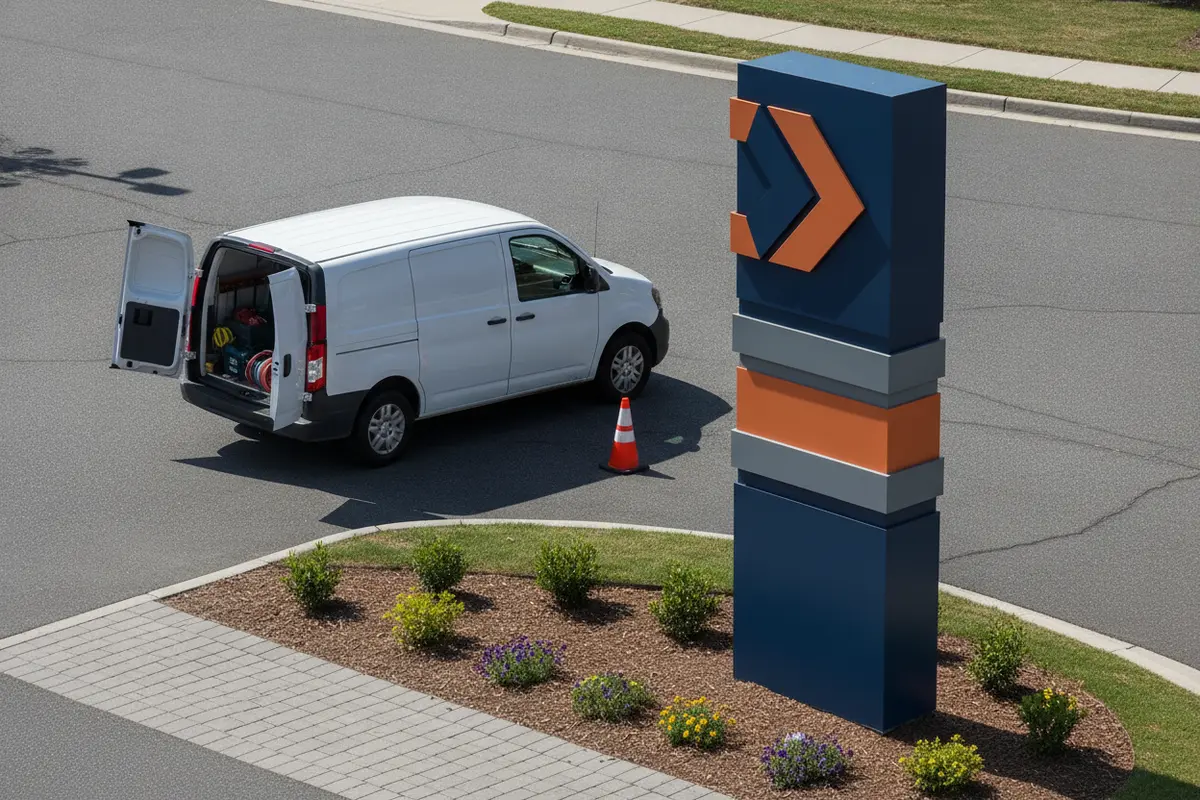
Access conditions can affect the work method, schedule, traffic plan, equipment needs, and cost. A pylon sign may sit beside an active drive, parking area, sidewalk, building entrance, landscaping, or utility corridor. The team should identify where equipment can safely set up, whether lanes or parking spaces need temporary control, what hours minimize disruption, and who can authorize site access. Do not promise a work date until the provider has reviewed the actual site and any required approvals.
Provide current site information where available: photographs, a site plan, known underground or overhead conflicts, property access rules, security requirements, and contact details for the on-site representative. Confirm whether the work area needs cones, barriers, traffic coordination, tenant notices, or a temporary pedestrian route. These details should be assessed for the particular location rather than assumed from a prior project.
Permitting and sign rules depend on jurisdiction, site, and scope. A repair that changes only a component may be treated differently from work that changes sign dimensions, location, height, structure, illumination, or message. Do not rely on a general rule or another property's approval as a substitute for checking the authority having jurisdiction. Georgia Tech's signage standards, for example, state that exact pylon locations and quantities are determined for individual projects. This illustrates why site-specific confirmation matters, not a rule for other jurisdictions. Review the Georgia Tech Signage Standards and Guidelines alongside the relevant local requirements for your own site.
Ask the project team to clarify who will identify required permits, submit documentation, coordinate reviews, and confirm approvals before work. Preserve existing permit records if available. If drawings or approvals cannot be found, flag that uncertainty early. The sign's history and current condition may affect what documents are needed and how the work should be sequenced.
How can owners compare repair approaches?
There is not one correct response for every pylon sign problem. Compare options against the verified condition, the property's identity requirements, expected service life, approvals, and disruption. A low-scope repair may be sensible when the affected component is isolated and the remaining sign is in serviceable condition. Repeated failures, extensive damage, or uncertain structural conditions can justify a broader assessment before committing to another component-level fix.
| Approach | Best fit to evaluate | Questions to resolve |
|---|---|---|
| Targeted component repair | A confirmed, localized fault with otherwise serviceable sign components | Has the cause been identified? Will the fix include testing and confirmation of adjacent conditions? |
| Cabinet or panel repair | Damage or wear confined to the enclosure, face, trim, or tenant display | Are the cabinet, attachment points, artwork, and panel schedule verified? |
| Electrical troubleshooting and repair | One or more illumination or control symptoms requiring qualified diagnosis | What has been tested? Are power, components, wiring, enclosure condition, and final operation addressed? |
| Structural evaluation and repair planning | Visible movement, impact, support damage, recurring concerns, or uncertain condition | Who will assess the structure? Is engineering or permit review required before repair? |
| Broader replacement planning | Extensive damage, repeated repair needs, changed property requirements, or a sign outside the approved program | Can one scope coordinate design, approvals, fabrication, electrical work, installation, and service? |
When reviewing proposals, compare scope rather than just the headline. A clear proposal identifies the observed condition, exclusions, assumptions, access needs, approval responsibilities, testing, and closeout documents. Ask whether concealed damage could change the scope and how that possibility will be communicated before additional work proceeds. A documented change process helps the owner control decisions and keep stakeholders informed.
How should the repair be coordinated from assessment to closeout?
A clear sequence makes it easier to keep property teams, tenants, technical specialists, and installers aligned. The exact sequence can vary, but these steps give the owner a practical framework:
- Assign a project contact. Name the person who can arrange site access, collect records, and provide decisions. Identify a backup if the primary contact is unavailable.
- Document and triage. Record the symptom, urgency, affected panel or sign face, known history, and any safety concerns. Keep people clear of a possible hazard while awaiting qualified review.
- Arrange a site assessment. Give the provider the observations, site restrictions, and available drawings. Ask what additional information or access is needed to diagnose the condition.
- Confirm the scope and approvals. Separate confirmed repairs from optional work. Establish who will verify permit needs, engineering requirements, tenant approvals, artwork, and property standards.
- Coordinate work timing. Review equipment setup, traffic and pedestrian management, tenant notices, site access, and any operating-hour limitations before booking installation or service.
- Test and document completion. Confirm the approved repair has been completed, the affected components operate as intended, and any changed tenant panels match authorized artwork. Request appropriate closeout information and retain it with the sign records.
For owners overseeing more than one location, use a consistent intake form and repair log. Track location, sign identifier, reported issue, date reported, safety action, assessment, approvals, scope, completion status, and follow-up. Standardized records can expose repeated faults and help a facilities team prioritize work, while still allowing each sign's site conditions and jurisdiction to be evaluated individually.
Carolina Signs and Wonders describes its work as spanning design, permitting, engineering, fabrication, installation, and ongoing service. For a project that needs coordinated sign work, review its signage services and project portfolio, then share the specific sign condition and site requirements during consultation. A provider should be able to explain how its proposed process fits the project, rather than treating every repair as the same task.
What information should you prepare before requesting a repair plan?
A focused project brief can make the first conversation more productive. It does not need to diagnose the fault. It should help the provider understand the sign, the reported problem, the people who need to approve work, and any known constraints.
- Property name and address, plus the location of the sign within the site.
- Number of sign faces and tenants affected, with photos taken from safe ground-level positions.
- A plain-language description of the symptom and when it was first noticed.
- Known incident details, such as reported impact or recent nearby work, without speculation about cause.
- Available sign drawings, permit information, electrical records, tenant panel schedule, and prior service history.
- Property access, operating-hour, security, traffic, and pedestrian requirements.
- Names or roles of the people authorized to approve artwork, site access, and project scope.
- Any deadline or operational concern that the project team should consider while assessing options.
With these facts in hand, owners can ask useful questions: What has been confirmed on site? What is still uncertain? Does the repair affect the structure, electrical system, sign appearance, or permitted configuration? Which approvals are required before work? How will the team test the repair and document closeout? Specific answers help decision-makers compare proposals and manage risk without assuming that a visible symptom tells the whole story.
Discuss your pylon sign repair needs
Frequently Asked Questions
Can a dark section of a pylon sign be diagnosed from a photo?
A photo can show which area appears dark and help document the symptom, but it usually cannot confirm the electrical or component failure. A qualified on-site assessment may be needed to inspect the sign and determine the cause and repair scope.
Should a property manager replace a damaged tenant panel right away?
First confirm the panel's condition, the correct approved artwork, its position, and who is authorized to approve the change. If there is a safety concern or the panel is loose, keep people clear and arrange prompt professional review rather than attempting to remove it.
Does every pylon sign repair require a permit?
Requirements depend on the jurisdiction, site, and proposed scope. Ask the project team to check with the relevant authority before work begins, especially if the work changes the sign's size, location, structure, height, illumination, or configuration.
When should an owner consider a structural assessment?
Seek qualified review when the sign appears to lean or move, supports or connections look damaged, the base has changed, or the sign has experienced impact. These observations do not establish the cause, so do not treat a visual check as an engineering determination.
What should be included in a repair closeout?
Request a record of the work performed, any components changed, test or operational confirmation, updated panel or sign information when relevant, and applicable approval documents. Keep the closeout with the property's sign and permit records for future planning.
When a pylon sign develops a problem, a documented assessment and clearly coordinated scope help property teams protect people. Preserve the approved sign program, and make a sound repair decision.


