


For a nursery or garden center, blade signs can help visitors identify an entrance or destination as they approach along a walkway or drive. Because a projecting sign is visible from more than one direction, it can support wayfinding where a flat wall sign may be difficult to see. A successful plan starts with the visitor route, the building, and the sign’s role in the wider property identity.
Request a project consultation
What should blade signs do at a nursery or garden center?
Start by assigning the sign one clear job. It might identify the customer entrance, a greenhouse, a garden department, a pickup point, or an office. The sign should help a visitor make a decision at the moment they need to make it. Avoid repeating information that is already obvious from another sign or crowding several directions onto one face.
Walk the property from the visitor’s point of view. Note where people arrive, where they turn, and where they need to recognize a destination. A visitor driving into the site has different needs from someone walking between greenhouses. Record each important approach and the approximate point where the sign should first become visible.
- Identify the approach direction and decision point for each destination.
- Check whether a facade, canopy, tree, seasonal display, cart, or parked vehicle obscures the proposed location.
- Separate customer wayfinding from operational messages for deliveries and staff.
- Decide whether the sign identifies one place or belongs to a coordinated property-wide system.
On a multi-building property, treat the blade sign as one part of the sign plan. A projecting marker might work alongside a primary entrance sign, interior wayfinding, and building identification. Carolina Signs and Wonders provides custom sign solutions for projects where elements need to work together.
How should the team assess the site?
Document the mounting surface and surroundings before selecting a design. A site review should record wall material and condition, available mounting area, nearby doors and windows, lighting, pedestrian circulation, and building features that could affect attachment. Photograph the facade from relevant approaches, and include a wide view that shows the sign location in context.
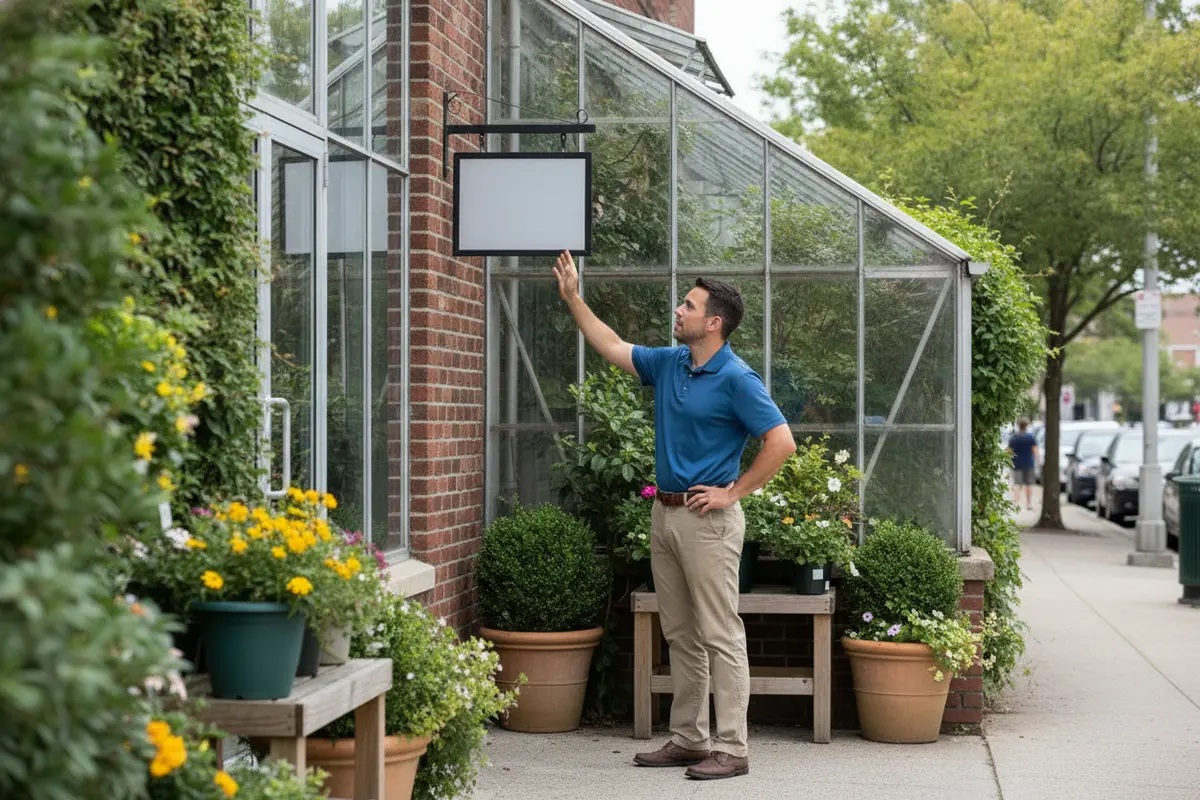
For a garden center, the surroundings are active and change through the year. Note irrigation lines, temporary structures, greenhouse entrances, outdoor merchandise displays, and routes used by customers and delivery vehicles. A sign near a path or corner also needs a review of overhead clearance and pedestrian movement. Do not assume the site looks the same in every season.
Make a simple sightline record. Stand at several approach points and photograph what a visitor sees at eye level. Note whether foliage, shelves, display tents, or parked vehicles block the proposed sign. If a view is clear only when a display is absent, consider another location or define a seasonal operating plan for that area.
Record existing conditions rather than relying on memory. A useful site brief includes the property address, building elevation, proposed mounting area, approximate dimensions, photos, intended viewing angles, and known construction constraints. These details give the design and engineering teams a basis for evaluating feasibility before a final design is chosen.
Which blade sign options should decision-makers compare?
Compare the sign’s purpose, viewing distance, building context, maintenance needs, and electrical requirements. The table is a starting point; final specifications depend on site conditions, project requirements, and local approvals.
| Planning choice | Useful when | Questions to resolve |
|---|---|---|
| Single-sided or double-sided face | Visitors approach from one direction or several | Will visitors see both sides? Should copy match? |
| Illuminated or non-illuminated | Visibility is needed after dark or mainly during daylight operations | Is power available? Who coordinates electrical scope and service access? |
| Compact or larger projecting format | The facade is constrained or the approach calls for greater visibility | What are the viewing distance, mounting limits, and clearance needs? |
| Standalone marker or coordinated sign family | One destination needs identification or several areas need consistent wayfinding | How should typography, color, materials, and hierarchy relate? |
- Visibility: Letter size, contrast, viewing angle, and distance influence whether a message can be understood quickly.
- Durability: Exterior exposure, moisture, sun, wind, and routine cleaning should inform material and finish choices.
- Electrical scope: For an illuminated sign, establish power access, controls, connection responsibilities, and service access.
- Brand fit: Keep logo proportions, colors, and typography consistent with approved brand standards.
A non-illuminated sign may be appropriate for a destination that operates in daylight and has a clear approach. Illumination may support visibility in lower-light conditions, but it adds electrical coordination and maintenance considerations. Review LED signage capabilities as a separate communication option when the project has broader electronic messaging needs. A blade sign and an electronic display have different roles.
Material selection should also account for the building and the expected care routine. Ask how the face, edges, finish, and mounting hardware will stand up to the property’s exposure. Consider whether staff can safely clean the sign and whether a component that may need service is accessible without disrupting customer routes. A design that looks attractive in a rendering still needs to work in the operating environment.
What approvals and coordination should be settled early?
Sign permissions depend on the property and jurisdiction. Confirm who owns the building, who controls the site, and whether a landlord, property manager, architectural review group, or public authority must approve the sign. Ask about applicable size, placement, projection, illumination, and permitting requirements before fabrication begins. Do not assume an existing sign establishes what is allowed for a new one.
Public projects can include custom fabricated signs placed on new and existing structures as part of a broader wayfinding scope. For example, the City of Durham’s downtown wayfinding request describes custom signs and structural work in its scope. The specific requirements for a nursery project still need confirmation with the property owner and relevant local authority.
For a garden center, the sign may be one part of a larger property improvement. Coordinate facilities, marketing, operations, the property owner, and the sign project lead. If construction or landscaping is underway, align the sign schedule with facade access, paving, electrical rough-in, and planting so completed work is not disturbed.
When a project includes public-facing routes or multiple sign types, map the visitor journey and review wayfinding and accessibility considerations as part of the overall package. Requirements vary by sign type and location, so confirm applicable rules with the relevant authority and project professionals.
Put responsibilities in writing. Establish who supplies final brand files, confirms site dimensions, submits applications, coordinates electrical connections, provides access equipment, and approves proofs. A turnkey project plan can connect design, permitting, fabrication, installation, and service so responsibilities do not fall between vendors.
How should a sign work in a changing garden center?
Plan for a working landscape, not just a photograph taken on one day. Seasonal merchandise and plant growth can change sightlines. Avoid locations where displays are likely to conceal the sign, and consider whether a future change in entrance use would make its message inaccurate.
Keep the primary message concise. A visitor should be able to recognize the destination without stopping to read a paragraph. Put supporting directions on other signs where they can be understood at the right point along the route. If department names change often, discuss how the sign’s content and construction could support future updates.
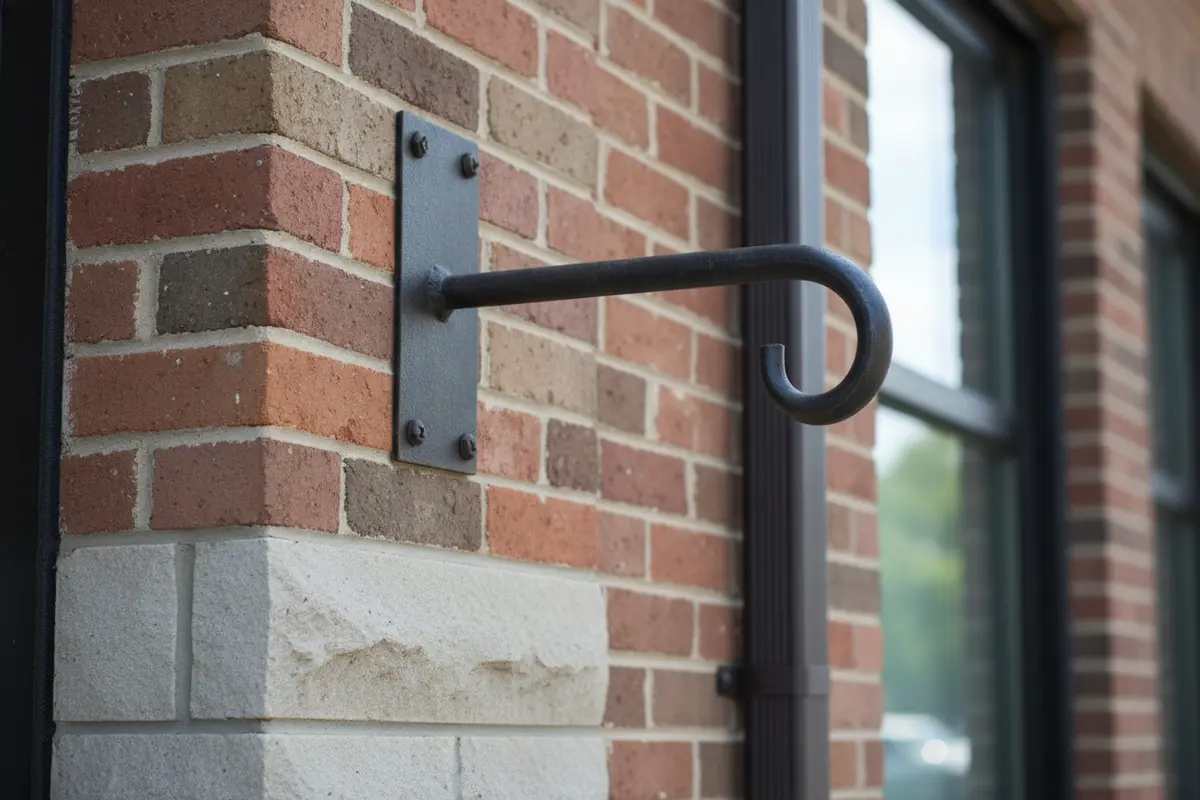
Design and mounting must be considered together. The bracket and attachment method need to suit the building substrate and anticipated conditions. Have qualified project professionals assess structural needs rather than choosing a mount on appearance alone. The plan should also include a practical installation path and a way to reach the sign for future maintenance.
Review the complete visitor sequence before finalizing the message. If the sign identifies a greenhouse, for example, ask whether a visitor can see the next directional cue after turning toward it. A marker that solves one decision but leaves the next step unclear may not improve the overall route. A small route sketch can expose missing cues before production.
How can installation be coordinated with site operations?
Agree on the installation sequence before the sign arrives. Confirm access hours, work zones, customer circulation, loading activity, equipment requirements, and areas that must remain open. At a busy garden center, installation may need to avoid peak customer periods or coordinate around deliveries and outdoor displays.
Identify the person who can make on-site decisions and approve a field adjustment. Share schedule changes promptly, and document conditions that differ from the site survey. If multiple signs are involved, sequence work to preserve consistent alignment and reduce repeat disruption. Keep staff informed about temporary changes to entrances or paths.
Before installation day, verify that the mounting area is accessible and that planned construction or landscaping has not changed the site conditions. Confirm whether the work area needs temporary barriers, whether equipment can reach the location, and how the team will protect nearby merchandise and planting. A brief pre-installation check can prevent avoidable delays.
Carolina Signs and Wonders offers commercial sign installation. On a larger property, a monument sign or another primary identification element may complement a blade sign, depending on visibility and site needs. The signage services overview can help project stakeholders frame a broader scope.
What should be included in a project brief?
A clear brief helps the signage partner assess scope, identify missing decisions, and coordinate stakeholders. Include the following information:
- Property address, ownership or approval contacts, and schedule constraints.
- The destination the blade sign will identify and the visitor approach it serves.
- Photos, elevations, approximate dimensions, wall information, and visible obstructions.
- Brand standards, approved logo artwork, color guidance, and proposed copy.
- Whether illumination is under consideration and what is known about power access.
- Related building, wayfinding, entrance, or campus signs that should coordinate with it.
- Known permitting, landlord review, construction, landscaping, and site-access requirements.
- Expectations for installation, closeout documentation, inspection, and ongoing service.
Add a short explanation of the problem the sign should solve. “Mark the greenhouse entrance from the main customer path” is more useful than “make a blade sign.” Include which approach matters most and whether the message has to work for customers arriving on foot, by vehicle, or both.
Share the brief with the people who will approve the design and manage the site. Marketing can confirm brand standards; facilities can verify building conditions; operations can flag traffic patterns; and the property representative can identify review procedures. Early alignment helps avoid late changes to copy, mounting position, or installation timing.
For visual discussion, the project portfolio can help stakeholders compare the role and scale of signage in commercial settings. Keep the reference focused on the project’s function and context rather than selecting a design before the site is understood.
How do you choose a partner for blade signs?
Look beyond the sign face. An exterior project may call for design coordination, permitting, engineering review, fabrication, electrical work, installation, and a service plan. Ask how these responsibilities are managed and who owns communication when the project involves several stakeholders or locations.
Evaluate whether the partner can work from site information, coordinate technical disciplines, and maintain brand consistency. For multi-location organizations, ask how local conditions will be documented while the sign family remains consistent. Review the company overview and service information as part of your project assessment.
Before approving a proposal, confirm what is included and what depends on third-party decisions. Clarify the expected design review steps, permit responsibilities, site access assumptions, electrical scope, installation coordination, and closeout information. A written scope makes it easier for facilities, procurement, marketing, and operations to review the same plan.
Discuss your garden center signage project
How can the team test a proposed sign plan?
Before settling on the design, review it against realistic conditions rather than a single elevation drawing. Use site photos and approach notes to mark where the sign should become visible, what a visitor should understand, and which physical features could interfere. Ask a colleague who was not part of planning to follow the route using only the proposed sign locations. Their questions can reveal a missing cue or a message that assumes too much familiarity with the property.
Consider three practical scenarios. First, examine a typical busy day, when carts, vehicles, and outdoor displays occupy their normal spaces. Second, consider a seasonal change, when taller plants or temporary merchandise may screen the sign. Third, review a lower-light arrival if the destination is open during evening hours. For each scenario, note whether the sign remains visible and whether another sign is needed to complete the route.
Check the design at its intended scale. A detailed proof on a computer screen can make copy seem more readable than it will be at the actual viewing distance. Review the number of words, contrast between the message and background, and the open space around the content. If a visitor has only a moment to look, prioritize the destination name and remove supporting details that belong elsewhere.
Use a simple decision log to keep feedback actionable. Record the issue, the person responsible for resolving it, and the decision date. For example, a note might state that the greenhouse marker is obscured from the west path during the growing season, with facilities responsible for confirming an alternate mounting area. This is more useful than a general comment that the sign should be easier to see.
What should happen after the sign is installed?
Closeout should confirm that the installed sign matches the approved plan and that the intended route works in practice. Have the project contact inspect the sign from the documented approach points, check the face and mounting area, and note any difference between field conditions and the design. For an illuminated sign, confirm that the agreed electrical and control arrangements are operating as intended through the responsible project professionals.
Give site staff a concise handoff. They should know what the sign identifies, who to contact about damage or service, and whether nearby seasonal displays should be kept clear. If the location depends on a particular sightline, include that information in routine site planning so later changes do not gradually block the sign.
For properties with multiple buildings, keep a record of sign locations, approved artwork, materials, and relevant maintenance details. This makes future updates easier to coordinate and helps the organization preserve a consistent visual system. Keep the record with facilities documentation rather than relying on one person’s memory.
After staff and customers have used the route, gather practical observations. Ask whether visitors still stop to ask where the destination is, whether the sign is visible from the expected approach, and whether landscaping or merchandise has changed the view. Treat those observations as input for a future adjustment, not as a reason to add more words immediately. Recheck the whole route before changing one element.
Frequently Asked Questions
Where do blade signs work best?
They can help where visitors need to identify a destination from an approach that is not directly in front of the building face, such as along a pedestrian route. Placement depends on sightlines, mounting conditions, clearance needs, and approvals.
Should a garden center blade sign be illuminated?
That depends on operating hours, ambient light, viewing distance, and the sign’s role. Consider power access, electrical coordination, and maintenance alongside visibility needs before choosing an illuminated design.
Can one blade sign guide visitors to several departments?
A single sign is usually clearest when it identifies one destination or a concise group of destinations. If visitors need several turns or detailed directions, plan a coordinated wayfinding system instead of crowding instructions onto one face.
What information should we provide to request a quote?
Share the site address, photos, intended location and purpose, approximate dimensions, brand standards, schedule, and known approval or electrical constraints. These details help the team assess the project and identify next steps for a custom quote.
How do you move from planning to a quote?
Start with the visitor route, building conditions, and the sign’s precise job. With those decisions documented, the project team can evaluate design, approvals, fabrication, and installation as one coordinated scope. Share your project details to discuss a blade sign or a broader commercial signage plan.


