


Custom engraved signs give a commercial property a durable way to mark donors, departments, company names, and directories. They can combine brand character with durable information, but the best result depends on more than selecting a font and material. A project team should define the sign's job, substrate, engraving method, contrast, mounting, accessibility needs, and approval path before custom sign fabrication begins.
Call (704) 625-2345 to get a free quote
What should custom engraved signs accomplish?
In brief: A custom engraved sign should communicate a specific identity or direction clearly, remain appropriate for its environment, and fit the property's broader signage standards. Define the message and audience before choosing the finish.
Start with the task the sign must support. A room plaque may help visitors confirm a destination. An office sign may identify a department or tenant. A donor or recognition plaque may need a more formal presentation. An exterior identification sign may need to be legible at a greater distance and withstand changing weather. These are different communication jobs, even when each uses engraved lettering.
Write the purpose in one sentence and assign an owner for the message. Facilities may own room names, the brand team may own typography and logo use, and a property owner or architect may control exterior appearance. Establishing those responsibilities early prevents late changes that affect artwork, materials, or mounting.
- Identify: Name a room, department, tenant, building, donor, or destination.
- Orient: Help people confirm where they are within a larger property or campus.
- Reinforce the brand: Use approved colors, type treatments, and naming conventions without sacrificing legibility.
- Support operations: Leave room for durable updates when departments or tenants change.
- Present a lasting finish: Make the sign feel appropriate to the architecture, audience, and expected service life.
Which materials fit a custom engraved sign project?
In brief: Choose the substrate based on location, exposure, viewing distance, desired visual weight, maintenance expectations, and whether the sign has accessibility or identification requirements. A material sample should be reviewed in the intended lighting before production.
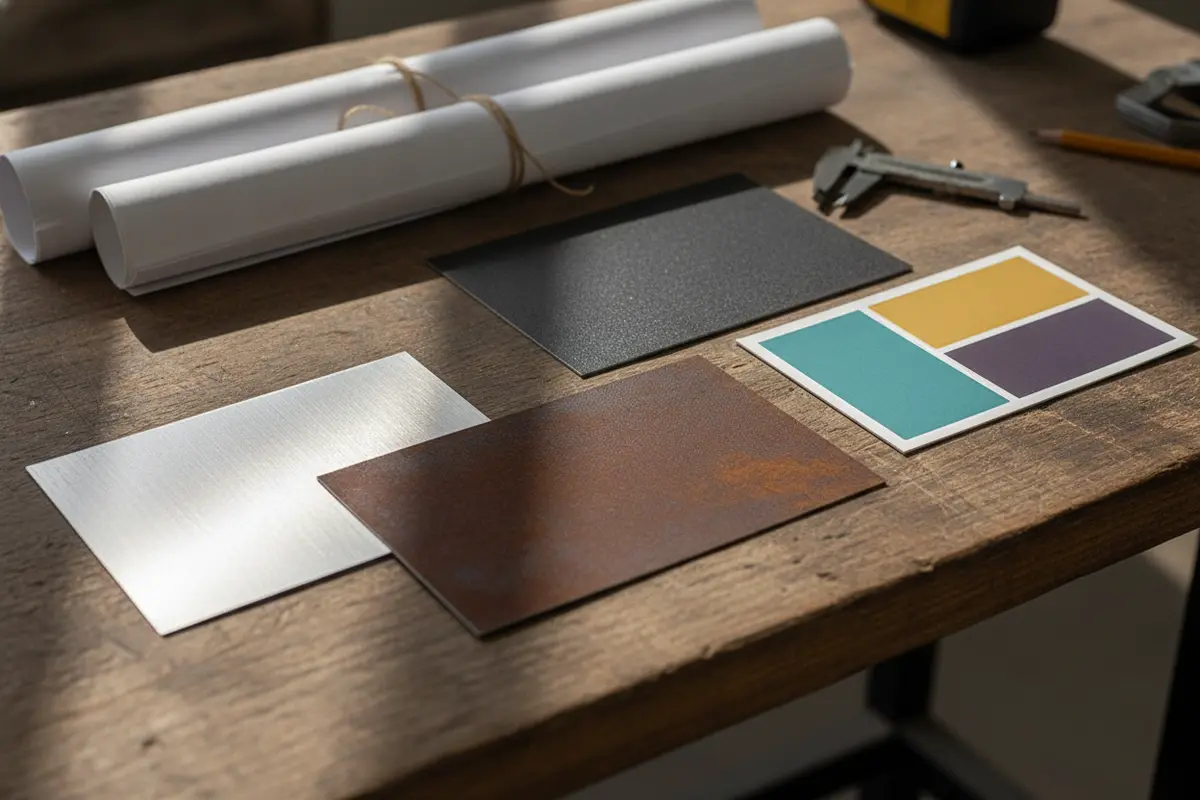
Engraving can be used with several sign materials, but the visual and performance result changes with each one. Metal can create a precise architectural appearance and may suit exterior plaques, directories, and formal recognition applications. Acrylic can provide a clean face with strong color and finish options for lobbies and interior rooms. Wood or wood-look materials may support a warmer setting when the environment and maintenance plan allow. PVC and other fabricated substrates can be useful when weight, routing, or a specific finish is part of the design.
Do not select a substrate from a small screen image alone. Compare full-size or representative samples for edge treatment, surface texture, letter contrast, reflected light, and how the material sits beside nearby walls, flooring, doors, or architectural metals. A design that looks balanced in a rendering can feel too reflective or too low-contrast in a corridor.
| Project consideration | What to compare | Questions for the fabrication review |
|---|---|---|
| Interior room or office plaque | Face finish, contrast, thickness, and mounting | Will the plaque remain legible under corridor lighting and coordinate with doors and hardware? |
| Exterior identification plaque | Weather exposure, coating, hardware, and cleaning | What will rain, sun, temperature changes, and site maintenance require over time? |
| Recognition or donor plaque | Letter hierarchy, finish, borders, and update strategy | How should names, dates, logos, and future additions be organized? |
| Tactile or accessible sign | Character treatment, Braille, contrast, and mounting location | Which applicable accessibility requirements and project standards must be reviewed before fabrication? |
For a larger program, document the approved material and finish as part of the sign standard. Include a sample reference, finish name, thickness, edge treatment, and cleaning guidance. That record helps a future sign match the original instead of relying on a vague description such as “brushed metal.”
How should engraved lettering and artwork be specified?
Engraved lettering is only useful when the viewer can read it quickly. Specify the typeface, letter case, character spacing, line spacing, message hierarchy, logo treatment, and contrast. Share the approved artwork as a vector file when possible, and identify which elements are fixed and which may change from sign to sign.
Review the intended viewing distance and lighting at the same time. A small interior plaque can support a more detailed layout than a sign read from a parking area. Shallow or subtle engraving may look refined at close range but disappear when glare, shadow, or low light reduces contrast. The fabricator should show how the final process will create the visual separation between the engraved area and the face.
Build a naming schedule before individual signs are released. The schedule can list sign ID, location, final wording, room or department owner, material, finish, mounting method, and accessibility review status. It becomes the source for artwork proofing, fabrication, installation, and closeout.
- Use the exact approved spelling for departments, names, and locations.
- Separate permanent identification from changeable information.
- Confirm whether a logo is required, optional, or prohibited for that sign type.
- Check capitalization and abbreviations against the property's wayfinding standard.
- Review a physical or accurately scaled proof before releasing a full batch.
When do accessibility requirements affect an engraved sign?
In brief: Engraving is the wrong method for a permanent room or space ID. A recessed letter is not a raised character. Those signs need raised characters and Grade 2 braille.
The U.S. Access Board's Guide to the ADA Accessibility Standards, Chapter 7, ties the rule to the job of the copy. Where a sign identifies a permanent room or space, visual and tactile characters are required. That includes room and floor numbers, room names, and labels for restrooms, locker rooms, cafeterias, libraries, conference rooms, and mechanical rooms. Raised characters must be at least 1/32 inch, uppercase, and sans serif, and the same content must be repeated in Grade 2 braille.
Some signs are exempt. Temporary signs posted for 7 days or less, directories, occupant names, and company names and logos do not have to be raised or brailled. A donor plaque or an engraved company name can stay engraved. A permanent room identification cannot.
Do not fold the tactile spec into this article. Use ADA restroom signage planning for which openings belong on a tactile schedule, and ADA and wayfinding signs for the program. If the lobby needs cut letters with depth, that is interior dimensional lettering, not an engraved plate.
How should the site and mounting details be reviewed?
A finished plaque is only as successful as the surface and hardware supporting it. Review wall construction, door and frame conditions, stud or anchor locations, clearances, adjacent trim, and the path installers will use to reach each location. For exterior signs, add exposure, drainage, expansion, vandalism risk, and maintenance access to the review.
Photograph each location and mark the sign ID on a plan. Note whether the surface is masonry, drywall, glass, metal, wood, or another finish. If the project is part of a new build, coordinate with the architect and general contractor before walls are closed. If it is a renovation, coordinate around occupied spaces, infection-control requirements where relevant, tenant hours, and security procedures.
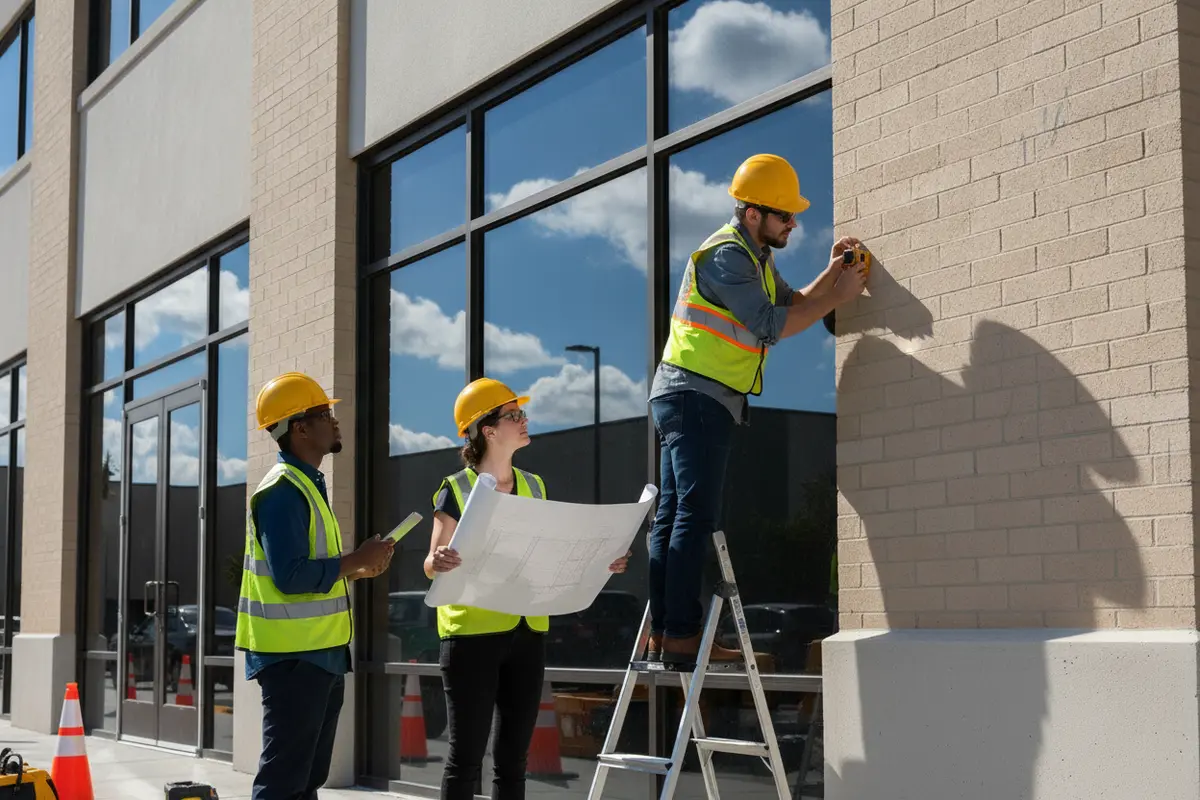
Mounting should support the sign without distracting from the message. Concealed hardware can create a clean appearance, while standoffs or visible fasteners may be appropriate to the design and substrate. Confirm the hardware finish and whether the installer needs blocking, special anchors, templates, or a field adjustment.
What approvals should happen before fabrication?
Use a defined approval path rather than sending artwork to several stakeholders without a decision owner. A typical commercial review may include the brand team, facilities, property owner, architect, general contractor, accessibility reviewer, and local authority. The exact sequence varies by project, but each review should have a named deliverable and a record of approval.
- Message approval: Confirm names, room numbers, departments, and required logos.
- Design approval: Confirm layout, materials, finish, scale, contrast, and sign standard.
- Technical review: Confirm mounting, structure, clearances, access, and any electrical coordination.
- Accessibility review: Confirm the sign types and locations that require specific treatments.
- Property or permit review: Confirm landlord, municipality, campus, or development requirements.
- Fabrication release: Record the approved proof and the date it was released.
For exterior or multi-location work, a complete signage package may require permitting or property review. A sign partner can help identify the information needed for that path, but the project should not assume that one approval covers every address or sign type.
How can fabrication and installation stay coordinated?
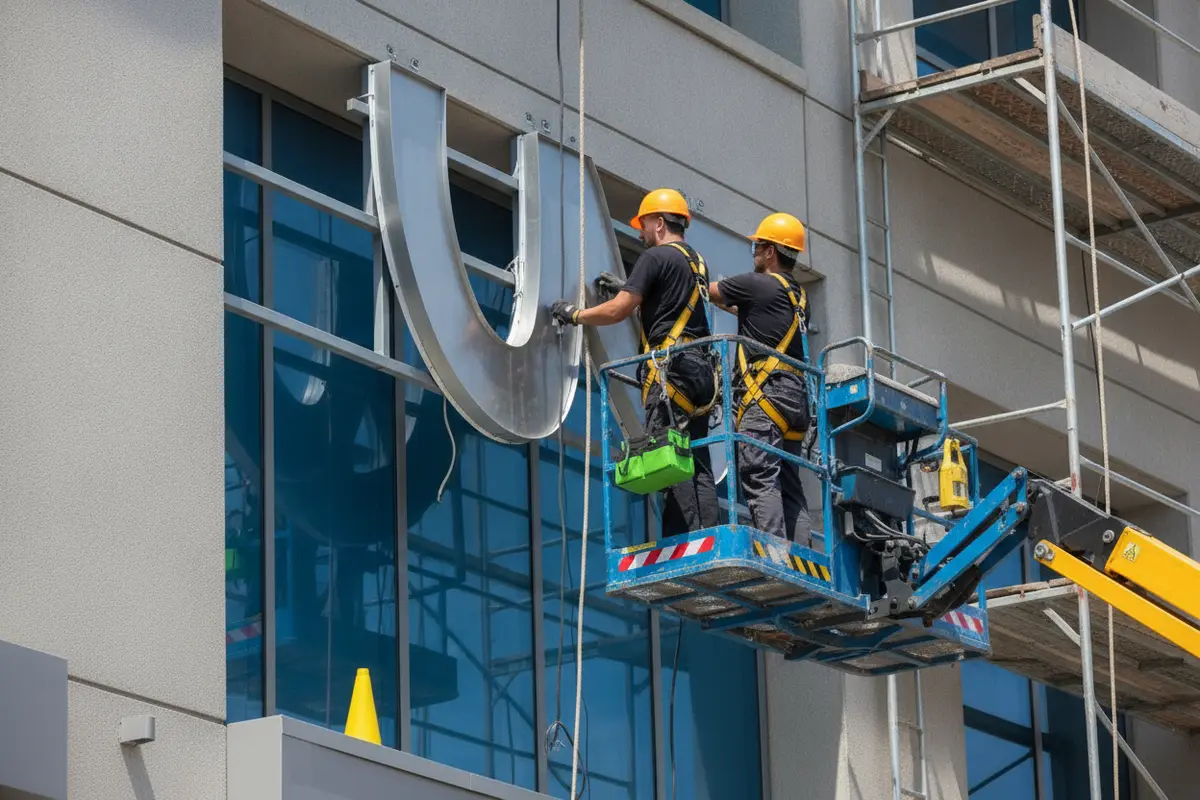
Engraved sign programs are easier to manage when fabrication and installation use the same schedule. Group signs by building, floor, room, or install phase. Mark any locations that depend on construction completion, surface preparation, access, or another trade. A sign that is ready in the shop may still be unable to install if the wall finish or electrical work is incomplete.
Coordinate the final proof with the field installation plan. The installer should receive sign IDs, location drawings, mounting details, hardware information, access instructions, and any special handling notes. For a multi-site project, a dedicated project manager can keep the central standard aligned with local site conditions and communicate exceptions before they become field rework.
- Freeze the approved message schedule and sign locations.
- Release the artwork proof with material, finish, and mounting details.
- Confirm site readiness, access, and any required permits before dispatch.
- Install, photograph, inspect, and record approved field changes.
Before closeout, compare the installed signs with the approved schedule. Record photographs, final locations, approved deviations, spare components, cleaning guidance, and the process for future replacements. This documentation helps the facilities team maintain consistency when a room changes function or a plaque needs to be reproduced.
What should a custom engraved sign quote include?
A useful quote request gives the fabricator enough information to identify unknowns before the design is finalized. It does not need to answer every technical question, but it should establish the project boundary and the people who will approve it.
- Property address, building use, and project phase.
- Sign locations, approximate quantities, and whether the work is one site or a rollout.
- Purpose of each sign, final or draft wording, and any logo or brand requirements.
- Preferred materials or a request for material recommendations.
- Photos, elevations, floor plans, door schedules, and known wall or mounting conditions.
- Accessibility, landlord, campus, municipal, or architectural requirements already identified.
- Target installation window, site access limits, and coordination contacts.
- Requested services, such as design support, permitting coordination, fabrication, installation, or future service.
Carolina Signs and Wonders can connect the planning conversation to custom sign fabrication, project coordination, and installation. Its broader sign installation service can be evaluated when the project includes several sign types or sites. For interior programs, review the related office signs service; for broader brand and site needs, the sign services overview helps organize the next discussion. You can also review the completed project portfolio and the company's approach to coordinated sign delivery before the consultation.
Discuss your custom engraved sign project
Frequently Asked Questions
Are custom engraved signs suitable for exterior use?
They can be, when the substrate, finish, hardware, mounting, and maintenance plan match the exposure. Review sun, rain, temperature changes, cleaning, and viewing distance before selecting the final construction.
Can an engraved plaque include a logo?
Yes, if the logo is supplied in an approved format and the layout preserves legibility. Confirm whether the brand team wants the logo engraved, applied as a contrasting element, or reserved for another sign in the system.
Do engraved room signs need an accessibility review?
A permanent room or space identification needs raised characters and Grade 2 braille, not engraved letters. Identify those openings early and route them to a tactile sign. Donor plaques, directories, and company names can remain engraved.
Can one engraved sign standard work at several locations?
One standard can create consistency across locations, but each site still needs a field review. Wall conditions, approvals, exposure, installation access, and local requirements can differ from one property to another.
What should I send for an initial consultation?
Send the property address, sign purpose, approximate quantity, wording, photos, plans if available, preferred timing, and the names of the people who will approve the design. A clear starting brief lets the project team identify missing information quickly.
Call (704) 625-2345 or request a quote to review the site, the materials, and the fabrication path.
When a project needs a durable, coordinated sign program, begin with the decisions that affect fabrication and installation. A focused consultation can turn an initial idea into an approved sign schedule, a clear quote, and a reliable path to completion.


