


A digital message board can help a school, church, municipality, or multi-location organization share timely information at a key decision point. Planning a commercial digital message board is not only a display selection. The project also needs a defined audience, a suitable site, reliable power and connectivity, content ownership, approvals, and a coordinated installation plan. Address these decisions early to protect readability, durability, and brand consistency.
Discuss your message board project
What should a digital message board accomplish?
Start with the communication job, not the screen specification. A board near a campus entrance may direct visitors to an event or communicate a schedule. A municipal display may share timely public information. A church or community organization may announce gatherings and programs. A corporate site may use a display to welcome visitors or reinforce location identity. The right content and display depend on who needs to see the message, where they will see it, and how quickly they must understand it.
Write a short purpose statement that project stakeholders can use to make decisions. For example: “Help visitors identify the main entrance and see the current event notice before they reach the parking area.” Then define what success looks like in practical terms. Is the priority changing notices without replacing physical panels? Making a campus entrance easier to navigate? Presenting consistent information at several locations? A single clear purpose helps prevent feature requests that do not support the project.
- Name the primary audience. Include visitors, staff, students, members, drivers, or pedestrians as appropriate.
- Identify the viewing moment. Note whether people approach on foot, from a vehicle, or from a lobby, and whether they are moving or stationary.
- Set content boundaries. Decide what information belongs on the display and what should remain on websites, printed materials, or other channels.
- Choose a content owner. Assign responsibility for drafting, approving, scheduling, and removing messages.
- Set a useful outcome. Describe the communication problem the sign should solve without relying on unsupported performance promises.
A clear content plan is especially valuable when several departments contribute. Establish who can publish, who reviews sensitive notices, how urgent updates are handled, and when expired content comes down. A technically capable display still needs a dependable operating process.
How should the team assess the site?
Visit the proposed location and observe it at the times people will use it. A site plan alone may not show the real approach angle, nearby visual clutter, seasonal shade, or the way vehicles enter and leave. Photograph the area from relevant viewpoints and record approximate distances, obstructions, existing signs, landscaping, and pedestrian routes. These observations inform both placement and display design.
For an outdoor board, consider sun exposure, rain, wind, temperature variation, drainage, landscaping growth, and access for future service. For an interior display, consider ambient light, ceiling height, viewing distance, circulation paths, and whether the screen competes with other visual information. In both settings, confirm that the proposed structure or mounting surface can support the planned installation and that service personnel can reach required components safely.
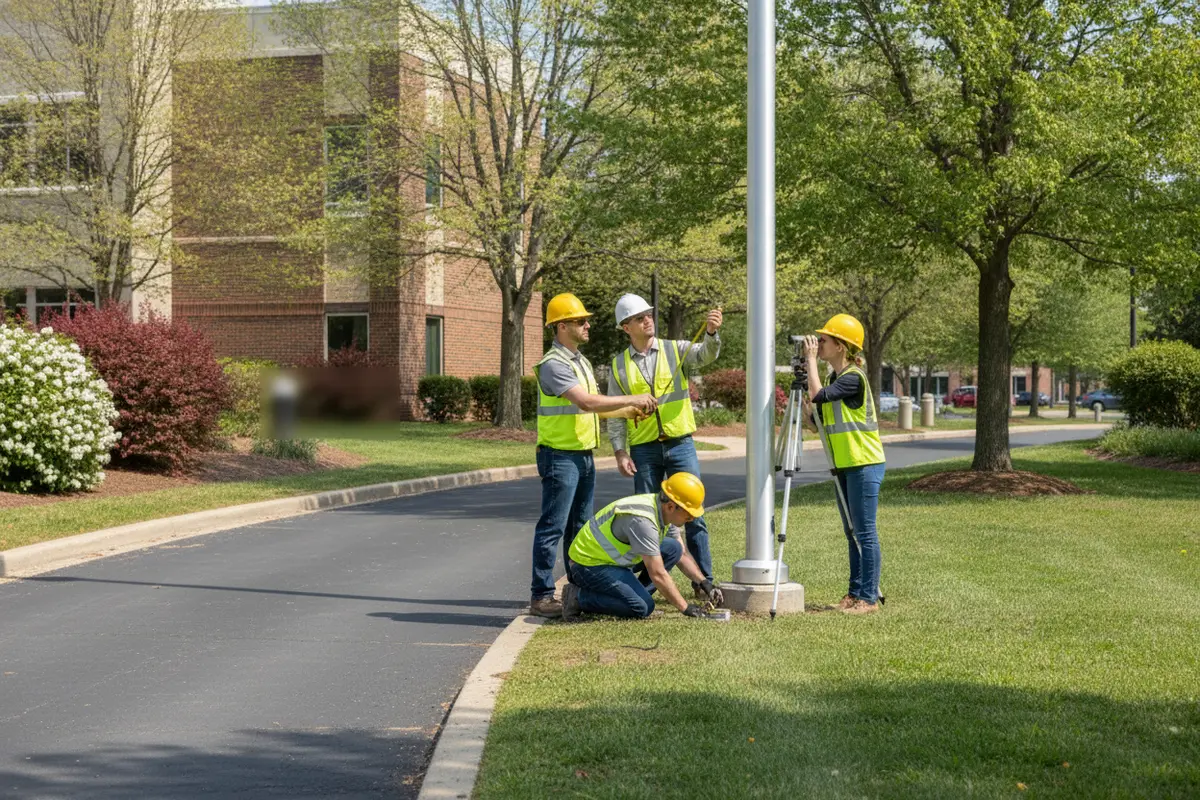
Assess sightlines from the actual direction of travel. Ask whether the audience can see and understand the display without turning attention away from a task that requires focus. Check for trees, building corners, poles, other signs, and potential future obstructions. A display that looks prominent from one spot may be hidden from the main entrance approach. If the sign serves both pedestrians and drivers, evaluate each viewing condition instead of assuming one placement works equally well.
Also identify utilities and site constraints before design advances. Locate likely power access, possible data or network paths, underground utilities, property boundaries, access routes for installation equipment, and any limits on excavation or construction work. These are planning questions, not assumptions to settle from a photo. Coordinate with facilities, property ownership, the design team, and qualified technical professionals as needed.
Which display and implementation options should the project compare?
Compare options against the intended use and site conditions, not an isolated feature list. The right implementation may be a freestanding outdoor display, a building-mounted unit, or an interior screen. Each choice changes structural, electrical, viewing, maintenance, and approval requirements. Carolina Signs and Wonders provides commercial digital signage; for projects considering illuminated sign elements, review the related LED signage options as part of the broader sign system.
| Project option | Where it may fit | Planning questions | Key coordination |
|---|---|---|---|
| Freestanding outdoor board | Campus, civic, or organizational entrance with a clear approach | What are the sightlines, site constraints, structural needs, and exposure conditions? | Foundation or support, power, permitting, access, and installation staging |
| Building-mounted outdoor display | Exterior wall or facade where the audience has a defined view | Can the building support the installation, and is the display visible at the intended distance? | Building conditions, electrical route, attachment details, review approvals, and safe access |
| Interior digital display | Lobby, reception area, or interior circulation space | What ambient light, viewing distance, and visitor flow should the display address? | Mounting surface, power and data access, interior finish coordination, and content ownership |
| Digital display within a larger sign program | Organizations coordinating digital information with identification or wayfinding | How should the digital element relate to permanent signs and established identity standards? | Design coordination, message hierarchy, accessibility review, and multi-site consistency |
Use the comparison as a starting point, then document the selected option and why it fits the site. A digital display is one component of a communication system. Where people also need fixed directions or room identification, coordinate the message board with ADA and wayfinding signage so that changeable announcements do not have to carry every navigation task. Consult the U.S. Department of Justice ADA resources as one authoritative starting point for accessibility information, and confirm project-specific obligations with the appropriate reviewers.
What technical and content requirements belong in the project brief?
Before requesting a proposal, collect the decisions that shape design and implementation. Exact specifications depend on the site, intended audience, and project scope, so avoid choosing a display solely by a single headline feature. A useful brief gives the project team enough context to evaluate the complete installation and handoff.
- Display purpose and location. State the audience, primary message types, mounting concept, and expected viewing approaches.
- Content workflow. Identify the platform or content-management needs, authorized users, approval sequence, update frequency, and process for urgent or expired messages.
- Readability goals. Describe typical viewing distance, viewing angle, ambient light, message length, and how long people have to read.
- Power and connectivity. Record what is known about electrical access, network availability, signal conditions, and who will verify the final requirements.
- Physical and environmental conditions. Note indoor or outdoor exposure, mounting surface, potential impacts, drainage, access for maintenance, and nearby obstructions.
- Identity and governance. Include approved colors, logo use, typography guidance, tone, and rules for consistent communications across departments or sites.
- Schedule and operating constraints. Identify events, school terms, construction milestones, restricted work hours, site access rules, and blackout periods.
- Closeout expectations. List the records, operating instructions, training, and service information the organization needs at handoff.
Keep the content system practical for the people who will use it. Define reusable message templates and a review process. Short messages with a clear hierarchy are easier to scan than dense paragraphs. Decide how dates, locations, contact details, and calls to action should appear. Create rules for time-sensitive content so that a notice does not remain visible after it is no longer accurate.
For a multi-location organization, separate global standards from local flexibility. A central team can define identity and content rules, while site leaders may need an approved way to communicate local events. Record which elements may change, who approves changes, and how consistency will be checked. Carolina Signs and Wonders supports projects across multiple U.S. locations; the national sign installation partner program is relevant when a wider installation network is part of the project scope.
What sequence helps keep planning decisions aligned?
A simple phase plan gives stakeholders a shared view of what must be resolved before the next commitment. It also makes dependencies visible. For example, the team should not treat a preferred location as final until the site, property, and approval questions have been reviewed.
- Define the need. Confirm the audience, communication purpose, message types, and content owner. Gather input from facilities, communications, and the people who will maintain the display.
- Review the site. Document viewing approaches, obstructions, exposure, mounting conditions, utilities, access, and operational constraints. Identify information that still needs field verification.
- Compare approaches. Evaluate freestanding, building-mounted, and interior options against the purpose, site, content operation, durability expectations, and coordination required.
- Confirm reviews and scope. Identify approval parties, technical responsibilities, owner-provided information, schedule dependencies, and handoff expectations before the project advances toward fabrication.
- Coordinate field work. Agree on site readiness, access, work windows, safety responsibilities, communication contacts, and how location-specific exceptions will be documented.
- Prepare for operation. Assign message and service owners, share system guidance with relevant staff, and confirm where closeout records will be kept.
Use a decision log to record the choice, its owner, the date, and any open condition. This can be a straightforward project document. It helps a facilities manager, communications lead, and procurement reviewer follow the same assumptions, especially when decisions span several meetings or locations. A documented sequence reduces the chance that a late discovery about utilities, content ownership, or access will be mistaken for a small detail.
How do permitting and installation affect the schedule?
Approvals and installation planning should begin before fabrication is treated as ready to proceed. Requirements vary by jurisdiction and site, and a digital display may involve sign regulations, property rules, electrical work, structural review, or other approvals. Identify the authorities and stakeholders who need to review the project, and confirm the applicable process directly rather than assuming a requirement from another location applies.
Build a responsibility list that covers the owner, facilities contact, design team, sign partner, electrical professionals, property manager, general contractor, and permitting contacts where applicable. Agree who prepares and submits each item, who answers review questions, and who gives written approval to move into the next project stage. For projects in North Carolina and South Carolina, the North Carolina service-area overview and South Carolina service-area overview provide regional context; they do not replace local approval research.
Coordinate installation around the site’s daily operations. A school may need work arranged around arrival and dismissal. A municipal or healthcare facility may need routes kept open. A corporate campus may require advance access coordination and contractor documentation. Confirm equipment access, work zones, temporary traffic or pedestrian routing, delivery timing, safety responsibilities, and any restoration work. Document site contacts and escalation paths before the crew arrives.
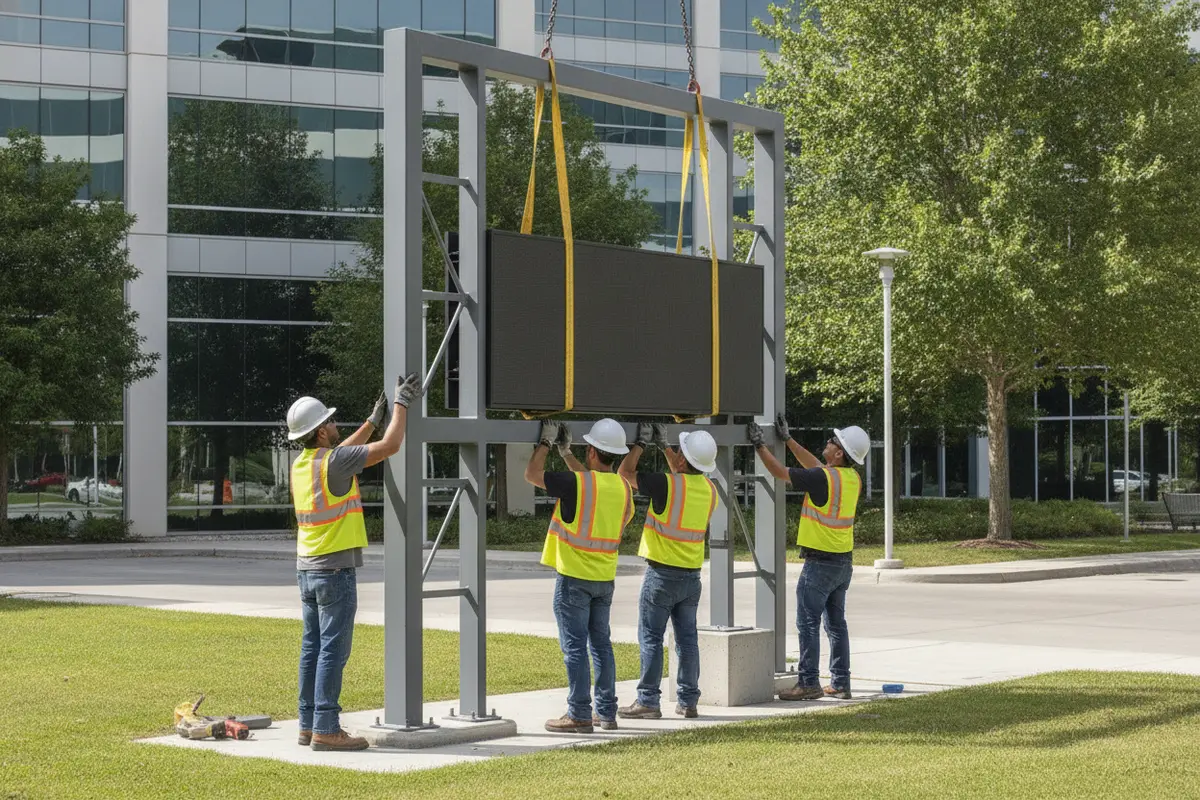
Assign one project lead to track open decisions, review comments, and schedule changes. This is useful when sign fabrication, electrical coordination, permitting, and field work involve different teams. Carolina Signs and Wonders offers commercial sign installation as part of its project capabilities. For multi-site work, specify how installation status, site exceptions, and completion records will be reported to the central team.
How should durability and ongoing operation be planned?
Durability begins with matching the display and support structure to the environment and how the organization will use it. An outdoor installation faces conditions that an interior screen does not, while an indoor display may still be exposed to strong light, frequent contact, or heavy visitor flow. Share the location and operating expectations with the project team so the proposed equipment, enclosure, mounting, and access plan can be reviewed as a complete system. Do not assume that a display specification alone accounts for the sign structure or the site.
Think through daily operation as well as the initial installation. Identify who will add and approve messages, who can resolve a publishing issue, and who will be contacted if the display is not working as expected. Keep instructions accessible to more than one authorized staff member, especially when the primary content owner is away. For organizations with shift changes or several departments, define a simple handoff process and a backup contact.
- Establish a maintenance contact. Record who receives service requests and what information to provide, such as the site, observed issue, and time it began.
- Plan for safe access. Consider how authorized staff or service personnel will reach the equipment without disrupting operations or creating an unsafe work area.
- Keep content governance current. Review user access and message approval roles when staff responsibilities change.
- Document the installed system. Retain approved drawings, operating instructions, contact details, and records of site-specific changes.
- Review message quality periodically. Confirm that templates, dates, contact information, and identity rules still serve the audience and remain accurate.
For a multi-location program, plan a consistent closeout package for every site. The central team should be able to see what was installed, note any approved local variation, find operating information, and understand how to request service. A repeatable record also helps facilities teams manage future changes without relying on informal recollection. Set the closeout requirements before installation so that the information is collected as the work proceeds rather than reconstructed later.
Digital content can change quickly, but the physical sign remains part of the built environment. Plan for the display’s role alongside permanent identification, directional signs, landscaping, and future construction. If a campus entrance or building circulation pattern changes, assign someone to reassess the message board’s location and content instead of assuming the original plan will remain appropriate indefinitely.
How can an organization select a durable project partner?
Choose a partner based on the project’s coordination demands, not only the display component. A commercial message board can require design, permitting coordination, structural and electrical considerations, fabrication, installation, and ongoing support. Ask how the proposed team will keep those responsibilities aligned and how it will communicate when site conditions or approvals change.
- Can the project team explain the sequence from site review through installation and handoff?
- Who is responsible for coordinating design, permits, fabrication, electrical work, and field installation?
- How will the partner document assumptions and flag unresolved site conditions?
- What communication cadence and escalation process will be used?
- How does the team handle multiple locations while preserving brand standards and reporting local differences?
- What operating guidance and service process will be provided after installation?
Request a clear scope that identifies included work, owner-provided information, approval dependencies, assumptions, and handoff requirements. Project pricing is custom and depends on the scope and site conditions; a consultation is the appropriate way to develop a project-specific quote. Review custom sign project capabilities and the company’s approach to signage projects as you prepare questions for a prospective partner.
Request a consultation for your digital message board
Frequently Asked Questions
What should be decided before selecting a digital message board?
Define the audience, the location and viewing conditions, the types of messages, the people who will manage content, and the project’s approval and schedule constraints. Those decisions help the team compare display and installation options on relevant criteria.
Does a digital message board need a content plan?
Yes. Assign owners for drafting, approval, publishing, and removing messages. Set rules for templates, message length, urgent updates, and expiration so the display remains useful and current.
Can one design be used across multiple locations?
A shared design standard can support consistency, but each location still needs its own site review and approval coordination. Document which identity elements stay fixed and which site-specific details may change.
When should permitting and installation planning start?
Start during early project planning. The organization can then identify review parties, confirm local processes, coordinate utilities and site access, and account for approval dependencies before committing to a field schedule.
How can you move from planning to a project quote?
Gather site photographs or plans, the purpose statement, likely display location, audience and viewing conditions, content workflow, schedule constraints, and known approval requirements. A sign partner can use this information to identify open questions and develop a scope aligned with the site and organization. Carolina Signs and Wonders manages signage projects through coordinated design, permitting, fabrication, and installation services. A careful brief makes the first project conversation more productive and gives stakeholders a practical basis for moving forward.
When your team is ready, request a project quote and share the decisions and site details gathered during planning.
Get a free quote for your signage project
A well-planned digital message board connects a useful message with the right audience, a suitable site, and an installation process the organization can support over time.


