

A poor display choice can waste thousands of dollars in local zoning fines. True value comes from picking strong LED signs and message centers that fit your site's physical needs.
Call us today at (704) 625-2345 or schedule a free consultation to discuss your electronic message center project and get expert guidance on the right solution for your facility.
An electronic message center is a dynamic LED screen that lets brands change public messages and graphics remotely. To choose the right system, you must first study your local zoning rules. Many cities limit sign size, brightness levels, and message display times to protect drivers. According to city sign standards, local traffic engineers must often review these outdoor designs to keep public roads safe. You must also map your traffic flow to find the right pixel pitch and viewing distance for your site. Finally, pick a turnkey partner who can install UL-listed electrical lines and handle all structural permits. This complete approach keeps your digital project compliant, safe, and highly visible for years to come.
What Is an Electronic Message Center and How Does It Work?
An electronic message center (EMC) is a high-brightness LED screen used to show real-time messages. These smart systems show active content, and many local firms use these LED signs and message centers to reach people. According to city rules on electronic message center standards, these on-premise displays can change content by automatic or remote means. This setup lets you update your message in seconds.
Core LED light technology
Unlike old signs that use neon or glass tubes, a modern electronic message center uses light-emitting diodes (LEDs). These tiny bulbs are placed in clusters on the board. LED parts are built to last a long time, with a standard rating of fifty thousand hours or more. This lifespan offers over five years of constant display for your brand.
Because LEDs do not use filaments, they do not burn out like old bulbs. They use less energy than old neon or fluorescent lights, and they make less heat. This makes them a smart choice for long-term use. The low heat output also protects the inside parts of the display.
LED signs are known for their high brightness, which is measured in nits. Outdoor screens often need a brightness level of five thousand nits or more to remain clear in direct sunlight. Many displays have auto-dimming sensors that adjust the brightness based on the light outside. This keeps the sign easy to read during the day and prevents it from being too bright at night.
The mechanics of pixel pitch
Pixel pitch is the space between the center of one LED bulb and the next. This spacing is a key factor in how clear your screen will look. It is measured in millimeters. A smaller number means the lights are closer together, which makes the image look sharper from a close distance.
Advanced displays can feature pixel pitches as small as six millimeters. If your building is close to a busy road, you will want a tight pixel pitch. This ensures that drivers can read your messages clearly as they pass by. For displays placed high up, a larger pitch is often best.
Control software and safety standards
To change your sign, you will use special control software. This program connects your computer or phone to the screen. High-end signs use secure systems like the Vnnox platform, which lets you plan and schedule messages from any spot. You can change text, add images, or show urgent alerts in real time.
When planning your sign, you must also think about safety. Local traffic engineers and police officers must review all designs. They check the sign to ensure it does not distract drivers or block their view. A safe design matches city rules and keeps your local roads safe.
Key Benefits of an Electronic Message Center for Your Organization
An electronic message center delivers constant visibility with bright LED lights visible 24/7 in any weather. It acts as an always-on marketing tool that boosts curb appeal, draws foot traffic, and allows real-time message updates from any connected device. LEDs last over 50,000 hours, use less energy than neon or fluorescent signs, and require minimal maintenance. Control software lets you schedule messages, display promotions, share events, and post emergency alerts instantly across one or multiple locations.
An electronic message center is a strong tool to share news and attract attention. These signs are dynamic, high-brightness LED displays that help local groups share real-time updates. They work well for shops, schools, churches, and towns that need to reach the public. By using these signs, you can share news, events, or sales in a clear and active way.
Constant visibility and curb appeal
Older signs can be hard to see at night or in bad weather. An electronic message center solves this problem with bright LED lights. This makes your building stand out and helps people find your door easily. The bright display keeps your message clear all day and night. It acts as a 24/7 sales tool that boosts your street appeal and draws in new foot traffic.
Local shops can use these displays to show different slides throughout the day. For example, a retail store can show morning deals, lunch specials, and evening hours on a single screen. Setting up a custom digital message center allows you to match your brand colors and styles perfectly. This custom design ensures your high-impact display looks neat and professional.
Long life and energy savings
Choosing a new sign is a big step, so long life is key. LED signs are built to last and do not need frequent repairs. Most LED parts are rated to run for 50,000 hours or more. This means you get over five years of constant use. Unlike older neon or fluorescent bulb signs, LEDs do not break down quickly or lose their shine over time.
LED technology also saves you money on power bills. These displays use much less power than old sign bulbs. They also generate less heat, which keeps the parts safe from wear. This high level of energy savings keeps your running costs low. You get a strong, bright sign that costs less to run and helps your budget over the years.
Easy message control and real-time updates
In the past, changing a sign meant going outside to swap plastic letters by hand. With modern digital signs, you can update your text from your desk. You can schedule slides to show at specific times of the day or week. For public safety, teams can use remote access tools to post real-time updates during critical local events. This keeps your local public safe and informed when conditions change fast.
At Carolina Signs, we make this control process simple. We use the ProVizion LED platform and Vnnox CMS, which let you schedule and manage messages from anywhere. Our team handles the hard work of building and installing your new system. We take care of permits, structural plans, and local code rules so you can focus on running your group.
Types of Electronic Message Centers: What Are Your Options?
Electronic message centers come in three main types: monochrome (single-color text for basic alerts). Full-color RGB (298 trillion colors for rich graphics and video), and transit/public safety signs built for tough environments. Your choice depends on pixel pitch needs, viewing distance, content complexity, and whether the display goes indoors or outdoors. Monochrome suits budget projects; full-color serves retail, healthcare, and schools; transit signs handle rail and bus applications.
When you choose an LED signs and message centers package, color is your first big choice. Monochrome signs use one color, like red or amber, to show simple text alerts. These displays work well for basic info or simple text lines. They are a smart choice for budget-friendly projects that only need to show words.
Color and design options
But full-color signs use red, green, and blue light diodes to show sharp images. For example, new sign lines can show rich video at 60 frames per second. They can display up to 298 trillion colors to highlight deep content. The G5 Series, which was unveiled at the 2026 ISA Sign Expo, set new standards for high-brightness outdoor use.
Pixel pitch and image clarity
Pixel pitch is the space between LED lights. It dictates how sharp your screen looks. A smaller pitch means a sharper picture from up close. This ultra-sharp style is ideal when people walk right past your building.
For example, some signs have a 6mm pitch for super sharp detail in retail areas. A mid-range option like a 9mm sign is popular for schools and healthcare. A 4-foot by 8-foot 9mm display has 32,768 pixels. This has three to five times more pixels than old 16mm displays with 9,216 pixels.
You can also find budget-friendly 20mm displays with 6,272 pixels for far viewing. A premium custom digital message center lets you share clear details.
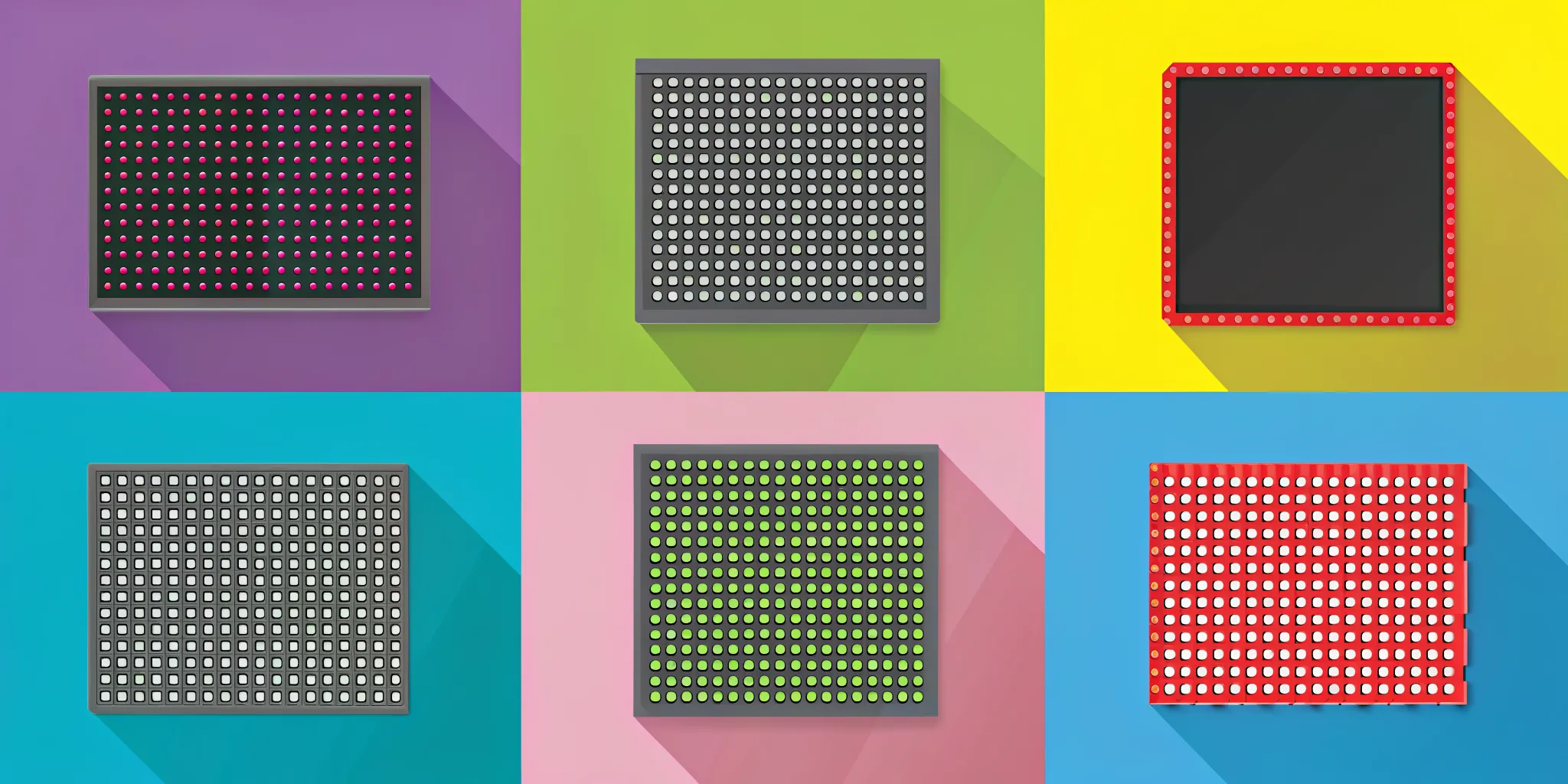
Finding the right pixel pitch keeps screens easy to read. This setup keeps your display sharp and useful.
- Display Class: Ultra-Sharp HD; Pixel Pitch Range: 6mm to 9mm; Color Depth: Full-color (298 trillion); Typical Applications: Close viewing, retail, healthcare.
- Display Class: Standard Mid-Range; Pixel Pitch Range: 10mm to 16mm; Color Depth: Full-color or monochrome; Typical Applications: Schools, churches, roadside displays.
- Display Class: Transit & Budget; Pixel Pitch Range: 16mm to 20mm; Color Depth: Monochrome or limited color; Typical Applications: Rail platforms, bus stations, highways.
Indoor and outdoor applications
Indoor signs help guide guests once they enter your space. These displays use lower brightness levels because they do not fight the sun. They often use a tight pixel pitch like 4mm or 6mm. This lets people read the screen clearly from just a few feet away.
Outdoor displays must be bright enough to compete with direct sunlight. These signs use high-powered LEDs that can shine through rain or glare. They also have strong cabinets to protect the parts from heat and cold. This weather-proof design keeps your sign working in any storm.
Transit and public safety signs
Some displays are built for tough transit jobs. For example, the AF-6700 series displays rail schedules on train platforms. The monochrome AF-6800 displays show bus transit details for travelers. These signs help transit hubs share real-time times and keep crowds moving.
Local traffic engineers review designs to ensure an electronic message center is safe for drivers. Under the Columbia sign standards, signs must not distract drivers on the road. They must follow strict rules for bright lights and movement speed. This careful planning keeps streets safe while helping your brand stand out.
How to Choose the Right Electronic Message Center for Your Facility
To select the right electronic message center, start by analyzing your site conditions: traffic speed, viewing distance, and content needs. Use a six-step process: check site and traffic speed, determine viewing distance and pixel pitch, define content requirements. Review zoning codes and safety rules, plan for weather exposure, and budget for a full turnkey package including hardware, installation, permits, and training. A turnkey partner handles all structural engineering and permits.
Buying an electronic message center is a big choice for any business. These bright, active LED displays are ideal for businesses, schools, churches, and towns that need real-time news and local updates. Because this sign is a key part of your site, you must choose a system that fits your goals and lasts for years.
Analyze Your Site First
Before you look at product lists, you must study your site. You need to look at local traffic speed and how close people get to your sign. A sign near a fast highway needs big, clear text so drivers can read it in a few seconds. A sign on a slow city street can use smaller text and show more detail.
You also need to think about what you want to show on your screen. Some sites only need simple text to share hours or dates. Other sites want to use full-color graphics and video. Knowing your goals first prevents you from buying a system that does not meet your needs.
Six Steps to Select Your Sign
To find the best option for your building, follow these six key steps. Each step helps you narrow down your choices so you get a system that works well.
- Check your site and traffic speed. Study how people move past your building. Fast-moving traffic needs a larger sign with bold text, while slow-moving city streets allow for smaller designs.
- Find your viewing distance and pixel pitch. The distance between your sign and your viewers determines your pixel pitch. Choosing the correct spacing ensures your message looks sharp to drivers and people walking by. For example, classrooms and sports fields need different layouts when choosing an electronic message center for schools.
- Define your content and media needs. Decide if you will display simple text, full-color graphics, or high-definition video. If you want to share sermon schedules or events, an electronic message center for your church will have distinct visual needs.
- Check zoning codes and safety rules. Before buying any hardware, review local sign laws. All sign designs must be checked for road safety. Local traffic experts and police must approve your plans, as shown on the Bismarck municipal code portal.
- Plan for weather and sun. Your digital display must withstand local weather extremes, like direct sun, wind, and heavy rain. Choosing high-grade cases helps prevent heat damage and water leaks.
- Budget for total cost. Do not just look at the price of the LED display. You should plan for a complete turnkey package that covers the hardware, electrical installation, permit work, and training.
Full Turnkey Support
A successful sign project is about more than just buying hardware. Working with an expert team makes the process smooth and keeps your project on track. Our team handles all permit work, structural engineering, and city code rules. This support is critical when installing large signs in different towns.
Our work covers North Carolina and South Carolina, but we also serve clients in 39 states. We make sure your system works safely from day one. Choosing a complete turnkey setup gives you peace of mind and protects your money for the long term.
When selecting an electronic message center, understanding the technical specifications that determine performance, longevity, and regulatory compliance is essential. This section outlines the key specifications to evaluate before making a purchase decision.
Pixel Pitch and Resolution
Pixel pitch measures the distance in millimeters between the center of one LED pixel to the next. A smaller pixel pitch means higher resolution and sharper images at closer viewing distances. Advanced EMCs offer pixel pitches as small as 6mm for ultra-sharp displays suitable for locations where viewers are within 50 feet of the sign. A 9mm pixel pitch display like the Cirrus 4x8 delivers 32,768 pixels, compared to just 9,216 pixels on a 16mm display and 6,272 on a 20mm display. For roadside signage where vehicles travel at 35+ mph, a 16mm to 20mm pitch is often sufficient because drivers view the sign from a distance.
Brightness and Nits Rating
Brightness is measured in nits (candelas per square meter). Outdoor EMCs typically require 5,000 to 10,000 nits to remain visible in direct sunlight. A sign with inadequate brightness will look washed out during the day, diminishing its marketing impact. Indoor EMCs operate at lower brightness levels, typically 1,200 to 2,500 nits. Automatic dimming sensors are an important feature that adjusts brightness based on ambient light conditions, ensuring the sign is always readable without causing glare at night.
Color Depth and Video Capabilities
Modern full-color EMCs use red, green, and blue LEDs to create vibrant images and video content. Premium displays can show up to 298 trillion colors with 60 FPS video playback. This allows organizations to display rich multimedia content, from promotional videos to real-time event coverage. Organizations that plan to use their EMC for video content should prioritize displays with higher refresh rates and color depth.
Weather Resistance and IP Rating
Outdoor EMCs must withstand rain, wind, temperature extremes, and UV exposure. An IP65 or IP66 rating indicates the display is fully protected against dust ingress and low-pressure water jets from any direction. High-quality displays also include thermal management systems to prevent overheating in summer and ensure reliable operation in sub-freezing temperatures. LED components are rated for 50,000 hours or more of continuous operation.
Control Software and CMS Integration
The control system is what makes an EMC dynamic rather than static. Carolina Signs and Wonders uses the ProVizion LED platform paired with the Vnnox CMS, which enables remote, real-time message scheduling and management from any internet-connected device. Organizations should evaluate whether the control software supports content scheduling, multi-location management, emergency messaging overrides, and user permission levels.
Permitting, Zoning, and Installation Requirements
Installing an electronic message center requires compliance with local zoning codes that regulate sign size, brightness levels, message duration, and placement. Most cities require a traffic safety review by local engineers and police. Structural engineering is needed for wind load resistance, especially for large displays. UL-listed electrical lines and proper grounding are mandatory. A turnkey sign partner handles all permits, structural plans, and code compliance from design through installation.
Adding a dynamic sign to your site is more than just choosing a screen. An electronic message center must comply with local laws before you install it. Every town has rules on sign brightness, image speed, and placement. Handling these codes can be hard, but our turnkey service handles the entire process for you.
Local zoning rules and display limits
Most local towns define an electronic message center as an on-premise digital sign that changes its display remotely. Because these signs are active, cities place tight limits on them. For example, zoning codes often limit how many seconds a message must stay still before a new one appears. This rule stops fast motion that could distract drivers.
Local rules also govern display brightness at night. Many towns require signs to have light sensors that dim the screen when the sun goes down. To ensure safety, local traffic engineers and police often review sign plans. They check the site to make sure the sign does not block views or look like traffic lights. A traffic safety review helps confirm that your sign is safe for nearby roads.
Wind load and structural design
Large digital displays are heavy and catch a lot of wind. Because of this, you must have strong structural engineering support. The sign must withstand local wind speeds, which can be high in parts of North and South Carolina. Our team handles all permitting and structural engineering to make sure your sign is safe. We design the steel posts and concrete bases to hold the weight and resist strong storms.
We work with local boards in varied towns to secure every needed permit. Doing this work ahead of time cuts your risk and avoids costly delays. Our deep knowledge of local codes means your project will move from design to final permit without legal issues.
UL-listed power and electrical safety
High-brightness LED screens need steady, safe power to run well. Our in-house team, Carolina Commercial Electric, provides safe, UL-listed electrical installation. We set up the proper wiring and power lines for your digital sign network. This in-house skill ensures your sign is wired right from the start.
Changing your content is easy once the sign is up. You can schedule public updates or share safety news from any computer. In fact, many cities allow remote access management so signs can show vital safety alerts when needed. Our turnkey package covers the hardware, professional sign installation, and the software training you need to succeed.
Why a Turnkey Partner Matters for Your EMC Project
Selecting the right electronic message center is only half the equation. The partner you choose to design, permit, install, and support your display determines whether the project delivers on its full potential. A turnkey partner simplifies complexity, reduces risk, and ensures long-term reliability.
Single-Vendor Accountability
When a single organization handles every phase of your EMC project from concept to completion, there is no finger-pointing when issues arise. The structural engineer, electrician, installer, software provider, and service team all work under the same quality standards. Carolina Signs and Wonders integrates design, structural engineering, in-house fabrication, UL-listed electrical contracting, and long-term service under one roof. Founded by a Fortune 100 veteran, the company applies rigorous operational discipline and engineering precision to every project.
Design-Build-Install-Service Lifecycle
The most successful EMC projects follow a coordinated lifecycle. During the design phase, the team evaluates location, viewing angles, and zoning constraints to recommend the right display specifications. The build phase leverages in-house fabrication capabilities for faster turnaround and tighter quality control. Professional sign installation ensures the display is mounted securely, wired correctly, and commissioned for immediate operation. Ongoing service includes CMS training, remote content management support, and maintenance programs that extend the display's operational life.
Risk Reduction for Multi-Location Deployments
Organizations deploying EMCs across multiple sites face compounded complexity. Each location has unique zoning codes, structural requirements, and electrical configurations. A turnkey partner with demonstrated experience across jurisdictions reduces the risk of compliance failures, installation delays, and inconsistent brand presentation. Carolina Signs and Wonders serves clients across 39 states, providing consistent quality and coordination for enterprise-scale deployments.
Long-Term Value Through Integrated Service
An electronic message center is a long-term infrastructure investment with a lifespan exceeding 5 years of continuous operation when properly maintained. Integrated service agreements ensure that software updates, hardware maintenance, and technical support remain consistent throughout the life of the display. The Vnnox CMS enables ongoing remote management, allowing organizations to adapt their messaging strategy without additional hardware costs.
Frequently Asked Questions
Frequently Asked Questions
What is the typical lifespan of an electronic message center?
High-quality LED components in electronic message centers are rated for 50,000 hours or more of continuous operation, which equates to approximately 5 to 7 years of 24/7 visibility. With proper maintenance and software updates, many displays continue performing well beyond this threshold.
How much does an electronic message center cost?
Cost varies significantly based on display size, pixel pitch, brightness requirements, installation complexity, and local permitting requirements. Because each project involves custom engineering, site preparation, and UL-listed electrical work, pricing is consultation-based. Reach out to receive a customized quote tailored to your specific location and display needs.
Do I need a permit to install an electronic message center?
Yes, most jurisdictions require permits for electronic message center installation. The process typically involves submitting structural engineering calculations, electrical plans, and site drawings for municipal review. Many cities also require traffic safety review by the local traffic engineer and law enforcement before approval. A turnkey partner like Carolina Signs and Wonders manages the entire permitting process.
Can I change the content on my electronic message center remotely?
Yes, modern electronic message centers use content management systems that allow remote scheduling and updates. Carolina Signs and Wonders uses the Vnnox CMS paired with the ProVizion LED platform, enabling real-time message changes from any internet-connected device. This allows you to update promotions, events, emergency alerts, and community announcements instantly across one or multiple locations.
What is the difference between an electronic message center and a digital sign?
While the terms are often used interchangeably. An electronic message center typically refers specifically to high-brightness LED displays designed for outdoor use with remote content management capabilities and regulatory compliance for on-premise signage. Digital signs can encompass indoor screens, menu boards, and kiosks. EMCs are purpose-built for high-visibility outdoor applications where reliability, brightness, and durability are critical.
Ready to Get Started on Your Electronic Message Center?
Choosing the right electronic message center is a significant investment in your organization's visibility and communication capabilities. From understanding pixel pitch and brightness specifications to navigating municipal zoning codes and permitting requirements, every decision impacts the long-term value of your display.
Carolina Signs and Wonders brings decades of engineering expertise, in-house fabrication, UL-listed electrical contracting, and turnkey project management to every EMC installation. Whether you need a single display for your facility or coordinated deployment across multiple locations in NC and SC. Our team handles every phase from design and permitting through installation and ongoing CMS support.
Call us today at (704) 625-2345 or schedule a free consultation to discuss your electronic message center project. Let us help you make the right choice for your organization.


