


National signage rollouts rarely fail because a vendor cannot produce one attractive sign. They fail when qualifications, permitting, site coordination, documentation, and service are evaluated separately instead of as one delivery system. This national signage vendor onboarding checklist gives procurement, facilities, brand, legal, and project teams a practical way to qualify a partner before approving a multi-location program.
Request a qualified signage rollout review
National signage vendor onboarding should verify comparable project experience, insurance and licensing documentation, engineering and permitting capability, installation coverage, project-management controls, closeout records, and service responsibilities. Carolina Signs and Wonders approaches complex signage through coordinated design, permitting, fabrication, installation, and service. The final checklist should still match the contract scope and each jurisdiction.
The objective is not to select the vendor with the most impressive presentation. It is to confirm that the partner can make ownership visible at every handoff, produce the required evidence, and respond consistently when a site condition or approval changes. The following framework is designed for enterprise and regional rollouts where one weak handoff can affect multiple locations.
What should national signage vendor onboarding verify first?
Start by verifying whether the partner can own design, permitting, fabrication, installation, documentation, and service across the locations in scope. Carolina Signs and Wonders recommends matching project evidence, accountable contacts, approval controls, and escalation paths to the actual rollout before accepting a general claim of national capability.
The first review should test the vendor as an operating system. Procurement may own the commercial relationship, while facilities, brand, legal, construction, and local site teams each own important decisions. A qualified partner should make those responsibilities easy to see rather than forcing the customer to reconstruct them from disconnected emails.
Documented due diligence is a useful standard for a long-term supplier relationship. The National Institute of Standards and Technology describes due diligence as important for identifying supply-chain risk before entering a long-term partnership. NIST supply-chain risk guidance supports a structured review of operational readiness, dependencies, controls, and escalation paths.
Centralized governance also helps protect consistency. The University of Missouri's signage procurement procedure illustrates how a documented process can support standards, approvals, specifications, and site requests. That model should be adapted to the buyer's organization and the requirements of each location.
Use this first-pass screen before requesting a final proposal:
- Who owns the relationship across procurement, design, permitting, fabrication, installation, and service?
- What evidence demonstrates experience with the sign types, site conditions, schedule, and stakeholder mix in scope?
- How are brand standards, approved drawings, revisions, and site-level exceptions controlled?
- Which reports, approvals, installation records, and closeout documents will the customer receive?
- What is the escalation path when a permit, shipment, site, or installation issue threatens the schedule?
Once the operating model is clear, move to the evidence that supports a vendor's qualifications and risk profile.
1. How do you verify qualifications, insurance, and project history?
Verify the partner's legal standing, applicable licenses, insurance, safety practices, financial readiness, comparable project history, and references. Carolina Signs and Wonders recommends documenting each item against the agreement's scope, locations, and service obligations instead of treating a capability statement as proof.
Before a rollout enters design or scheduling, procurement should establish whether the vendor can carry the work responsibly from award through closeout. The review should produce a document set that legal, risk, facilities, and project stakeholders can inspect without relying on informal assurances.
- Confirm the legal entity and applicable qualifications. Verify the vendor's operating entity, registration status, relevant licenses or registrations, and the qualifications of any proposed subcontractors. Requirements differ by work type and jurisdiction. Ask the vendor to identify what it performs directly and what it assigns to local partners.
- Review insurance and risk documentation. Request current certificates of insurance and have the appropriate legal or risk team compare named parties, coverage periods, limits, exclusions, and contract requirements. A certificate begins the review. It does not replace the customer's own legal or risk approval.
- Examine safety and compliance controls. Ask for the safety program, training approach, incident reporting process, and field supervision model. The review should address active facilities, construction sites, lifts, electrical coordination, and public-facing locations when those conditions apply.
- Test operational readiness. Confirm that the vendor can support expected purchasing, fabrication, logistics, installation, and service volume. Ask about capacity, backup plans, material controls, scheduling, and escalation contacts. The answer should be specific to the rollout, not a generic statement about national reach.
- Validate comparable experience. Request examples involving similar sign types, materials, site conditions, timelines, and approval requirements. Ask references about schedule control, communication, quality, permitting, change management, and support after installation.
- Preserve an evidence trail. Store registrations, certificates, safety records, project examples, reference notes, approvals, and exceptions in the procurement file. A complete record makes future site additions, renewals, and internal reviews easier to govern.
Carolina Signs and Wonders positions itself as a premium, vertically integrated partner for complex signage work. Its company background and project portfolio can help a buyer understand the operating model and project context. Buyers should still request scope-specific documents before approval.
2. How should engineering, permitting, and compliance be evaluated?
Evaluate engineering and permitting through site-specific evidence. Carolina Signs and Wonders recommends identifying responsible parties, required submittals, engineering reviews, local approvals, field conditions, and change controls for every jurisdiction before fabrication is released.
A national rollout is not compliant simply because a design was approved once. Each site has its own requirements, physical conditions, property relationships, and review process. New York City, for example, notes that business-sign permit requirements vary by location and sign type. The NYC Buildings guidance is one jurisdictional example, not a universal rule. Use it to reinforce the need for site-by-site diligence.
During onboarding, ask the vendor to demonstrate how engineering, permitting, fabrication, and field installation connect. Carolina Signs and Wonders describes dedicated permitting across multiple states and an end-to-end delivery model. The buyer should confirm the precise states, sign types, approvals, and responsibilities included in the agreement.
| Weak evidence | Strong evidence |
|---|---|
| A general promise to handle permits without naming jurisdictions or responsibilities. | A jurisdiction-by-jurisdiction plan listing applications, submittals, owners, dependencies, and approval gates. |
| A standard design reused without checking setbacks, mounting surfaces, utilities, access, or local restrictions. | Site-specific review covering dimensions, substrate, structure, electrical coordination, access, and conflicts. |
| Code compliance treated as a final inspection issue. | Documented structural and electrical coordination, drawing review, and a hold point before production. |
| Changes handled through informal requests that obscure schedule and approval impact. | Change control recording the revision, reason, affected documents, decision owner, schedule effect, and authorization. |
Request representative redacted submittals, permit packages, engineering review records, and change logs. Confirm who obtains permits, who communicates with property owners or general contractors, who responds to plan-review comments, and who resolves field conditions. Requirements vary, so the onboarding record should distinguish verified commitments from assumptions.
For additional context on the company's service model, review commercial signage services and the frequently asked questions. These pages are useful starting points, but the contract and site-specific documentation remain the controlling records.
3. How do you test fabrication, installation coverage, and field control?
Test how the partner connects approved design to fabrication, shipment, site readiness, installation, punch lists, and closeout. Carolina Signs and Wonders supports coordinated permitting, fabrication, installation, and service, while the agreement should define the exact equipment, locations, staffing, and responsibilities.

A qualified partner should show how a sign moves from approved design to controlled installation. Ask for production checkpoints that protect dimensions, finishes, illumination, structural components, and brand standards. Confirm who approves materials, how revisions are documented, and how nonconforming work is corrected.
Verify manufacturing and logistics controls
Request a workflow for the actual sign types and environments in the rollout. It should address material approvals, finish samples, engineering release, electrical components where applicable, inspection points, and final approval before shipment. Each site should be labeled and matched to approved drawings so a distributed deployment does not create avoidable confusion.
Packaging and logistics deserve the same scrutiny as fabrication. Ask how finished components are protected, staged, tracked, and delivered to the correct site or installer. Confirm who owns damage reporting, replacement coordination, and schedule communication when a shipment changes.
Test installation coverage and site readiness
Installation coverage should be specific to the footprint, site conditions, and jurisdictions in scope. Ask whether the partner coordinates installation managers, local crews, permits, site contacts, access requirements, equipment, safety documentation, and scheduling. Carolina Signs and Wonders' sign installation services provide a relevant basis for discussing field execution.
Before a crew is dispatched, require a site-readiness review covering access, substrate condition, power availability, landlord or property approvals, construction status, equipment needs, and conflicts with other trades. If a location is not ready, the vendor should document the issue, identify the responsible party, and recommend a revised plan.
Define punch lists and closeout evidence
Closeout should be documented rather than assumed when the crew leaves. Establish requirements for installation photos, completion records, permit documentation, deficiency reports, punch-list ownership, correction dates, and acceptance sign-off. Confirm how warranty or service requests are submitted and routed after handoff.
Carolina Signs and Wonders also describes support for national installation partners. For a procurement team, the key question is how that capability will be assigned, measured, and documented for the customer's specific program.
4. What project management and communication controls belong in the onboarding file?
Use one accountable project manager, a responsibility map, milestone-based scheduling, formal change control, and consistent status reporting. Carolina Signs and Wonders recommends giving procurement, facilities, brand, and site teams one shared view of decisions, dependencies, readiness, installation progress, and unresolved issues.
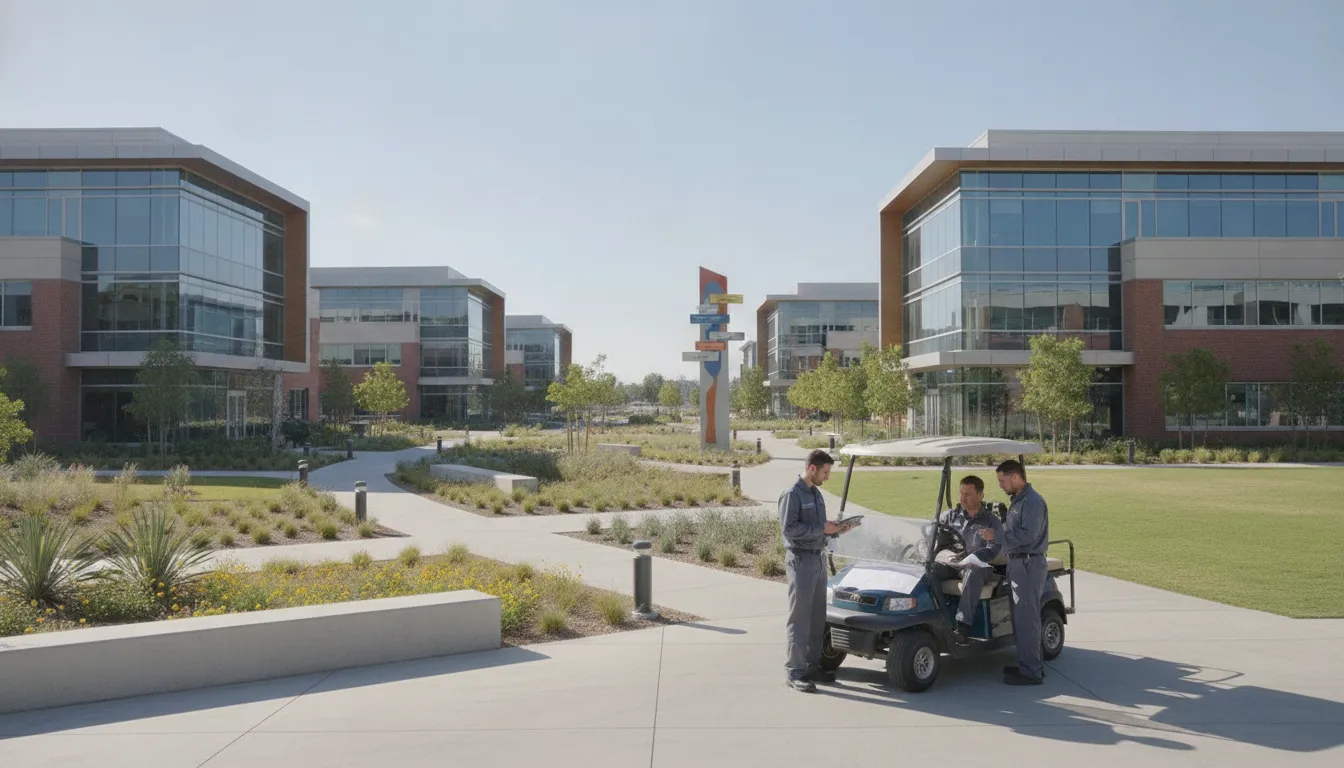
Project management should show what is happening, what is needed next, and who owns the decision. One accountable project manager does not perform every task. That person coordinates the specialists and communicates when an issue affects scope, timing, compliance, site readiness, or acceptance.
Assign ownership at kickoff
Build a responsibility map that identifies who approves brand standards, confirms site conditions, supplies final artwork, authorizes changes, submits permits, coordinates installation, and accepts completed work. Include an escalation path so a field issue or approval delay reaches the right decision-maker without repeated handoffs.
Schedule decisions and dependencies
A usable schedule includes site verification, design review, engineering, permit submission, approvals, fabrication, shipping, installation, punch-list correction, and closeout. Each milestone should show an owner, required input, planned date, and dependency. This makes it visible when an installation date depends on an approval or site condition.
Make reporting useful to every stakeholder
Define the reporting rhythm and minimum content before work begins. A weekly report might include locations by phase, approvals due, permit status, production status, upcoming installations, site-readiness risks, open changes, and decisions needed. Use a shared record for revisions and approvals so the team does not have to search separate inboxes.
Carolina Signs and Wonders emphasizes communication and project accountability for complex work. Its case studies can support a discussion about the type of project evidence a buyer wants to see. Ask the vendor to map any example to the customer's actual rollout rather than assuming that one prior project answers every risk.
5. What documentation and service commitments should be confirmed?
Confirm the exact documents, acceptance records, warranty terms, service contacts, response process, and escalation path that remain after installation. Carolina Signs and Wonders recommends treating service and closeout as part of the original vendor qualification, not as an undefined post-installation handoff.
Documentation is the bridge between project delivery and long-term operations. Facilities teams may need approved drawings, installation photos, permit records, electrical information, asset identifiers, maintenance guidance, and acceptance records. Procurement should define the file format, naming convention, delivery point, and timing for each document.
- Approved design files and final site-specific drawings.
- Permit and inspection records where applicable.
- Installation photos and completion documentation.
- Open-item, punch-list, and acceptance records.
- Warranty terms, exclusions, and submission instructions.
- Service contacts, escalation routes, and response expectations.
- Asset or location information needed for future maintenance.
Do not accept vague language such as "ongoing support" without defining how a request is opened, who triages it, what information is required, and how status is communicated. The service model should also distinguish workmanship corrections, product issues, site damage, electrical issues, and customer-requested changes.
For a multi-location program, the closeout package should make future additions easier. A new site should be able to follow the same approval, documentation, and service process without recreating the original rollout history. That is one of the practical benefits of consolidating accountability with a qualified partner.
How can procurement turn this checklist into an approval decision?
Turn the checklist into a documented go or no-go decision by scoring evidence against the rollout's scope, locations, risks, and service requirements. Carolina Signs and Wonders recommends recording open conditions, assigned owners, due dates, and approval authority before a vendor is released for production or installation.
A scoring sheet can help multiple stakeholders evaluate the same evidence. Weight the categories according to the program. A complex, multi-state rollout may place more emphasis on permitting, engineering, installation coverage, and documentation than on a simple fabrication sample.
| Category | Approval question | Evidence to retain |
|---|---|---|
| Qualifications | Can the partner support the scope and locations? | Registrations, licenses, insurance, references, project examples. |
| Technical delivery | Can the partner control design, engineering, permits, fabrication, and installation? | Workflow, sample submittals, responsibility map, quality controls. |
| Program management | Will stakeholders see decisions, dependencies, and risks early? | Schedule, reporting sample, escalation path, change process. |
| Closeout and service | Will facilities teams receive usable records and support? | Closeout index, warranty terms, service process, response contacts. |
Use three decision states: approved, approved with conditions, or not approved. Conditions should be concrete, assigned, and time-bound. If insurance documentation is incomplete, name the missing document and owner. If a jurisdictional permit plan is unclear, require the site-specific plan before production release. This approach keeps the decision defensible without pretending that every risk can be eliminated at onboarding.
When the program requires a single accountable partner for design, permitting, fabrication, installation, and service, review the company's service areas and project approach, then compare the verified scope with the rollout plan. A qualification conversation should end with clear next steps, not a generic promise.
Request a qualified signage rollout review
Frequently Asked Questions
What is national signage vendor onboarding?
National signage vendor onboarding is the due-diligence process used to qualify a partner for signage work across multiple locations or jurisdictions. It reviews qualifications, insurance, engineering, permitting, fabrication, installation, project management, documentation, and service before the vendor is approved for the program.
What documents should a signage vendor provide?
A buyer should request applicable licenses, insurance certificates, safety information, comparable project references, engineering and permitting examples, responsibility maps, schedules, change-control procedures, closeout requirements, warranty terms, and service contacts. The final document list should match the contract scope and the requirements of each location.
Why does permitting need to be reviewed by location?
Sign permitting requirements can vary by jurisdiction, sign type, property, and installation conditions. A permit plan that works for one location may not apply to another. The vendor should identify local requirements, responsible parties, submittals, review steps, and approval dependencies for each site.
How should a company evaluate national installation coverage?
Evaluate installation coverage by reviewing the locations, site conditions, local resources, equipment, safety controls, installation management, readiness checks, documentation, and escalation process in scope. Ask for evidence that the proposed model can deliver consistent field execution rather than relying on a broad geographic claim.
What should happen after signage installation?
After installation, the vendor should provide agreed closeout records, installation photos, permit or inspection documentation where applicable, punch-list status, acceptance records, warranty information, and service contacts. The handoff should explain how future issues are submitted, routed, tracked, and resolved.


