


A programmable LED sign can give a school, church, municipality, healthcare organization, or multi-location company a reliable way to share timely information. However, the display is only one part of the project. The most successful plans connect communication goals with site conditions, permanent identity, approvals, electrical coordination, installation access, and long-term ownership. This guide explains how facilities teams and other decision-makers can evaluate a programmable LED sign as a durable commercial signage project.
What should a programmable LED sign accomplish first?
Begin with the communication job, not a display feature list. A programmable LED sign may announce events, show schedules, communicate campus information, support public notices, or reinforce a broader identity and wayfinding system. Those uses place different demands on the sign location, content process, display configuration, and project team.
Write a short purpose statement before comparing solutions. For example, a school team might state that the sign should help approaching drivers see timely campus announcements while preserving the school’s permanent identity. A municipal team might need a display that supports community information at a civic facility without becoming the only source for critical notices. A multi-location company may need consistent brand presentation while allowing each site to manage local updates.
That statement gives stakeholders a practical basis for reviewing design options. It also limits scope creep. When a project has several audiences, rank their needs instead of asking the display to do everything at once. Identify what belongs on the sign, what belongs on another communication channel, and which messages require approval before publication.
- Audience: Identify whether viewers are driving, walking, entering a campus, or already inside the property.
- Primary use: Set priorities such as announcements, schedules, directions, event information, or public communication.
- Viewing context: Describe the approach, expected viewing distance, traffic movement, and important sightlines.
- Brand relationship: Decide how changing content will work with permanent identification and other signs.
- Ownership: Name the team responsible for content, user access, approvals, and routine decisions.
- Success criteria: Define useful performance in the real setting rather than relying on a specification alone.
For a high-visibility project, this early alignment reduces the chance that facilities, communications, procurement, and leadership are evaluating different versions of the same project. It also creates a clearer brief for a qualified sign partner.
How should the team evaluate the site?
A programmable LED sign depends on more than the electronic display. The proposed site influences visibility, structural support, electrical planning, permitting, construction access, maintenance access, and the relationship between the new sign and nearby property. A site review before design development can expose constraints while the project still has room to respond.

Review the location from every viewpoint that matters. Walk the property, drive the approach, and observe the sign area at different times when practical. Note nearby buildings, landscaping, grades, utilities, existing signs, parking movements, and likely obstructions. A sign that looks prominent from one angle may be difficult to read from the actual approach or may compete with a more important entrance sign.
Document both confirmed facts and open questions. Useful site information includes property boundaries, available drawings, existing foundations, support structures, electrical access, drainage conditions, work-zone requirements, and equipment access. Do not assume that an existing base, cabinet, or nearby power source can support a new display. Those conditions require project-specific review.
- Photograph the proposed location from principal viewing approaches.
- Record obstructions, grade changes, landscaping, traffic patterns, and nearby signage.
- Identify where a crew, lift, delivery vehicle, or other installation equipment may need to work.
- Gather site plans, property information, existing sign documentation, and electrical records when available.
- Mark questions that require owner, utility, engineering, permitting, or jurisdiction review.
- Consider how service personnel will reach the display after installation without disrupting normal operations.
Facilities teams should also consider the future operating environment. Will the sign be near irrigation, high foot traffic, vehicle circulation, or a location that is difficult to access after hours? Can the organization protect the work area during installation? Is there a practical location for controls and service activity? These questions help connect the initial concept with the responsibilities that begin after handoff.
Review Carolina Signs and Wonders’ LED sign services while documenting the site and communication goals. A coordinated review helps stakeholders discuss the display as part of a complete installation rather than as an isolated component.
Which display and implementation choices matter?
There is no universal configuration for every programmable LED sign. Compare options according to viewing context, message purpose, operating needs, physical conditions, and the permanent sign program. The right decision is usually the one that fits the complete project brief, not the one with one attractive feature considered by itself.
| Decision area | Questions to resolve | Project impact |
|---|---|---|
| Viewing context | From where will people approach, and how will they move past the sign? | Shapes placement, proportions, sightline review, and communication priorities. |
| Display role | Will the changing display stand alone or integrate with permanent identification? | Determines how the sign supports recognition and information needs together. |
| Content operation | Who creates, approves, schedules, and updates messages? | Influences access, training, governance, and day-to-day usefulness. |
| Structure and mounting | What support, enclosure, foundation, and site-specific review are needed? | Connects the display concept with safe and durable field implementation. |
| Electrical coordination | How will power, routing, controls, and required electrical work be addressed? | Reduces coordination gaps between the sign and the property infrastructure. |
| Delivery and service | Who handles permitting, fabrication, installation, closeout, and future support? | Clarifies accountability across the project lifecycle. |
Material and implementation decisions should account for exposure, access, and maintenance planning. Ask how the enclosure, mounting approach, supporting structure, and electrical connections will be specified for the actual environment. Confirm how service access will work and what documentation the owner will receive. A qualified team should be able to explain which decisions remain open until the site and applicable requirements are reviewed.
Use a structured comparison instead of treating one approach as automatically better:
- Integrated sign program: Consider this when the changing display must work with permanent identification, a monument sign, campus wayfinding, or several related sign types.
- Standalone message display: Consider this when changing announcements are the primary purpose and the site has a suitable, approved location.
- Existing structure adaptation: Investigate this only after the structure, mounting conditions, proposed load, and electrical plan have been reviewed for the new display.
- New engineered structure: Evaluate this when site conditions, appearance, height, or project requirements call for a coordinated support solution.
- Single-site implementation: Build the brief around one property’s approvals, operating team, and site constraints.
- Multi-site program: Establish shared standards for identity, content roles, documentation, and quality while allowing local review of each site.
For organizations with multiple properties, standardization should not mean copying one site without review. Establish the elements that should remain consistent, then document the conditions that can vary. This approach supports brand continuity while respecting different property layouts, authorities, electrical conditions, and installation schedules.
Municipal sign rules vary by jurisdiction and property. The City of Garland sign information, for example, describes a programmable sign as one that displays changing content through animated, scrolling, or moving messages. That definition is useful context, but it is not a substitute for reviewing the rules that apply to the actual project location. Confirm local requirements before treating a proposed display, message behavior, or location as approved.
What approvals and coordination should happen before fabrication?
Permitting and installation coordination are central parts of a commercial sign project. Requirements depend on the jurisdiction, property, sign type, placement, dimensions, electrical scope, and other project details. Identify the applicable review path before fabrication so design changes can be resolved while they remain manageable.
Assign ownership for approvals and gather the information reviewers may need. Depending on the project, that may include site plans, proposed placement, sign dimensions, elevations, structural documentation, electrical information, property-owner authorization, and evidence of related approvals. Confirm submission requirements directly with the relevant authority. Rules from one municipality should not be assumed to apply in another.
Coordinate the sign with facilities staff, property representatives, architects, general contractors, electrical teams, and installation personnel as appropriate. Establish one project contact, document decisions, and connect the sign schedule to site readiness. Access restrictions, construction sequencing, weather, other trades, and operating hours can all affect installation timing.
- Confirm the project owner, decision-makers, and internal approval process.
- Verify the proposed location, property boundaries, site access, and known restrictions.
- Identify permit, plan-review, zoning, electrical, and owner-approval requirements.
- Coordinate structural and electrical scope with qualified project professionals.
- Resolve design comments and release fabrication only after the approved basis is clear.
- Set installation access, work-zone, safety, schedule, and restoration expectations.
- Define closeout documents, operating guidance, and service contacts before the project is complete.
For a project with several locations, maintain an approval tracker for each site. Record the responsible party, submission date, open comment, required revision, approval status, and installation dependency. A shared tracker gives procurement and facilities leaders a more reliable view of the program than informal email threads.
Review the company’s custom sign capabilities and commercial sign installation information when defining the full scope. Connecting design, permitting, fabrication, electrical coordination, and field work under one plan can reduce gaps between project phases.
How should a team plan content and day-to-day use?
Operational planning should happen before handoff. Decide who creates messages, who approves them, who can publish them, and what happens when the primary owner is unavailable. A school, church, or municipality may need different roles for routine announcements, event updates, emergency communication, and public-facing review. A company with several locations may need both central brand oversight and local publishing responsibilities.
Create a content governance document that is simple enough to use. It should state the sign’s purpose, the types of messages it supports, the approval path, user roles, review timing, and escalation contacts. It should also explain how the organization will remove an outdated message and verify that the current schedule reflects what is happening on site.
- Message ownership: Name the department or role responsible for each content category.
- Approval levels: Define which messages can be published routinely and which require additional review.
- Access control: Limit administrative access to appropriate users and document backup coverage.
- Update cadence: Set a practical schedule for checking, refreshing, and retiring messages.
- Brand consistency: Establish basic expectations for identity, tone, imagery, and relationship to permanent signs.
- Issue response: Document who should be contacted if the display, controls, structure, or electrical system needs attention.
Plan a realistic message workflow with an example. Suppose a campus wants to promote an upcoming event. The department submits the information, a designated reviewer confirms the date and location, an authorized user schedules the message, and the content owner removes it after the event. This small exercise can expose unclear authority before the sign is in service.
Content should also respect the viewing environment. A driver approaching an entrance has limited time to process information, while a person arriving on foot may have more opportunity to read supporting details. Keep the message purpose clear, avoid trying to place every detail on the display, and direct viewers to the organization’s established communication channels when more information is needed.
Include a basic operating demonstration in project closeout. The owner should know how to access the system, update content, confirm the display status, and request service. The final handoff should identify relevant project documents and the people responsible for future decisions.
What should a project brief include before requesting a quote?
A complete project brief helps a sign partner identify assumptions and open questions. It also lets internal stakeholders compare proposals on more than appearance. The brief does not need to answer every technical question. It should provide enough context for a responsible consultation.
- Organization type, property name, and the people involved in decisions.
- Communication purpose and the audiences the sign must serve.
- Proposed location, approach images, site plans, and known property constraints.
- Relationship to existing permanent identification, wayfinding, or other sign elements.
- Desired content responsibilities, approval roles, access needs, and operating expectations.
- Known permitting, owner, schedule, construction, electrical, or accessibility considerations.
- Whether the project is a single site, a repeatable multi-site program, or part of a larger rollout.
- Required coordination with a general contractor, architect, facilities group, or other trades.
- Closeout, training, documentation, and future service expectations.
Use the brief to separate requirements from preferences. A required approval date is different from a preferred installation window. A site restriction is different from an aesthetic choice. This distinction gives the project team a clearer way to manage revisions and evaluate tradeoffs.
How can you select a durable project partner?
For a complex or high-visibility programmable LED sign, evaluate the partner’s ability to manage the full scope, not only supply a display. Ask how design, permitting, engineering, fabrication, electrical coordination, installation, and service fit together. A single accountable project lead can simplify communication across internal stakeholders and outside parties.
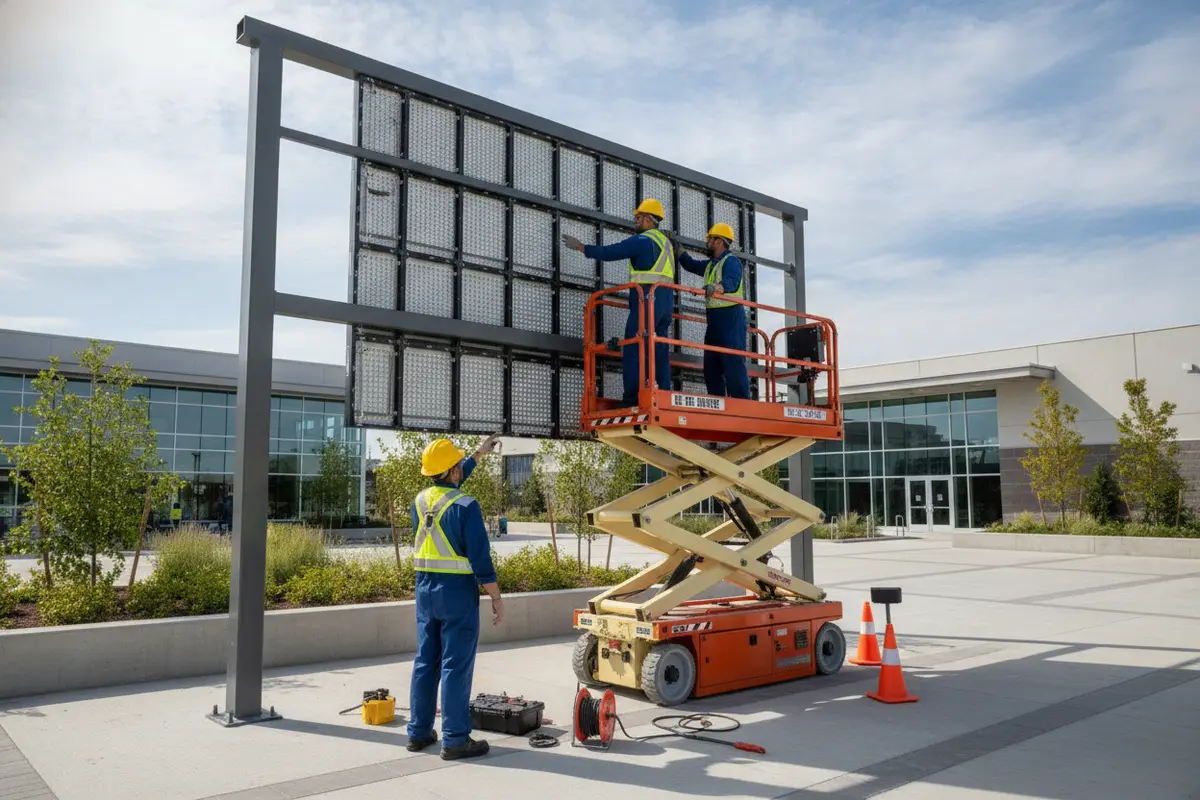
Ask how the team will handle unknown site conditions, document decisions, communicate schedule changes, and coordinate with other trades. Ask what the organization will receive at completion, including operating guidance and relevant project documentation. For a multi-location organization, ask how shared specifications and brand standards will remain consistent while each location receives its own site and approval review.
Carolina Signs and Wonders provides design, structural engineering, manufacturing, installation, electrical coordination through Carolina Commercial Electric, and ongoing service for signage projects. The company serves projects across North and South Carolina and in multiple United States markets. Its national sign installation partner program describes installation support for sign companies working across markets. That resource is particularly relevant to national sign companies seeking an area installation partner, rather than to an organization simply planning one local display.
A capable partner should explain the project sequence in plain language. Look for a defined discovery process, site review, design development, approval coordination, fabrication release, installation planning, testing, closeout, and service path. Ask who owns each transition. Many project problems occur not because one task is impossible, but because responsibility becomes unclear between tasks.
Compare proposals using a written scope. Review assumptions, exclusions, approval responsibilities, site conditions, schedule milestones, communication practices, and closeout deliverables. Confirm how changes will be documented and how the team will communicate when field conditions differ from the original information. These questions are especially important when the sign is part of a broader construction or rebranding program.
Project pricing is custom and depends on the display, structure, site, approvals, electrical scope, installation conditions, and service expectations. A consultation is the appropriate way to develop a responsible project scope and estimate rather than relying on a fixed figure detached from the property.
Get a consultation for your programmable LED sign project
Frequently Asked Questions
What is a programmable LED sign?
It is an electronic sign display that can show changing messages. The exact capabilities, installation requirements, and permitted use depend on the selected system, the property, and the rules that apply at the project location.
Does every programmable LED sign need a permit?
Approval requirements vary by jurisdiction, property, sign type, placement, and project scope. Confirm the applicable requirements with the relevant local authority before finalizing design or releasing fabrication.
Can an existing sign structure support a new display?
That cannot be determined from appearance alone. The existing structure, foundation, mounting conditions, proposed display, and electrical plan should be reviewed by qualified professionals for the specific project.
What should an organization decide before requesting a quote?
Prepare the project purpose, proposed location, viewing audience, content needs, known site information, schedule, stakeholder list, approval expectations, and service requirements. These details help a project team identify open questions and build a consultation around the real conditions.
How can a multi-location organization keep signs consistent?
Define shared standards for identity, content roles, approval workflows, documentation, and project coordination. Then review local site, permitting, structural, electrical, and installation differences at each location instead of applying one property’s assumptions everywhere.
A well-planned programmable LED sign connects communication goals with site conditions, approvals, installation, and long-term operation. Early coordination gives stakeholders a clearer path from concept to a durable sign that fits the organization’s needs.


