


Choosing how illuminated channel letters attach to a commercial building is a design, engineering, and operations decision. The mounting method affects facade penetrations, wiring access, landlord criteria, nighttime appearance, installation sequencing, and future service. For a single location or a multi-site rollout, the right answer should come from the building and project requirements rather than a standard preference.
Raceway mount vs direct mount channel letters is a comparison between attaching individual letters to a shared electrical raceway and attaching each letter directly to the building facade. Raceway mounting can consolidate wiring and simplify certain installations, while direct mounting can create a cleaner facade presentation. The best choice depends on the substrate, approvals, electrical route, appearance, access, and long-term service plan.
This guide gives facilities teams, property owners, general contractors, brand managers, and commercial tenants a practical way to evaluate the choice before shop drawings and fabrication. Carolina Signs and Wonders supports the full signage workflow, including site assessment, engineering, permitting coordination, custom fabrication, electrical coordination, professional installation, and service.
Request a channel letter mounting consultation
What is the difference between raceway and direct mount channel letters?
Raceway-mounted channel letters attach to a shared metal enclosure that can house wiring and power components. Direct-mounted, also called remote or flush-mounted, letters attach individually to the building facade, with wiring routed through the wall or another planned pathway. The visual and technical result depends on the building, sign design, and installation details.
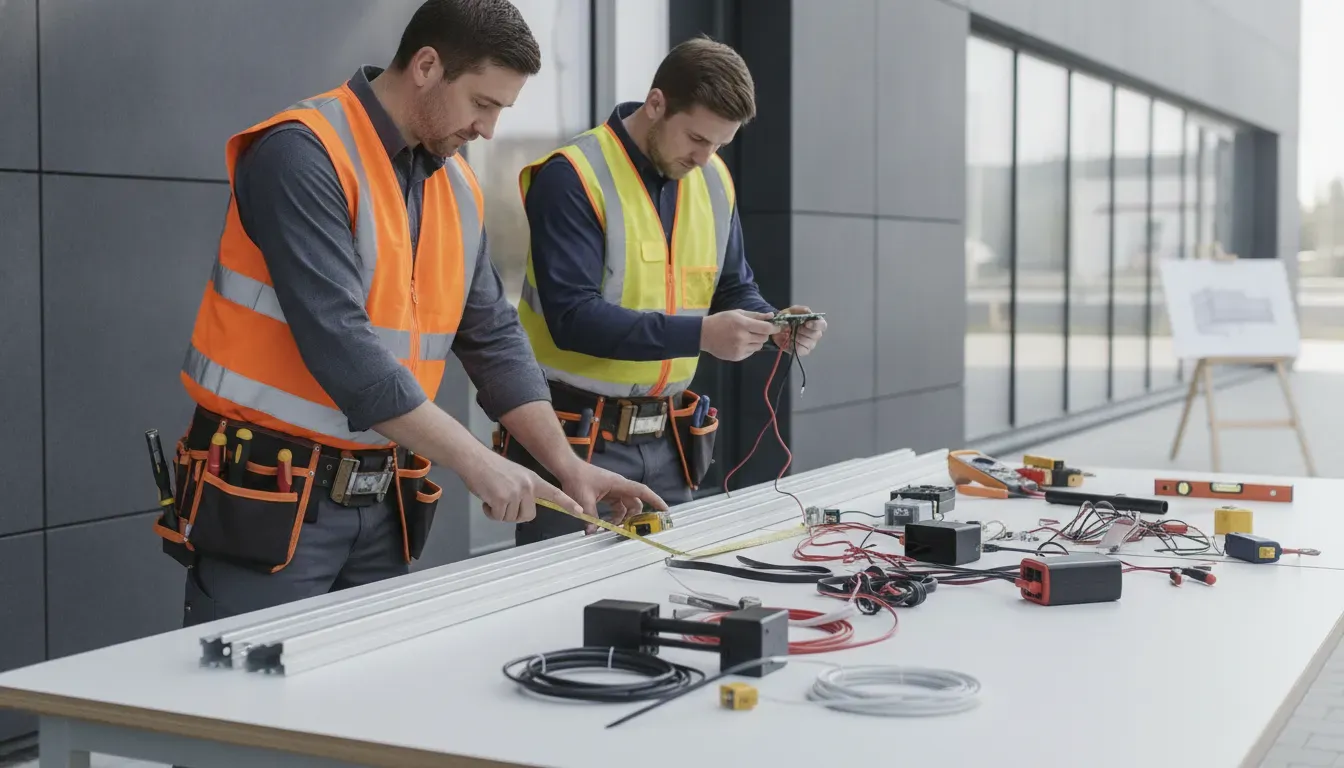
With a raceway system, the letters are assembled on an aluminum raceway before the complete sign assembly is secured to the building. The raceway provides a defined path for wiring and can consolidate several attachment points into a coordinated installation. It may be finished to complement the letters or facade, but it remains part of the visible sign assembly and must be considered in the elevations.
With direct mounting, each letter is positioned and secured separately. Electrical pathways are coordinated behind or through the facade according to the approved design. When the substrate, wiring route, and access conditions support it, direct mounting can minimize the visible backing behind the letters and create a more integrated architectural presentation. It also requires careful field layout because letter positions, penetrations, and service access must be coordinated individually.
The terms can vary by sign contractor, landlord, architect, or jurisdiction. Some teams use remote mount for direct attachment, while others distinguish remote wiring from the physical mounting method. The project documents should define exactly what is included, where the wiring will run, how the sign will attach, and what will be visible after installation.
| Planning factor | Raceway mount | Direct mount |
|---|---|---|
| Physical arrangement | Letters attach to a shared raceway that is then mounted to the facade. | Letters attach individually to the prepared building surface. |
| Electrical organization | Wiring and selected power components can be organized within the raceway. | Wiring pathways, penetrations, and access points are coordinated behind or around individual letters. |
| Facade appearance | Creates a consistent sign assembly, with the raceway finish and profile included in the design. | Can provide a cleaner, more integrated appearance when the facade and wiring route support it. |
| Approval focus | Review the raceway size, finish, projection, attachment, and visibility from the property or public way. | Review individual attachment details, penetrations, substrate, wiring route, and repair access. |
| Best decision input | Useful when coordinated wiring, repeatable assembly, or facade conditions favor a shared support. | Useful when the architecture, substrate, and approved electrical pathway support individual placement. |
Which mounting method fits the building facade and landlord criteria?
The facade and property approval process should drive the mounting decision. Evaluate the substrate, structural support, weather exposure, available electrical pathway, sign projection, raceway visibility, individual penetrations, and landlord or design-review requirements before choosing a method.
A commercial building is not a blank surface. Brick, concrete, insulated metal panels, EIFS, curtain wall systems, architectural cladding, and other substrates have different attachment and access considerations. The design team needs reliable information about the wall assembly, structural support, existing penetrations, utilities, access equipment, and weather exposure before finalizing mounting details.
Landlords and property owners may also have criteria that are more specific than municipal sign rules. A property standard may control the allowable sign zone, projection, raceway visibility, finish, color, illumination, attachment points, and repair procedures. A direct-mounted layout may satisfy a clean facade standard at one property, while a raceway may be more workable at another location where wiring access or facade protection is a priority.
Use a site assessment and approval checklist that answers these questions:
- What is the actual wall construction and where can structural attachment occur?
- Can the facade accept the planned penetrations without affecting weather protection or concealed systems?
- Where will the electrical pathway, disconnect, power supplies, and service access be located?
- Does the landlord allow a visible raceway, and if so, what finish, projection, and dimensions apply?
- Will a raceway conflict with architectural bands, windows, joints, louvers, or facade maintenance zones?
- Can installers safely reach every letter and attachment point with the planned equipment?
- Are owner, architect, brand, facilities, and permitting approvals documented before fabrication?
These questions are especially important when the sign is part of a new construction or renovation schedule. A mounting choice that is easy to describe in a concept image may require different blocking, access, conduit, or waterproofing coordination in the field. Resolving those conditions early protects the design intent and reduces late changes.
How does the mounting method change the appearance of channel letters?
Direct-mounted channel letters can emphasize individual letter forms and the architecture behind them, while raceway-mounted letters create a unified sign assembly. Neither method guarantees a better appearance. Scale, spacing, raceway finish, facade material, lighting, viewing distance, and the quality of the layout determine how the completed sign reads.
Direct mounting is often considered when the project calls for a minimal backing profile. Individual letters can appear to sit directly on the wall, allowing the facade material and letter spacing to remain visually prominent. This approach can support a refined corporate, healthcare, hospitality, or architectural presentation when the substrate and electrical design permit it.
The visual risk is not only the presence of attachment hardware. Inconsistent letter spacing, exposed conduit, uneven stand-off, poorly coordinated penetrations, or difficult service access can undermine the clean appearance that direct mounting is intended to create. The shop drawings should show the letter layout, mounting depth, electrical path, and relationship to architectural elements, not just the face artwork.
Raceway mounting creates a more unified assembly. The shared support can help keep letter alignment consistent and make the electrical organization easier to communicate during fabrication and installation. The raceway must still be designed as part of the sign. Its height, depth, finish, color, and relation to the facade can either make the installation feel intentional or draw attention away from the brand.
For either method, evaluate the sign in daylight and after dark. Review the face color, return depth, halo or face illumination, nearby exterior lighting, reflections, contrast, and sightlines from the road, parking area, sidewalk, and primary entrance. For a multi-location program, document the visual standard while allowing the mounting method to adapt to each building's actual conditions.
How do electrical access and serviceability affect the decision?
Electrical access should be resolved before the mounting method is approved. The project team should identify power sources, circuit capacity, disconnect requirements, wiring pathways, power-supply locations, weather protection, and future service access. A raceway can organize components in one enclosure, while direct mounting requires a coordinated route for each letter and its connections.
Illuminated channel letters are both a visual asset and an electrical installation. The sign package should identify the intended power source, load calculations, disconnect location, pathway, controls, and responsibility for electrical work. A nearby service point does not automatically mean the building can support the proposed sign, and an existing circuit may not be appropriate for a new installation without review.
Raceway mounting can provide a defined enclosure for wiring and selected power components. That may simplify organization and reduce the need to route separate visible pathways across the facade. The raceway itself still needs appropriate attachment, weather protection, access, and service planning. Power supplies and connections should remain accessible according to the approved design and applicable requirements.
Direct mounting can reduce the visible backing, but the electrical pathway must be carefully coordinated behind the wall or through planned penetrations. Each letter's connection, seal, attachment, and service approach should be documented. This is particularly important when a facade contains insulation, rainscreen assemblies, waterproofing, structural steel, or concealed utilities.
Ask the project team to show service access in the design review. A sign that looks excellent on completion still needs to be inspected, cleaned, repaired, or have an LED component replaced over its operating life. The selected method should support safe access without requiring avoidable removal of surrounding facade elements or creating an unclear responsibility between the sign contractor, electrician, landlord, and facilities team.
What should the installation and permitting plan include?
A complete installation plan connects approved artwork to site conditions, structural attachment, electrical work, access equipment, permits, inspections, testing, and closeout documentation. The mounting method should be selected before fabrication so the production and field teams are working from the same approved requirements.
Local requirements vary by city, county, property type, sign location, illumination, height, projection, and building conditions. Property or landlord approval may also apply even when the municipal permit path is clear. Treat the mounting method as part of the permit and installation package, not as a field detail that can be decided after the letters are fabricated.
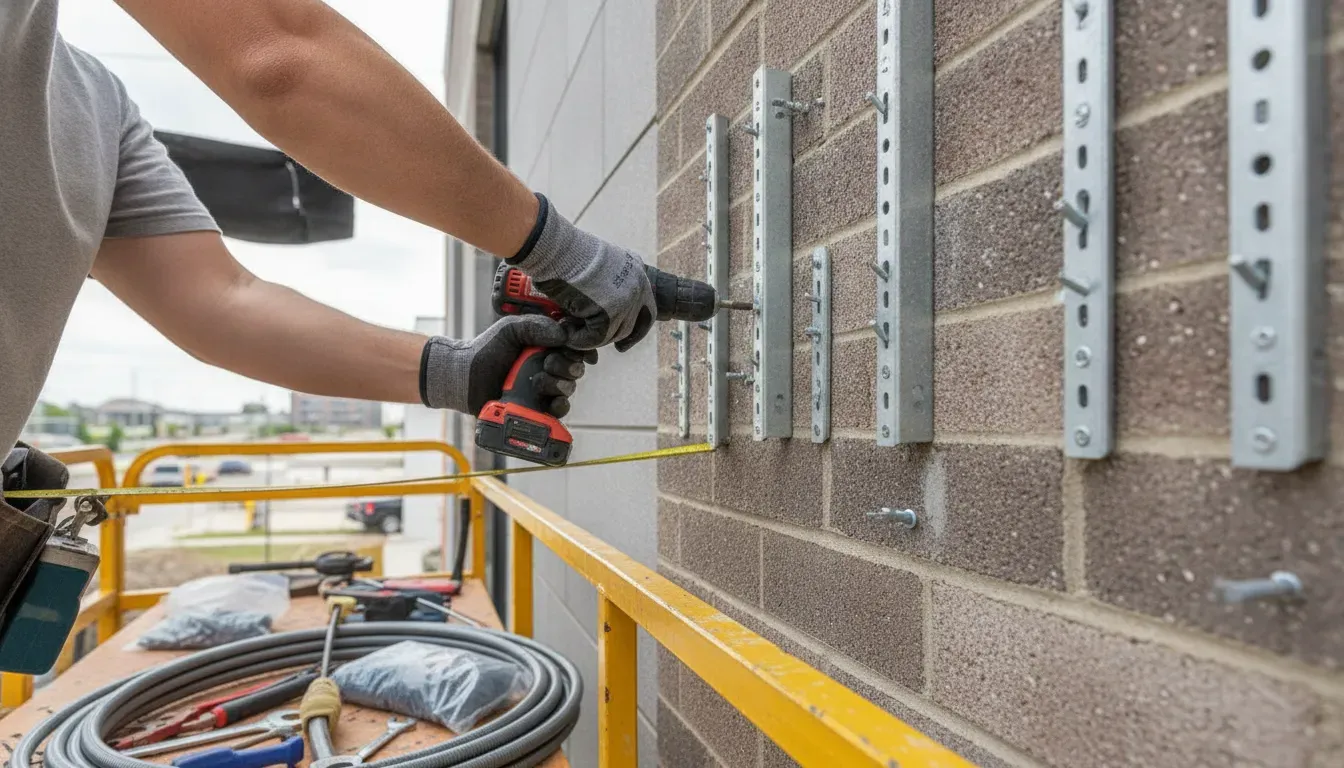
- Complete the site assessment. Record the facade construction, proposed sign zone, dimensions, sightlines, access, utilities, existing penetrations, and installation constraints.
- Confirm the mounting concept. Show the raceway or individual attachment method, letter spacing, projection, finish, wiring path, structural support, and service access in the design package.
- Coordinate owner and landlord review. Confirm property standards, approved elevations, raceway visibility, finish requirements, access windows, and responsibility for future maintenance.
- Resolve engineering and electrical requirements. Determine whether structural calculations, load calculations, electrical design, licensed electrical work, or separate approvals apply to the project.
- Complete the permitting path. Prepare the drawings, sign schedule, elevations, attachment details, electrical information, and supporting documentation requested by the applicable authority.
- Release fabrication only after approvals. The production package should reflect the approved mounting method, dimensions, materials, illumination, wiring, and site-specific requirements.
- Coordinate installation and testing. Confirm site readiness, equipment, staging, mounting, electrical connections, illumination tests, alignment, cleanup, and client walkthrough requirements.
- Document closeout and service. Preserve approved drawings, test results, component information, warranty records, and the service contact or procedure for the property team.
Carolina Signs and Wonders provides professional sign installation as part of a coordinated project workflow. Bringing fabrication, electrical coordination, permitting, and installation planning together helps the field team execute the approved design rather than reinterpret it on site.
How should multi-location teams choose between raceway and direct mounting?
Multi-location teams should set a mounting decision framework, not force every building into one method. Establish brand and appearance standards, then allow the approved mounting approach to adapt to each facade, landlord rule, electrical condition, permit path, installation schedule, and service requirement.
A repeatable rollout needs consistent outcomes more than identical construction at every address. The letters should preserve approved proportions, colors, illumination behavior, spacing, and brand presentation. The support method may change when one building has a suitable raceway zone, another requires individual attachment, and a third has a landlord standard that limits projection or visible backing.
Use a project matrix to compare each location before releasing the sign package:
- Building condition: substrate, structural support, facade protection, existing systems, and attachment zones.
- Property criteria: landlord standards, design-review requirements, raceway visibility, finish, and projection.
- Electrical plan: source, capacity, disconnect, pathway, power-supply access, and inspection needs.
- Brand presentation: letter spacing, depth, illumination, contrast, nighttime appearance, and viewing distance.
- Installation logistics: equipment, access windows, staging, construction sequencing, and site readiness.
- Service plan: inspection access, component replacement, documentation, and long-term accountability.
For a single building, the decision can often be resolved through a detailed site assessment and design review. For a multi-location program, the team should add a prototype or representative site review before releasing a standard. That step can identify where the standard needs controlled adaptations and what information each local project must provide.
Carolina Signs and Wonders can connect channel-letter design and fabrication with the broader requirements of commercial business signs. The objective is not to promote one mounting method in every situation. It is to select a buildable, approved, serviceable solution that protects the building, the brand, and the project schedule.
Discuss your channel letter mounting plan with Carolina Signs and Wonders
Frequently Asked Questions
Is raceway mounting or direct mounting better for channel letters?
Neither method is universally better. Raceway mounting may fit a project that benefits from organized wiring, repeatable assembly, or a shared support, while direct mounting may fit a facade where individual placement and a minimal backing profile are priorities. The substrate, electrical pathway, landlord criteria, appearance, installation access, and service plan should determine the recommendation.
Does raceway mounting make channel letters easier to service?
Raceway mounting can make wiring and selected power components easier to organize, but serviceability still depends on access, enclosure design, component locations, and the completed installation. A direct-mounted sign can also be serviceable when its wiring, connections, attachments, and access method are documented and installed as planned. Review future service before approving the mounting method.
Can channel letters be mounted directly to a brick or masonry facade?
Direct mounting may be possible on masonry, but the appropriate attachment method depends on the actual wall construction, structural support, weather exposure, sign weight, and local requirements. A qualified project team should verify the substrate and attachment details through site assessment and engineering review before fabrication. Do not infer suitability from the facade appearance alone.
Does a raceway require landlord or permit approval?
A raceway may require property approval and may affect the applicable permitting review because its dimensions, projection, finish, attachment, and electrical components become part of the sign assembly. Requirements vary by location and property. Confirm landlord criteria and the local approval path before fabrication, and document the raceway in the submitted drawings when required.
How do I decide which mounting method belongs in the shop drawings?
Start with the site survey, facade conditions, electrical route, owner or landlord criteria, and the desired appearance. Then compare the two methods for attachment, penetrations, wiring access, installation sequencing, and future service. The shop drawings should show the selected method clearly enough that the owner, architect, electrician, permitting contact, fabricator, and installer are approving the same buildable solution.


