


School district digital sign procurement is the work of turning one campus message center, or a short list of them, into a bid a board can award. The package has to name the site, the power path, who may be on campus during the work, and what "done" means. A product brochure does not do that. Facilities and purchasing need a scope a vendor can price without guessing.
Call (704) 625-2345 to talk through a school digital sign bid
A usable bid names one campus, one sign location, and the power source. It also names the hours crews may work and a single turnkey scope for design, permits, fabrication, electrical, and install. Leave any of those out and the bids will not match.
What should school district digital sign procurement decide first?
Start with the decision the board is actually making. Most districts are replacing one letter board at a main entrance, or adding a second display at a stadium or early-college driveway. That is a different purchase from a district-wide screen network, and it should be bid as its own project.
Write the purpose in one sentence before anyone shops displays. Common purposes are dismissal changes, weather closures, event times, and emergency notices that staff can post from a desk instead of walking outside with plastic letters. If the board also wants indoor lobby screens, keep those on a separate line so the outdoor sign is not priced as a campus media system.
Name the buyer. Purchasing may run the advertisement, but facilities owns the pole, the foundation, and the circuit. Communications owns what may be posted. The technology team owns the login. Put those four roles on the cover sheet so a bidder knows who answers a site question and who signs the submittal.
Carolina Signs and Wonders builds this kind of project as one scope: design, permitting, fabrication, electrical coordination, and installation. The company is based in Charlotte and works across North Carolina and South Carolina, including school districts that need a durable outdoor display rather than a commodity board. For the hardware itself, the digital signs service page is the product overview. This article stays on the bid.
Which purchasing path does the district have to use?
Do not copy another state's bid form and assume it fits. In North Carolina, G.S. 143-129 sets formal bidding rules for boards and other political subdivisions. Construction or repair at or above $500,000, and purchases of apparatus, supplies, materials. Or equipment at or above $90,000, follow that statute unless a narrower local rule says otherwise. The advertisement has to leave at least seven full days between the notice and the bid opening. And the notice has to say where the plans are and when bids open.
Those dollar lines are a starting point, not a legal opinion. A district's own policy, a state contract, or a cooperative agreement can change the path. Ask purchasing which path this sign is on before the specification is written. A sign that looks small on a quote sheet can still cross a formal threshold once foundation work, a new circuit, and a permit set are included.
South Carolina districts follow their own procurement rules. Do not paste the North Carolina thresholds into a South Carolina packet. Ask that purchasing office for the advertisement rule and the opening date before the packet goes out.
Whatever the path, the packet should still read like a construction scope. Award language that only says "provide an LED sign" produces bids that leave out trenching, a disconnect, or the cost of working after dismissal. The board then has to compare numbers that do not cover the same work.
What belongs in the bid package?
A bidder should be able to price the job from the packet plus one escorted site walk. If a fact is missing, say who will answer it and by when. Do not leave it as "field verify" with no contact.
| Bid item. | What to require. | Why bids fail without it. |
|---|---|---|
| Location. | Campus name, face direction, setback, and whether the existing base stays. | Vendors price different spots and different structures. |
| Power. | Source panel, who verifies the circuit, and whether a new pathway is in the base price. | Electrical becomes a change order after award. |
| Hours and access. | When noisy work is allowed, office check-in, and student-occupied dates. | Crews arrive during arrival or dismissal. |
| Permits and drawings. | Who pulls the sign and trade permits, and that drawings go to the owner before the application. | The district thinks the vendor included a permit the quote left out. |
| Closeout. | Training for two staff roles, as-builts, and a named service contact. | The sign is live and nobody can post to it. |
Ask for a base bid that is turnkey. Alternates are fine for a second face, a monument cabinet with the school name, or a spare parts kit. They should be separate lines, not buried in the base number.
Require a listed electric sign. UL Solutions tests electric signs to UL 48 so they can be approved under the National Electrical Code, NFPA 70, Article 600. The packet should say the display, the cabinet, and the retrofit kit if one is used must be listed for the way they are installed. A parts list with no listing is not the same thing.
Price the base bid as one finished sign: structure, power, listing, permits, training, and a service contact. Keep extras on alternate lines so the board can see them.
What should the site walk confirm before award?
Schedule one walk with facilities, purchasing, and the principal or the communications lead. Bidders who skip it should not be relieved of the scope. The walk is where the packet becomes a real campus.
- Stand at the proposed sign and confirm what a driver sees at arrival and at dismissal. Note trees, a bus canopy, and any sign the city or the district already owns in that view.
- Open the electrical room the packet names. Confirm the panel label, spare capacity as the electrician reads it, and the path from that room to the sign. If there is no pathway, the base bid includes a new one.
- Mark where students and buses will be. Write the hours for digging, concrete, and crane time. Many schools require noisy work outside the school day.
- Identify underground utilities and who calls them before any excavation. The bidder measures. The district does not guarantee the bidder's dimensions.
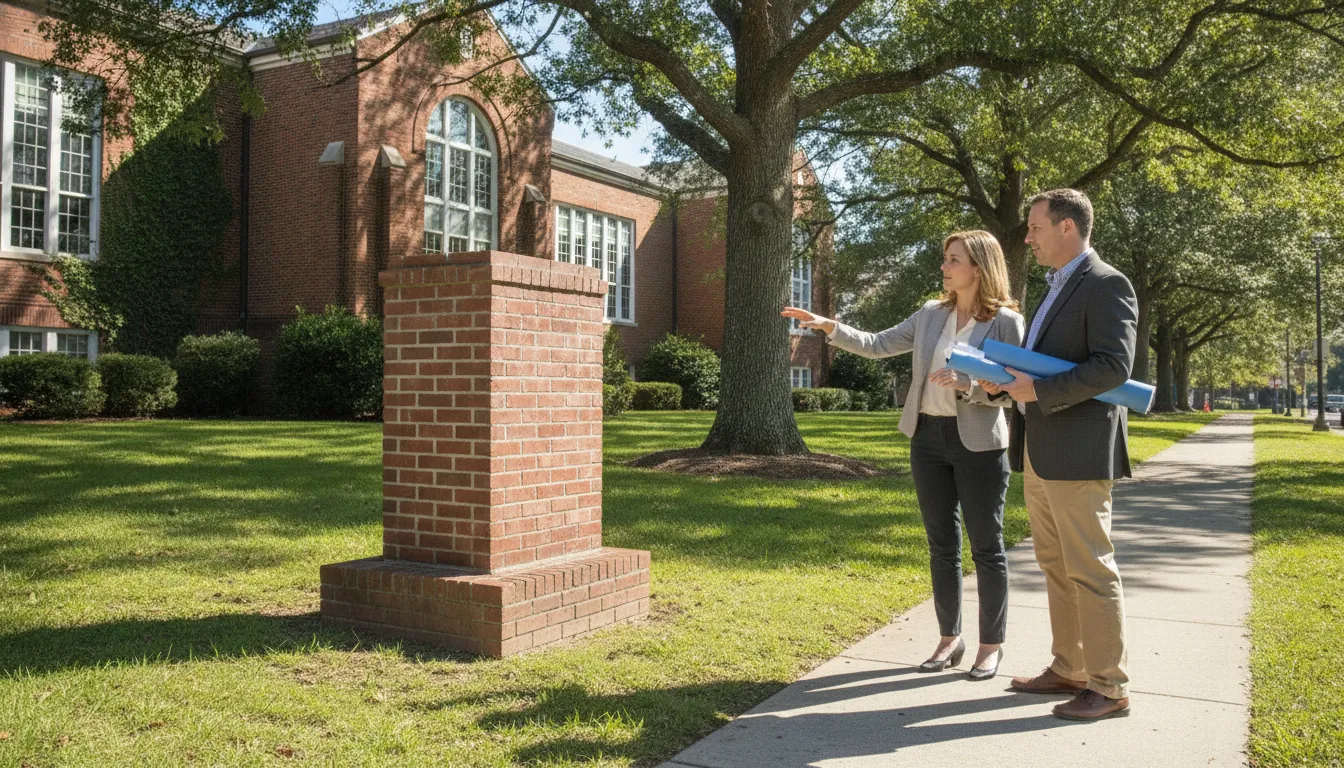
- Photograph the existing base. Say whether it stays, gets cleaned, or comes out. Reusing a masonry base only works when a structural drawing says the new cabinet can sit on it.
- Name the two people who will be trained: one in communications and one in facilities. Collect their emails in the award letter, not on installation day.
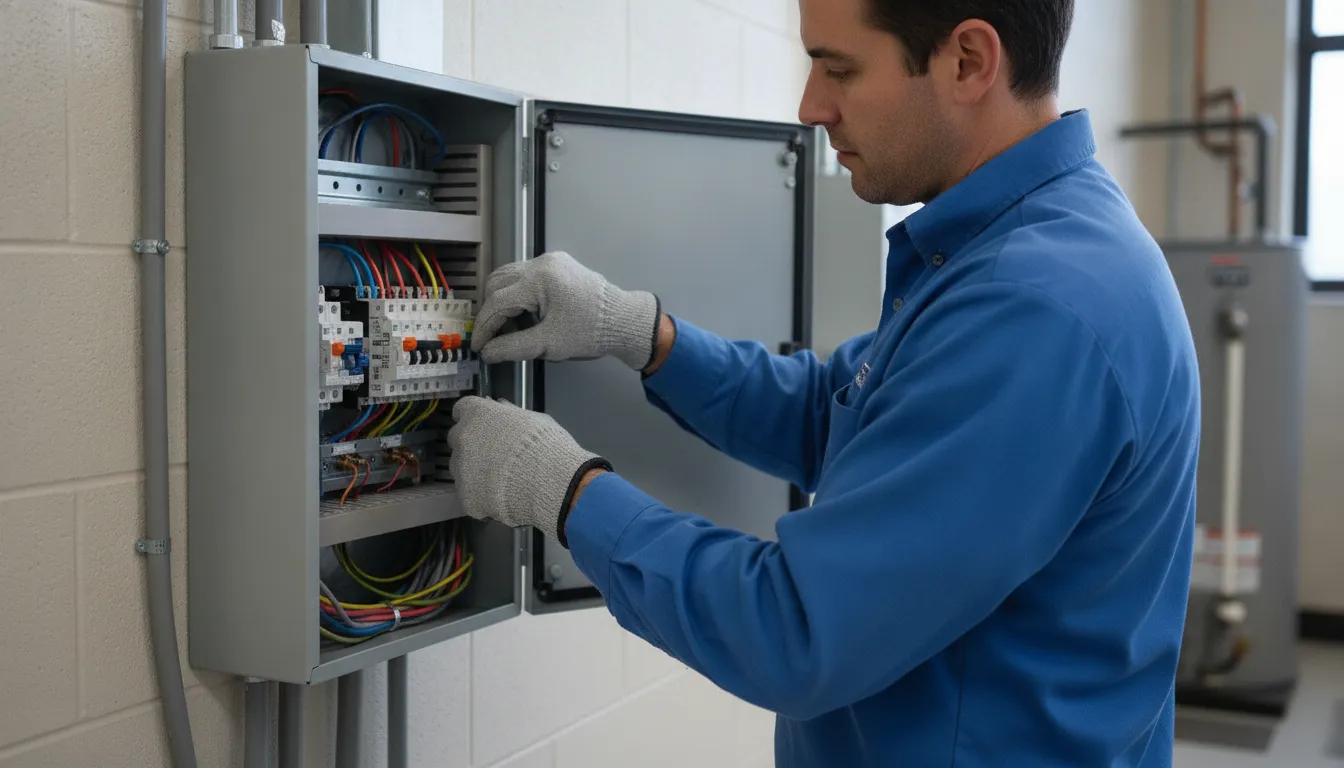
Carolina Signs and Wonders handles the electrical side through Carolina Commercial Electric, its UL-listed electrical division. So the circuit and the cabinet are one scope instead of two contractors pointing at each other. Installation is coordinated by the same team that fabricates the sign. Read the sign installation page for how field work is run, then make the bid require that single point of accountability.
If the district is still choosing the display type, pause the bid and read the outdoor LED signs for schools guide. Product choice is not this packet. This packet assumes the district has already decided it wants an outdoor message center at a named spot.
How should the district score the bids?
Lowest price is a weak way to award a sign that has to be permitted, powered, and taught to staff. Score the packet. Publish the points so vendors answer the same questions.
- Scope match. Does the base bid include design drawings, the permit applications the packet assigns, fabrication, the electrical pathway, installation, and training?
- Campus constraints. Did the vendor accept the after-hours rule and the check-in rule in writing?
- Listing and drawings. Is the proposed sign listed for outdoor use, and will stamped drawings go to the owner before the permit is filed?
- One accountable lead. Is there a named project manager for submittals, inspections, and the day the sign is commissioned?
- Service after acceptance. Who do facilities call when a module fails, and is that contact in the closeout set?
Reject a bid that excludes the electrical pathway or the permit the packet put in the base scope. Those exclusions are how a low number becomes the expensive one. Also reject a bid that cites a competitor's brand as the only acceptable product. Name performance the district needs, such as outdoor listing, a readable face at the posted approach, and a content login two named staff can use. Let vendors propose a listed product that meets that bar.
The broader campus program, including room signs and street-sign limits, already lives in the school signage guide. Do not paste that program into this bid. Link it for the facilities lead who is planning the rest of the campus, and keep this award about the digital sign only.
For a district buying many sign types across several schools, the signage procurement checklist is the enterprise view. Use it when the purchase is a program. Use this article when the purchase is a digital sign the board can award now.
Award the vendor who priced the whole scope, accepted the campus hours, and named one project lead. A lower number that drops power or permits is not the lower cost.
What should the district leave out of this bid?
Keep the packet short enough that a board can see the decision. Several nearby topics belong in other documents.
- Do not write a catalog of indoor lobby screens, gym video walls, and cafeteria boards. Those are different mounts, different viewers, and often a different budget year.
- Do not set a content calendar here. Who may post, and how long a message stays up, is an operating rule for communications after the sign is accepted.
- Do not publish a fixed price or a "typical school sign cost." Foundation depth, the circuit length, and the jurisdiction change the number. Ask for a consultation quote against the packet.
- Do not specify a sign the district has not measured. If the face size is still open, make it an alternate with a maximum cabinet size that fits the base and the setback.
The existing digital signage for schools guide covers what these displays are, how campuses use them, and how a single school plans one. Send a principal there. Keep purchasing in this packet.
Frequently Asked Questions
Does every school district digital sign have to be formally bid?
No. The path depends on the district's state and its own policy. In North Carolina, G.S. 143-129 sets formal bidding at $500,000 for construction or repair and $90,000 for purchases of apparatus, supplies, materials, or equipment, with a seven-day notice. A local policy or a cooperative contract can change the route. Ask purchasing before the packet is written, and do not assume a South Carolina district uses the same thresholds.
Who should own the specification inside the district?
Facilities should own the site, the structure, and the power path. Purchasing should own the advertisement and the award record. Communications should own what the sign is allowed to say, and technology should own the login. Put all four names on the cover sheet so bidders are not guessing which office can approve a drawing.
What electrical facts belong in the base bid?
Name the source panel if it is known, and say whether a new pathway is included. Require a listed electric sign under UL 48 for approval under NEC Article 600. Ask the bidder to confirm the circuit on the site walk. If the packet is silent, electrical shows up later as a change order.
Can the work happen while students are in class?
Only the quiet parts. Digging, concrete, and lifting should be scheduled outside arrival and dismissal when the packet says so. Require office check-in, a fenced work area, and a utility locate before excavation. The bidder's price should assume those limits, not a clear site on a weekend that was never offered.
How is this different from a general school sign plan?
A campus sign plan covers identity, room identification, and street signs. This purchase is the bid for an outdoor digital message center: the documents, the site facts, and the award. Write them separately so the board is approving a sign it can build, not a whole campus program.


