


School signage is the permanent set of entrance, building, room, and safety signs a campus uses so families, staff, and first responders can tell where they are. A facilities director planning a replacement usually needs one coordinated scope, not a pile of one-off plaques. This guide covers which pieces belong in that scope, who has to approve them, and what a site survey should confirm before anyone prices the work.
Get a free quote for a school signage plan, or call (704) 625-2345.
School signage is the permanent identification, wayfinding, and safety sign program for a K-12 campus. It is separate from a digital message board, a scoreboard, and a college identity system. Plan the entrance, the room-identification plaques, and the safety signs as one project so materials, colors, and mounting heights match.
What belongs in a school signage program?
A useful school signage program covers the signs a visitor meets in order. Start at the public street, then the drop-off lane, the main entrance, the corridors, and the rooms that stay in the same place year after year. Temporary event boards, classroom decorations, and a one-week poster do not belong in the same package. The broader sign services catalog covers monument, wayfinding, and installation work for other sites. This page stays on the K-12 campus scope.
Group the permanent pieces into four jobs:
- Arrival identity. A monument sign or building-mounted identification sign that names the school at the driveway.
- Orientation. Directional signs from parking and the bus loop to the main office, gym, and auditorium. The design method for a full campus hierarchy is covered in custom wayfinding signs.
- Room identification. Tactile plaques at permanent rooms such as restrooms, the media center, the cafeteria, and numbered classrooms.
- Safety and site control. Signs that mark the office, restricted doors, and the edge of the school site, coordinated with the traffic devices the road authority already owns.
Leave these out of this scope. A digital message center is its own electrical and content project, covered in the school digital signage guide. A roadside marquee is covered in the school marquee supply and install guide. Scoreboards, donor walls, and college campus identity systems each need their own brief. Mixing them into one "signs" line item is how school projects stall in committee.
Put entrance identity, directional signs, tactile room plaques, and site safety signs in one school signage scope. Keep digital displays, marquees, and scoreboards on separate projects so each one can be priced and permitted on its own.
Who should approve school signage before you request a quote?
School signage fails in procurement more often than it fails in fabrication. The facilities director usually owns the vendor and the schedule, but that person rarely owns the name on the sign, the colors, or the room list. Get those owners in the first meeting.
| Decision | Usual owner | Confirm before design |
|---|---|---|
| Campus name, mascot, and colors. | Communications or the principal. | Use the current brand file, not a photo of the old sign. |
| Which rooms get tactile plaques. | Facilities, with special-education input. | Mark rooms that stay put versus rooms that change use. |
| Street-edge and school-zone signs. | The road owner, plus district transportation. | Confirm whether the footing is in the public right-of-way. |
| Budget and install window. | Facilities, reporting to the superintendent or board. | Name the break window and the capital line that pays for it. |
| Electrical and illuminated pieces. | Facilities and the electrical contractor. | Confirm a spare circuit, a shutoff, and who pulls the permit. |
Ask the principal which doors families actually use. The architectural front door and the door parents use at 7:30 a.m. are often different. A sign package aimed at the wrong door looks finished and still fails the first week of school.
If an athletic director or a foundation wants a scoreboard, a donor plaque, or a field entrance, write that as a later phase. It can share colors. It should not hold up room plaques and the main entrance sign.
Which school signs have to be tactile?
Public schools are state and local government facilities. The U.S. Department of Justice 2010 ADA Standards apply to new construction and to alterations that start on or after March 15, 2012. The U.S. Access Board's guide to the sign standards is the practical reading of those rules. It says tactile requirements apply to interior and exterior signs that identify permanent rooms and spaces, where the school provides those signs. Required labels at exit stairs and on elevator controls are also tactile.
The same guide exempts signs posted for seven days or less, building directories, occupant names, and logos. A classroom number is not in that exempt list. A paper sign for spirit week is. One plaque can carry both kinds of content: the room name has to be tactile, while a changeable insert with a teacher's name does not.
Where tactile characters are required, fabrication and mounting follow the Access Board's Chapter 7 technical rules.
- Raised characters are uppercase, sans serif, at least 1/32 inch above the background, and between 5/8 inch and 2 inches high.
- The baseline of the lowest tactile character is at least 48 inches above the floor. The baseline of the highest is no more than 60 inches above the floor.
- At a door, the sign sits on the latch side, clear of the door swing, with an 18-inch by 18-inch floor space centered on the tactile characters.
- Visual characters use a non-glare finish and contrast: light characters on a dark field, or the reverse.
Those are minimums, not a design. Finish, typeface, and how a restroom pictogram shares a plaque with Braille are covered in the ADA compliant signs planning guide and on the ADA and wayfinding signs service page. Do not let a sign shop invent a second spec for the school.
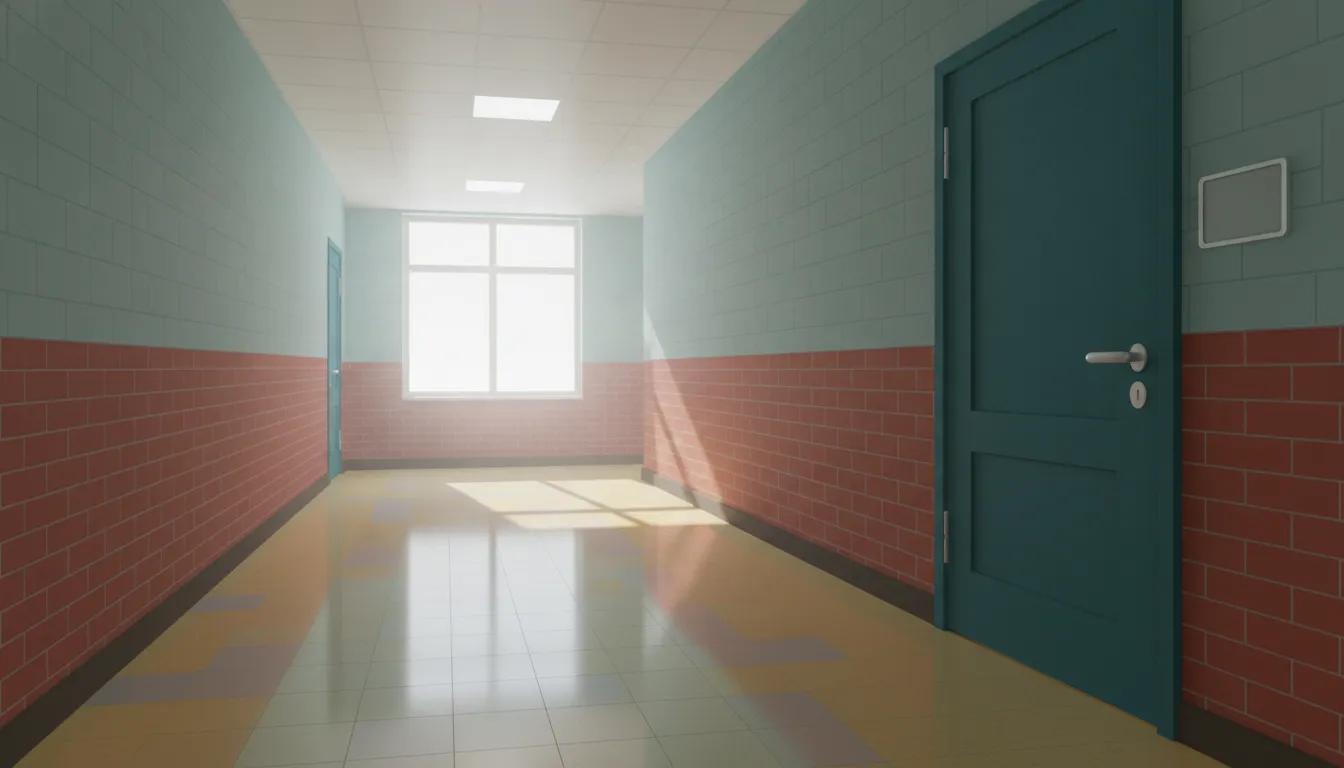
Tactile school signs are for permanent rooms and required exits, mounted on the latch side between 48 and 60 inches. Directories, short-term posters, and staff names are treated differently. Mark the room list before you count plaques.
What should a school signage site survey confirm?
A quote built from a Google photo misses the things that change the price: who owns the dirt at the curb, what is buried in it, and which door the latch-side rule can actually use. A site visit before design catches those conditions. It is part of scoping the job, not a separate packaged deliverable.
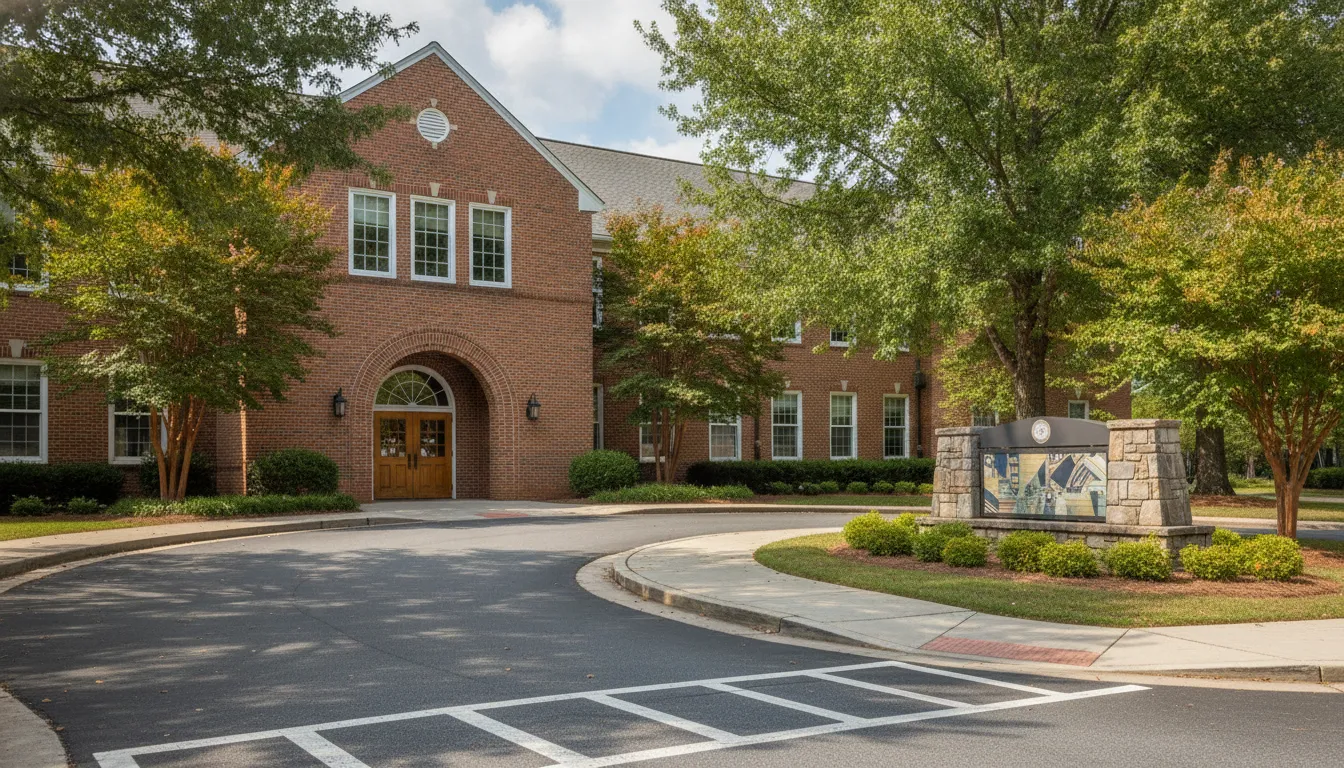
- Property line and right-of-way. Many school identification signs sit close to the street. If the footing is in the public right-of-way, the city or the state road agency, not the district, controls the permit. Confirm that on a survey, not from the fence line.
- Sight lines at the driveway. The sign has to be readable from the decision point in the car and still leave the corner open for drivers leaving the lot. A tall sign that blocks the view is a safety problem, not a branding win.
- Latch side at every permanent door. Measure the wall beside the handle. Double doors, a sidelight, or a fire-extinguisher cabinet often leave no legal place for the plaque. The standard then sends the sign to the nearest adjacent wall, which has to be in the survey notes.
- Power, only if something lights up. An illuminated entrance face needs a circuit, a disconnect, and a path for conduit that does not cut the accessible route. If the scope is plaques and a non-illuminated panel, do not add electrical just to make the rendering glow.
- Materials that survive students. Specify a finish and a mounting method that can be cleaned and that resists prying. High-traffic corridors and bus loops punish thin plastic and surface-only fasteners.
- Install window. Summer and other breaks are the realistic windows for corridor work. Night or weekend sign installation costs more and needs a district escort. Put the window in the quote so it is not a surprise change order in May.
Write the survey findings into the bid form. "Match existing" is not a specification when half the existing plaques are at the wrong height.
How should school signage work with street signs?
The signs on the public road are a different system from the signs on the campus. The Federal Highway Administration's Manual on Uniform Traffic Control Devices, Part 7, covers school area traffic control. School warning signs, including the SCHOOL portion of a school speed limit sign, use a fluorescent yellow-green background with a black legend and border, and they have to be retroreflective or illuminated. If the jurisdiction designates a school zone, the School sign has to mark where that zone begins.
A district does not get to redesign those signs to match a mascot. The road authority adopts the Manual and decides where the zone starts and ends. Campus school signage should point people to the office and name the building. It should not imitate a regulatory sign, and it should not repeat the speed limit in school colors.
The practical split:
- Yellow-green school warning and speed-zone signs stay with the agency that maintains the road.
- The monument or wall sign on school property names the school and follows local zoning for size, lighting, and setback.
- Interior plaques follow the ADA rules above, not the traffic manual.
Ask transportation staff which approaches already have a school-zone assembly before you propose a new roadside panel. Duplicating it on school property confuses drivers and can put a non-standard sign where a standard one belongs.
Roadside school-zone signs follow the traffic manual and the road owner. Campus school signage names the building and guides people who are already on site. Do not restyle a warning sign in school colors.
How do you write a school signage scope a vendor can price?
Send one scope, with counts. Vendors cannot price "update the signs" in a way you can compare. A complete request includes:
- A scaled site plan or a marked aerial photo showing the entrance sign, parking direction, and each building door in the package.
- The room list, with permanent name, room number, and whether a pictogram is required.
- The brand files: logo, approved colors, and which names are official. "Elementary School" and the name families use are sometimes different.
- The mount type for the entrance sign: ground monument, wall panel, or post and panel, plus whether the face is illuminated.
- The install window and any rule about background checks, badging, or tobacco-free and weapons-free campus policies the crew must follow.
- What is excluded: digital displays, scoreboards, and vehicle graphics.
Ask each bidder to return a location schedule, not a lump sum alone. The schedule should list location, message, size, tactile or visual only, and mount height. That is the document the board can review and the document the installer can be held to. Carolina Signs and Wonders does not promise a board-ready packet as a standard deliverable.
Carolina Signs and Wonders builds and installs this kind of work as one vendor, from design and permitting through fabrication and installation, on a consultation quote. There is no standard school package price, because the room count, the footing, and the permit path change the job.
Request a quote for a school signage consultation.
Frequently Asked Questions
What is school signage?
School signage is the permanent sign program for a K-12 campus: the entrance identification, directional signs, tactile room plaques, and on-site safety signs. It does not mean a digital message board, a scoreboard, or a roadside school-zone sign, which are separate systems.
Do all classroom signs have to include Braille?
Signs that identify permanent rooms, including numbered classrooms, need raised characters and Braille when the school provides them. A temporary sign posted for seven days or less, a directory, and a teacher's name are not held to that tactile rule. Confirm the room list against the 2010 ADA Standards before you order.
How high should a school room sign be mounted?
Tactile characters sit between 48 inches and 60 inches above the finished floor. Measure 48 inches to the baseline of the lowest character and 60 inches to the baseline of the highest. Place the sign on the latch side of the door, outside the door swing.
Can a school match its roadside speed-zone sign to school colors?
No. School warning signs on the public road use fluorescent yellow-green with a black legend under the Manual on Uniform Traffic Control Devices, and the road authority controls them. Brand colors belong on the identification sign on school property.
Who should be in the first school signage meeting?
Facilities, the principal, and whoever approves the school name and colors. Add district transportation if any sign is near the public road, and add an accessibility lead when the room list is long. Athletic and foundation projects can follow as a later phase.
Ready to talk through your school's signs?
Bring the room list, a photo of each entrance, and the semester you want the work finished. A consultation can sort campus signs from road signs and help you decide what belongs in the first quote. Nothing in that conversation is a packaged site walk or a board packet unless the project scope says so.
Get a free quote or call (704) 625-2345.


