


Choosing a commercial sign company Charlotte owners can brief is not only a matter of selecting a sign style. A successful project has to work on the property, represent the brand, meet applicable requirements, and be installed without creating avoidable delays for the owner, tenants, contractor, or facilities team. The right partner helps turn those decisions into one coordinated scope.
Call (704) 625-2345 to discuss your Charlotte commercial signage project
Short answer: The best commercial sign company for a Charlotte project can connect site review, design, permitting, fabrication, installation, and service. Keep the approved scope clear for every stakeholder.
What should a commercial sign company in Charlotte help you plan?
A commercial signage project usually includes more than one sign and more than one audience. A building may need an illuminated identity sign for the road and a monument at the entrance. It may also need tenant panels, interior identification, and directional signs for parking or multiple buildings. These pieces should feel like one system even when they use different sizes, materials, mounting methods, or illumination.
Before requesting a proposal, define what the signs need to accomplish. A useful project brief answers:
- What should a driver, pedestrian, visitor, tenant, or employee recognize first?
- Where do people arrive, make decisions, and need confirmation that they are on the right route?
- Which signs are permanent identity elements, and which signs may need future tenant or message updates?
- What brand standards, property rules, landlord requirements, or construction documents already exist?
- Who approves the message, appearance, budget, permits, and installation schedule?
Starting with these questions helps a commercial sign company develop a package instead of pricing isolated pieces that may not work together. Carolina Signs and Wonders’ Charlotte sign company team can review the property and the intended visitor experience before the scope is finalized.
How do you compare commercial sign companies in Charlotte?
Look beyond a portfolio of attractive finished signs. Ask how each company will manage the decisions between the first conversation and the final installation. A partner for a complex commercial project should be able to explain its approach to site conditions, approvals, drawings, production, field coordination, and service after installation.
| Evaluation area | Question to ask | Why it matters |
|---|---|---|
| Project ownership | Who is responsible for keeping the scope and decisions organized? | A clear owner reduces gaps between design, production, and field work. |
| Site review | Will the team verify dimensions, visibility, mounting conditions, utilities, and access? | Field facts prevent a design or mounting plan from being based on assumptions. |
| Approvals | Who identifies property, municipal, landlord, and construction requirements? | Approval needs can affect design, schedule, and installation sequencing. |
| Fabrication | How will materials, illumination, finishes, and quality be controlled? | Durable, consistent construction supports the brand and the useful life of the project. |
| Installation | How are access, safety, coordination, and closeout documentation handled? | Professional field execution protects the property and helps the project finish cleanly. |
| Service | What happens if a sign needs repair, an element changes, or a location expands? | A service path keeps the signage program useful after the original installation. |
A lower initial proposal is not necessarily the lower-risk choice if it leaves site verification, permit coordination, or installation responsibility unclear. Request a proposal that identifies assumptions, exclusions, decisions still needed, and the person accountable for the next step.
Which sign types may belong in a Charlotte commercial project?
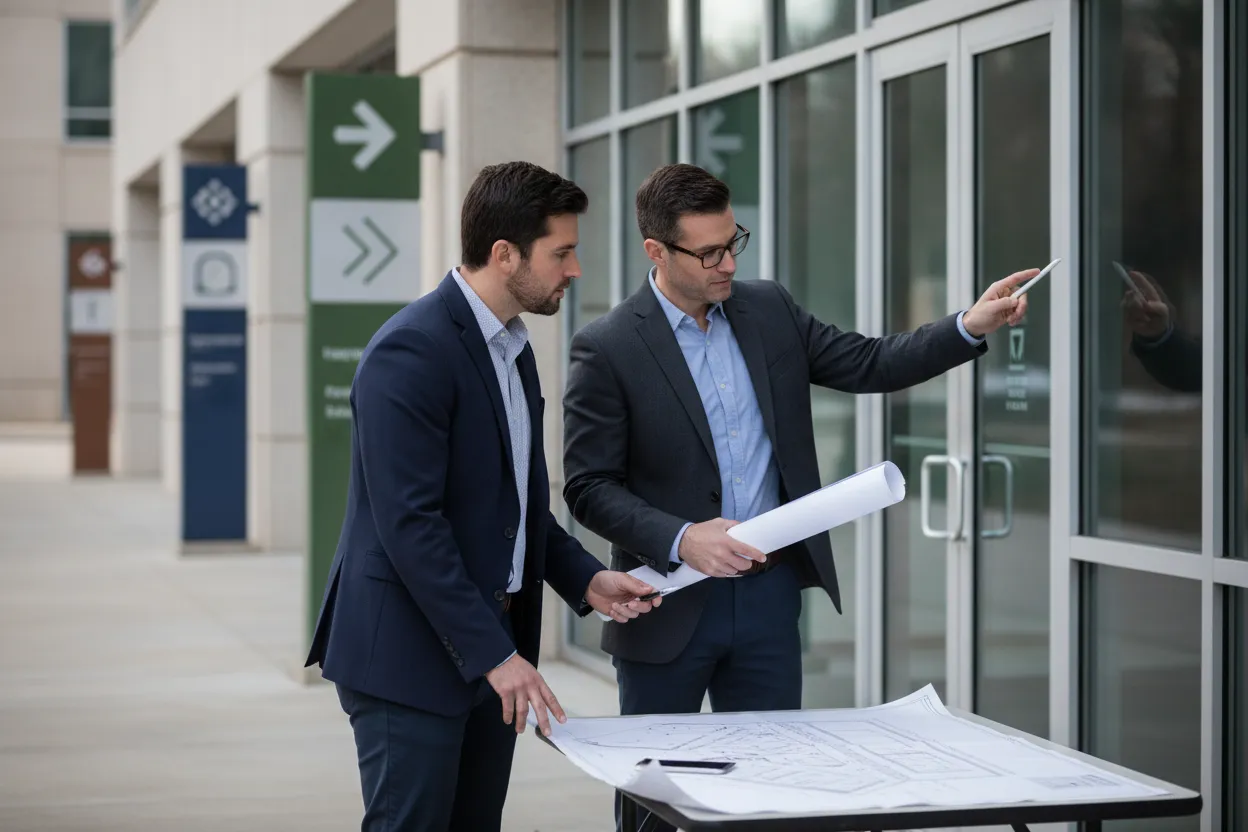
The right sign mix depends on the property, sightlines, traffic patterns, brand standards, and the way people use the site. A commercial sign company should recommend sign functions based on those conditions rather than treating a standard package as appropriate for every property.
- Building signs: Illuminated or dimensional identity signs can help a business remain recognizable from an approach road or parking area.
- Monument signs: Freestanding entrance signs can identify a campus, office park, healthcare property, or mixed-use development from the street.
- Tenant and directory signs: Shared properties may need updateable panels and a consistent hierarchy for multiple occupants.
- Storefront and entrance signs: Retail, hospitality, and service businesses need clear identification at the point of arrival.
- Interior signs: Lobby identity, directories, room identification, and directional signs help people navigate once they enter.
- Digital or illuminated message signs: Some properties benefit from changing information, but the design must account for viewing distance, content governance, electrical needs, and approvals.
For office properties, review the company’s office signage solutions when defining lobby, directory, room, and branded-environment needs. For visitor navigation or accessibility, the ADA and wayfinding signage service can help connect the sign schedule to the building experience.
What is the key selection principle? Choose each sign for a defined job, viewing condition, and location. Then coordinate the family so people receive consistent information from the property entrance to the final destination.
What should you verify during a Charlotte site survey?
A site survey turns a general concept into buildable information. The sign team should examine the actual location where each sign will be seen, mounted, illuminated, accessed, and maintained. Photos and measurements are useful, but the review should also consider how the site operates during a normal day.
Important questions include:
- From what distance and angle must the message be read?
- Will trees, parked vehicles, future construction, lighting, or other signs affect visibility?
- What wall, canopy, foundation, or landscape condition will support the sign?
- Are electrical service, conduit routes, controls, or disconnect access needed?
- Can lifts, cranes, or service vehicles safely reach the installation area?
- Will mounting affect finished surfaces, waterproofing, landscaping, utilities, or tenant operations?
- Does an occupied site require off-hours work, traffic control, escorts, or protection for visitors?
For a sign replacement or retrofit, document what is already installed before proposing a new face, cabinet, lighting system, or mounting solution. A focused commercial sign retrofit plan may preserve usable infrastructure while addressing appearance, visibility, maintenance, or energy concerns.
How do permits and approvals affect commercial signs in Charlotte?
Approval requirements depend on the property, sign type, location, ownership, zoning context, and work involved. The City of Charlotte explains that Commercial Zoning reviews and approves commercial development projects and signs and coordinates site-related requirements with the building permit process. Review the City of Charlotte commercial zoning guidance as an official starting point, then confirm the requirements for the specific property and project.
Other approval questions may involve a landlord, property manager, developer, homeowners association, historic district, campus standard, shopping-center criteria package, or general contractor. Electrical work, structural attachment, foundations, access, and public-facing work may add coordination requirements. A sign company should identify what it knows, what must be confirmed, and who is responsible for each submission rather than implying that one general rule covers every Charlotte site.
Include approval work in the project schedule before fabrication. If the approved design changes after materials are ordered, the owner may face avoidable rework or a field installation that no longer matches the property’s requirements. A documented sign schedule, elevation or shop drawings where appropriate, material details, illumination notes, and installation assumptions give reviewers and project partners a shared reference.
What should an owner expect about permitting? Expect the approval path to be project-specific. A responsible sign partner helps identify the agencies and property stakeholders involved, prepares the right information, and avoids promising a permit outcome before the requirements are confirmed.
How should design and brand standards be coordinated?
Commercial signs are often seen from several distances and in several conditions. A building identity sign may need to read from a roadway, while an interior directory must organize information at walking speed. Materials, color, contrast, illumination, letter scale, spacing, and message hierarchy should be selected for the viewing condition as well as the brand.
Give the sign company the current logo files, approved colors, type guidance, required messages, and any existing property standards. Then ask how those standards will be adapted to the available sign area and construction method. A strong recommendation may include different sign types across the site while preserving recognizable relationships between them.
Do not let a decorative concept hide a practical problem. Confirm that the sign can be read, serviced, cleaned, updated, and replaced without creating an inconsistent patchwork later. For a property with multiple tenants or phases, document naming conventions and future panel rules before the first sign is fabricated.
What happens during fabrication and installation?
Once the scope and approvals are settled, the team should convert the approved design into production and field instructions. Confirm the final messages, dimensions, materials, finishes, lighting, attachment details, access plan, and installation sequence before fabrication. Keep one controlled version of the sign schedule so the shop and the field team are not working from different revisions.
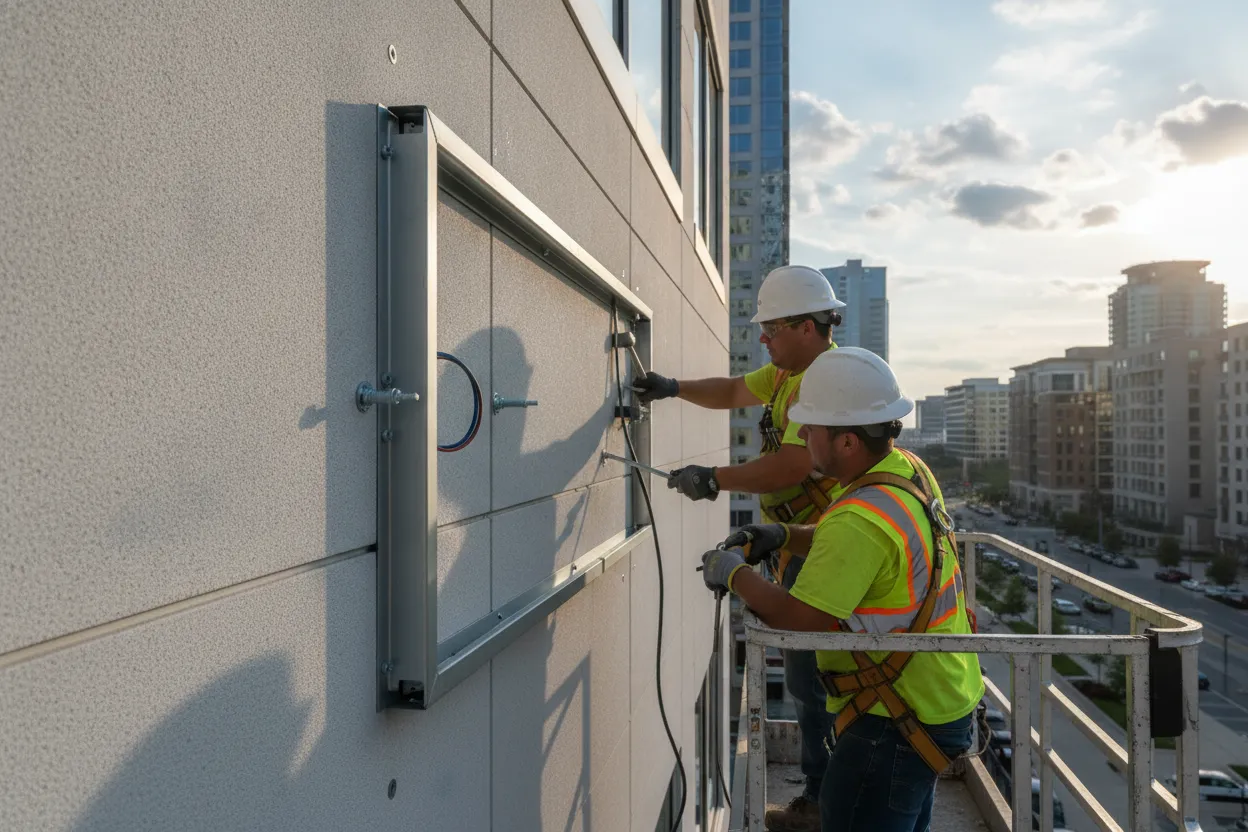
Installation planning should account for occupied buildings, parking and traffic, weather-sensitive work, lift or crane access, protection of finished surfaces, and coordination with other trades. The property team should know what areas need to be clear, when power or access is required, and how the site will be left at the end of each work period.
Experienced commercial sign installation connects the approved drawings to real field conditions. Ask what closeout information will be provided, such as installation photos, sign locations, service contacts, warranty details, and records of approved changes. These details help facilities teams maintain the program and plan later phases.
What should you include in a quote request?
A commercial sign company can prepare a more useful proposal when the request includes enough context to separate known requirements from open decisions. Send the property address, plans if you have them, photos, and brand files. Also send sign locations, messages, target dates, landlord standards, and the names of people who will approve the work.
Also describe what is already known about power, walls, foundations, access, landscaping, tenant coordination, and existing signs. If the project is part of a larger development or rollout, identify the number of locations and the standards that must remain consistent. If plans are still early, say so. A consultation can identify the information that needs to be verified before a firm production scope is set.
Use this checklist when comparing proposals:
- Scope of sign types, locations, messages, and quantities.
- Site survey assumptions and field verification requirements.
- Design, engineering, permitting, and approval responsibilities.
- Materials, illumination, finishes, mounting, and electrical assumptions.
- Fabrication, installation, access, safety, and coordination steps.
- Schedule milestones, owner decisions, and change-control process.
- Service, warranty, closeout documentation, and future update options.
For additional planning context, see the guide on how to choose a commercial sign company, then bring the location-specific questions above to a Charlotte project consultation.
Request a quote for your Charlotte commercial signage project
Frequently Asked Questions
How early should I contact a commercial sign company in Charlotte?
Contact a sign company during early design or site planning, before sign locations, electrical access, landscaping, and construction sequencing are fixed. Early coordination gives the team time to review sightlines, approvals, mounting conditions, and the information needed for a reliable proposal.
Can one sign company handle design, permitting, fabrication, and installation?
Some commercial sign companies provide an integrated path across those services. Ask exactly which responsibilities are included, who coordinates outside parties, and what documentation you will receive at each stage. A single accountable partner can reduce handoff gaps, but the scope should still identify every owner decision and approval.
What information does a sign company need for a commercial quote?
Useful starting information includes the property address, plans or photos, sign locations, desired messages, brand files, property standards, power and access details, construction timing, and the project decision-makers. If any of those items are unknown, identify them as open questions for the site review.
Does every commercial sign need a permit in Charlotte?
Requirements vary by sign type, property, location, ownership, zoning context, and the work involved. Use the City of Charlotte guidance as a starting point and confirm the project-specific approval path with the city, property stakeholders, and your sign partner before fabrication.
What makes a commercial sign project durable?
Durability comes from matching materials, finishes, illumination, mounting, and maintenance access to the actual environment. A controlled sign schedule, field verification, quality fabrication, professional installation, and a clear service path also help the program remain consistent over time.
Whether you are planning a new business property, refreshing an existing campus, or coordinating signs for multiple stakeholders, a consultation can turn the next step into a defined project scope. Call (704) 625-2345 to request a free quote for your Charlotte commercial signage project.


