


People do not experience a sign program as a collection of separate signs. They experience it as one set of instructions. A directory names the destination. A directional sign points toward it. The room marker confirms they arrived. If those signs use different names, the route feels uncertain. Abbreviations and extra detail create the same problem.
Request a quote for a wayfinding signage system
Before fabrication, wayfinding signage systems should agree on the facility's approved naming convention, information hierarchy, and message schedule. That means deciding which destinations are listed and how each is written. It also sets what appears at each decision point, and when updates move through the signs together.
This planning matters when a site has several departments. It also matters when a site has several floors, entrances, or audiences. The goal is not to make every sign carry the same amount of information. Each sign should carry the right information in the same language. Visitors can then move from broad orientation to a specific confirmation. Teams that already have signs in place can start with a wayfinding signage audit. Office programs can use the same three rules inside office wayfinding signs.
What should wayfinding signage systems agree on before fabrication?
Before fabrication, the project team should agree on one naming convention, one information hierarchy, and one message schedule for the entire wayfinding signage system. These shared rules keep directories, directional signs, and room identification consistent from the first sign a visitor sees to the last one they use.
This decision belongs to the facilities, capital-project, brand, and procurement teams responsible for hospitals, campuses, offices, and civic buildings across the United States. The finished signs are produced through ADA wayfinding signs. It is less about choosing a sign face than establishing a common language that every sign family can follow.
A directory may say “Imaging.” A directional sign may say “Diagnostic Imaging.” A room marker may use an internal department name. Each label may seem reasonable on its own. Together they create hesitation. They also make drawings, schedules, and later updates harder to manage. The same problem appears when one sign gives a building name, floor, department, and room number while another includes only a department. A well-designed individual sign cannot repair a system that gives visitors conflicting information.
- One naming convention: controls the approved names for buildings, departments, destinations, rooms, entrances, and other locations wherever they appear.
- One information hierarchy: controls which details receive priority and how much information each sign type is expected to communicate.
- One message schedule: controls the final wording, sign-by-sign assignments, and version of each message that moves from the project documents into production.
The naming convention should be authoritative enough for brand and facilities teams to approve, while remaining usable in procurement documents and construction coordination. The information hierarchy then turns that vocabulary into consistent levels of detail. A directory can introduce a group of destinations. A directional sign can point toward the approved name. A room identification sign can carry that same label.
The message schedule is the practical handoff between decisions and fabrication. It gives the project team a controlled record of what each sign says, where it belongs in the system, and which revision is current. That record helps prevent a late drawing, spreadsheet, or stakeholder edit from reintroducing an old name after the broader system has been approved.
Once these rules are settled, later planning can follow the guide to custom wayfinding signs. No single sign has to invent the system's language. Recent sign projects show how a coordinated program reads on a finished site.
How do you lock one naming convention across the system?
Answer: Choose one public label for each destination. Document its longer form and abbreviation. Name one approver before any department, building, or room name changes.
A naming convention is the shared language behind a reliable wayfinding signage system. It should help a first-time visitor recognize the destination quickly. The same name should appear in a directory, on a directional sign, and beside the room door. Treat the message schedule as a controlled source, not a collection of labels that each department can edit independently.
- Choose the public name first. Start with the words a first-time visitor is most likely to understand. Prefer a clear public label over internal shorthand, a legacy name, or an acronym that only employees know. For example, if visitor instructions say “Imaging” while the door says “Diagnostic Radiology,” the convention must choose one public label for the destination. The same approved label should appear wherever that destination is referenced.
- Resolve the longer official name. Some destinations have a formal name that matters for records, compliance, or departmental ownership but is too long for ordinary navigation. Decide whether the public label stands alone, or whether the official name appears as a defined secondary form. Record both deliberately. Do not let one sign shorten the name while another invents a different abbreviation.
- Keep the hierarchy consistent. Separate the naming rules for departments, buildings, floors, and rooms, then check how they fit together. A department should not alternate between its service name and its organizational name. A building should not switch between a campus nickname and its official designation. Room names should follow the approved department and destination terms rather than local preferences.
- Assign rename authority. Write down who may approve a new name, abbreviation, or replacement label. Facilities may maintain the inventory, while a department leader, communications owner, or project authority confirms the public wording. Include the approval date and a note about superseded names so teams can update directories, instructions, and room identification together.
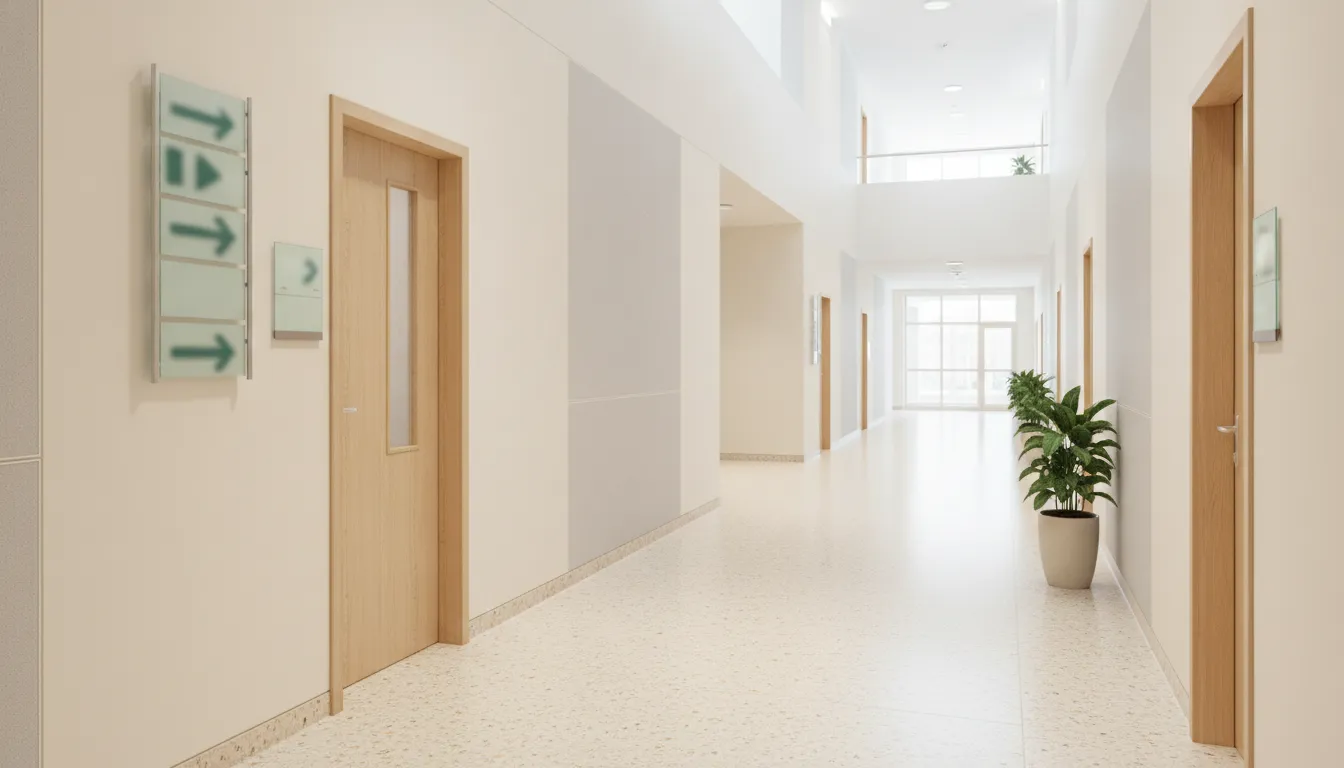
Once approved, hand the convention to every team that creates visitor instructions or sign messages. The room signage inventory should consume the approved name rather than create another version. That simple control prevents a visitor from being sent toward one label and arriving at a door marked with another.
Which information belongs at each level of the hierarchy?
A well-planned wayfinding signage system gives people only the information they need for the decision in front of them. A sign at the property edge should orient a visitor to the site, while a destination door should confirm a specific room. When every sign repeats a full directory, the important message gets harder to find and changes become more difficult to manage.
Use the hierarchy below as a message schedule. The wording will vary by property, but the information should become more specific as a person moves closer to the destination.
Answer capsule: Put broad orientation at arrival. Put the destination list in the lobby. Put the next choice in the corridor, and the room name at the door.
| Decision point. | What the sign should say. | What it should leave off. |
|---|---|---|
| Site arrival | Identify the property, building, or major visitor entry, then point people toward the appropriate entrance, parking area, reception point, or primary destination zone. | A complete room list, every tenant name, and detailed corridor directions that belong inside the building. |
| Lobby directory | List the destinations a visitor can reach from that entry, grouped or ordered in a way that makes the next choice clear. Include the relevant floor or zone when it helps orient the visitor. | Step-by-step directions for every corridor, plus room-level details that should be confirmed closer to the destination. |
| Corridor choice | Name the destinations or destination group reached by the next turn, branch, stair, elevator, or corridor. Keep the message focused on the choice being made at that point. | The entire lobby directory, destinations served by other branches, and information that does not affect the immediate decision. |
| Destination door | Identify the specific permanent room, suite, or space at the point of arrival. Use the approved room name or number consistently with the directory and directional signs. | Directions to unrelated rooms, a full floor directory, or site-level orientation that the visitor has already passed. |
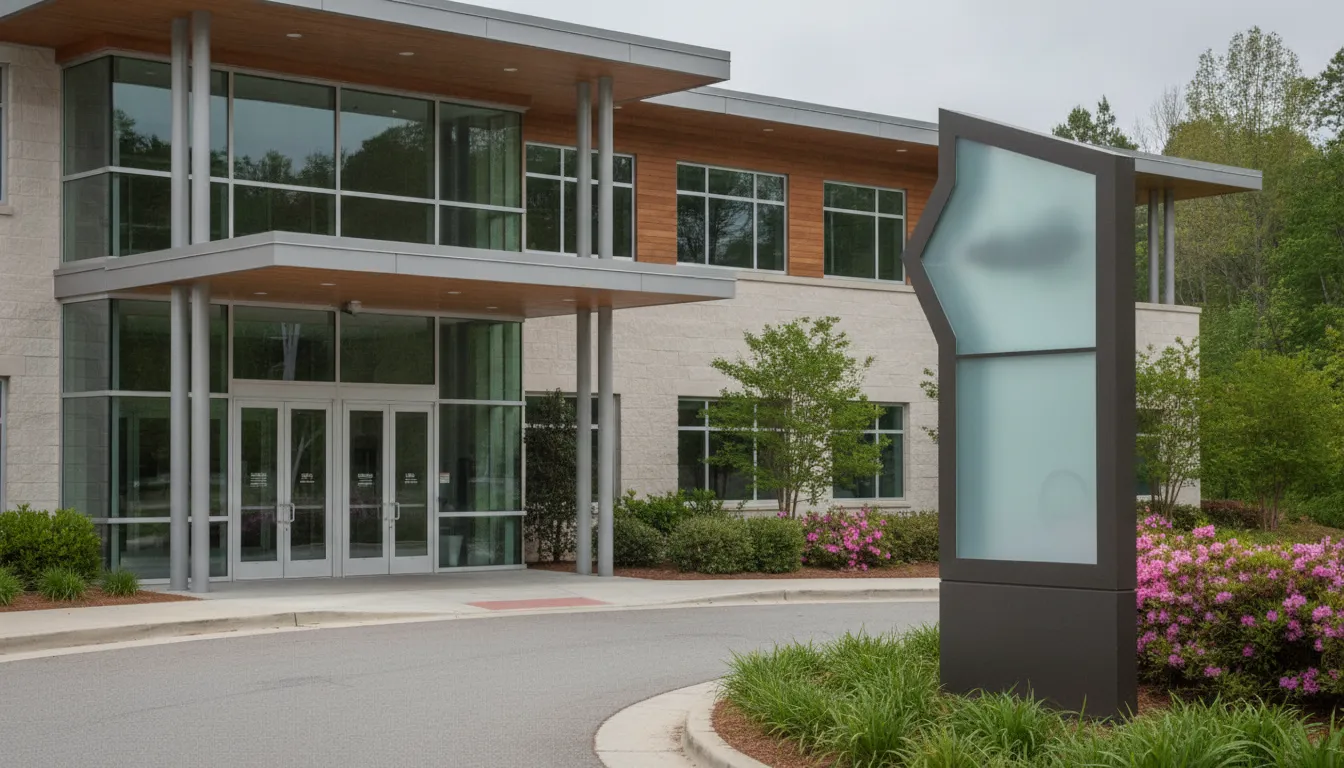
This structure also makes updates easier. If a tenant, department, or room changes, the message schedule shows which signs need review. The rest of the system can stay in place. For properties with multiple interior levels, use interior wayfinding signage planning to coordinate the broader multi-floor experience. The essential rule remains the same: each sign should answer the current decision, then hand the visitor to the next level of information.
What belongs on the message schedule?
Answer: The message schedule assigns every approved message to a sign role. It records whether that message is permanent or changeable. It also names who keeps it current. It turns a list of rooms, destinations, services, and instructions into a controlled source for the wayfinding signage systems that people will actually use.
Start with the words visitors must see, then identify the sign that carries each message. A room name may belong on a room marker and also appear in a directory. A destination such as “Main Entrance” may need a directional sign at a decision point, followed by a confirmation sign at the destination. The schedule should make those relationships visible without forcing the fabricator or installer to interpret a spreadsheet full of unassigned text.
- Message: the approved name, destination, instruction, or announcement.
- Sign role: the job the sign performs, such as identification, directional, confirmation, or directory.
- Permanent or changeable: whether the wording is expected to remain in place or be updated as conditions change.
- Update owner: the department or named role responsible for approving and supplying revisions.
The permanent-versus-changeable decision deserves its own review. A fixed destination name, such as a room or department, should not be managed like a rotating announcement. Hours, a temporary closure, or a current-event note may need a replaceable panel. A digital display is another option. Pick one controlled update path. Mark those differences early. A permanent sign should not carry wording that will soon be wrong. Changeable content needs a sign built to be updated.
This distinction also supports a careful accessibility review. The U.S. Access Board guide to ADA signs explains the split. Signs that identify permanent rooms and spaces are covered where those signs are provided. Directories are exempt from the visual and tactile requirements. Temporary signs posted for 7 days or less are exempt too. That classification does not replace a project-specific review. It does give the schedule a useful question. Is this message identifying a lasting place, or is it information that will change?
Keep the schedule connected to the specification catalog rather than duplicating technical rules in every row. The catalog for ADA compliant signs belongs in the ADA article. For signs that identify accessible destinations and routes, review the related ADA wayfinding signs service information as the message list moves toward design and production.
What should a site survey confirm before you request one quote?
Answer: A useful survey connects visitor decisions, approved names, message changes, and trade coordination into one documented system. That gives the design and production team a shared basis for a wayfinding signage system instead of three disconnected orders.
Before requesting a quote, ask the survey to record these five checks:
- Where does a first-time visitor make a choice? Mark each decision point, such as an entry, lobby, corridor junction, elevator landing, or destination turn. The goal is to identify where a person needs direction, where they need confirmation, and where a destination needs identification. Record the viewing condition at each point, including the approach and the distance at which the message must be understood.
- Does the approved public name fit the viewing condition? Use the same approved name across directories, directional signs, room markers, and related digital or printed references. Then check whether that name remains clear at the available sign size, sightline, and reading distance. If a name is too long or ambiguous for a decision point, resolve the naming issue before fabrication rather than shortening it inconsistently later.
- Which messages are permanent, and which can change? Separate stable destinations and room identities from information that may be updated, such as occupants, departments, hours, or temporary instructions. This distinction should shape the message schedule. It shows which signs last and which ones must be easy to revise.
- Which doors and directories must coordinate with the system? Compare the sign schedule with door numbers, room markers, lobby directories, and other identification points. Building-integrated architectural signs still need to use the same approved names and hierarchy, even when they are designed as part of the architecture.
- What electrical coordination is required? Identify any illuminated piece early and note the electrical trade or connection that must be coordinated. The survey should also identify installation interfaces with doors, directories, and other adjacent work so the eventual sign installation follows one coordinated plan.
Carolina Signs and Wonders can serve as the single-vendor partner for design, permitting, fabrication, and installation across North Carolina and South Carolina. The company prepares custom quotes from the confirmed scope, not fixed packages. The survey should show the naming convention, the hierarchy, and the message schedule.
Request a quote for a wayfinding signage system
Frequently Asked Questions
What must wayfinding signage systems agree on before fabrication?
They must use the same approved names, destinations, hierarchy, directional logic, and message schedule across every sign family. The facility team should also confirm which locations, entrances, floors, departments, and room identifiers are in scope. Resolving those decisions before fabrication helps prevent conflicting messages from appearing along the same journey.
What does a message schedule record?
A message schedule records the approved content for each sign location. It also records the sign function, the destination, and any direction or sequence. It gives the project team one reference for checking spelling, naming, hierarchy, and consistency before information moves into design and fabrication.
Does every wayfinding sign need tactile lettering?
No. Permanent room identification is treated differently from directories and short-term temporary notices. The U.S. Access Board explains sign categories in its Chapter 7 signs guide. The ADA-compliant signs guide covers the related planning steps.
How do directory, direction, and identification signs differ?
Directories organize multiple destinations, directional signs guide people toward a destination, and identification signs confirm a specific room, department, or place. The right mix depends on the facility's circulation and naming plan. For function-focused planning, see the custom wayfinding signs planning guide.
Ready to plan your wayfinding system?
Call (704) 625-2345 or use the quote form to start the conversation.
A consultation can help your team confirm naming, establish a clear hierarchy, and organize the message schedule before fabrication begins. When you are ready to discuss the project, request a quote for your wayfinding signage system from Carolina Signs and Wonders. Share the spaces, destinations, and information visitors need to find, and the conversation can start with a focused direction for the next phase.


